New Pittsfield Program Feeds Elementary Pupils For Free
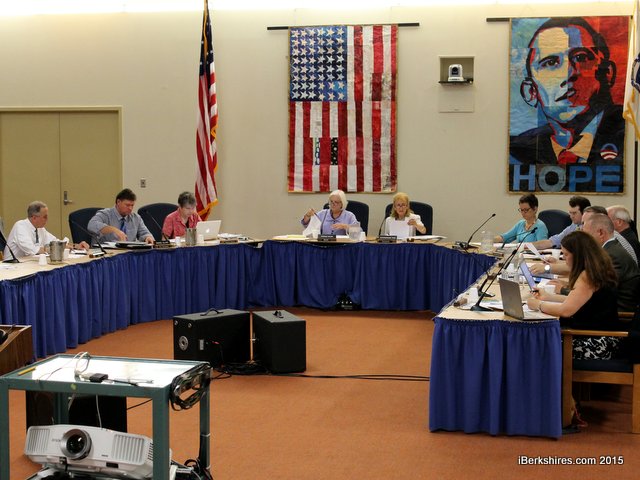 All of the elementary school meals will be paid for by the U.S. Department of Agriculture. All of the elementary school meals will be paid for by the U.S. Department of Agriculture. |
The School Department has joined the federal Community Eligibility Provision program designated for districts with high levels of poverty. The program ups the U.S. Department of Agriculture's reimbursement for meals provided at participating schools.
Participating districts must have more than 40 percent enrollment from low-income households to be eligible and the higher percentage of low-income students in a school or district, the higher the reimbursements.
"Our eight elementary schools qualify for 100 percent reimbursement for all meals," said Sylvana Bryan, director of cafeteria services. "We'll be providing meals at no charge for elementary school students."
The entire School Department consists of 55.8 percent of students from low-income households. When Bryan crunched the numbers, doing the program districtwide wouldn't have been feasible because the federal government would only provide 89 percent reimbursement on the meals. The loss of revenue from the paid and reduced meals would have left the city short $7,000 a month.
But as a whole of the elementary schools, 63 percent of the students are deemed low income so the multiplier factor used in the program will give the city 100 percent reimbursement for all meals. The city's percentage is now locked in for four years before the eligibility is looked at again.
"It is a benefit to the whole community and not just one group," Bryan said, adding that it costs families $475 per child each year to eat school lunches.
In September, families who usually fill out the meal application won't need to for their elementary school students and any student attending school can eat free. At the middle and high school level, Bryan stresses that the meal applications still need to be filled out because the free and reduced lunch program there is operating as it has.
The poverty levels are based on information gleaned from other programs like food stamps and other temporary assistance programs. Previously, the numbers of free and reduced lunch defined the levels of poverty in a community. Boston was among the first in the state to adopt the program in 2013. North Adams looked into the program but the number of students made it unfeasible.
"We're really going to have to change the yardstick of who qualifies as low income," said Kristen Behnke, assistant superintendent for business and finance.
The changes coming from the federal level are replacing the free and reduced lunch determination with an entirely new type of program. Some families may not qualify as low income currently but with the addition of other programs that take in to account expenses, others may. Behnke said the two ways to measure income are not comparable.
The new factor will ultimately have an impact on the state's Chapter 70 disbursements, individual school's Title 1 programs, and the e-rate system. The Community Eligibility Provision was a pilot program coupled with the National School Lunch Program and had expanded over the last two years.
Those who support the program say often students were treated differently in lunch lines, schools would serve bare minimum lunches to those who had unpaid balances or sometimes throw the food out altogether, and low-income students were singled out, stigmatized, and teased. That difference in treatment could lead to a number of behavioral and educational troubles. The program aims to ensure that each students receives a healthy meal regardless of income.
Opponents, however, say the program is a waste of tax dollars and the government shouldn't be paying for meals for those who can afford it.
Locally, Bryan says it will reduce the amount of paperwork and filings the staff has to do and is expected to expand the use of the programs. It isn't known if any additional staff is going to be needed.
"Every child would get a free breakfast and lunch," Superintendent Jason McCandless said. "We would really like to see an increase in our breakfast program."
McCandless said lunch is the last meal of the day for some students. He said the breakfast program will help get the students energized for the day after going hours without eating.
Tags: low income, school lunch,