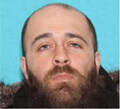
Key Questions Unanswered in Adams Terror Suspect Case
 United States v. Ciccolo currently hinges on a firearms violation but more charges are expected to be filed. United States v. Ciccolo currently hinges on a firearms violation but more charges are expected to be filed. |
ADAMS, Mass. — After this week's court proceedings in Springfield, we know a lot more about the FBI investigation that had residents of Adams asking questions for more than a week.
But there is much we still do not know about the United States v. Alexander Ciccolo.
Perhaps the biggest unknown at this point is what charge or charges Ciccolo ultimately will face.
At this point, the only count against the 23-year-old Adams man and estranged son of a Boston Police captain is that he violated section 922(g) of the U.S. penal code: possession of a firearm by a felon.
That charge stems from his July 4 receipt of four firearms from a "confidential human source" working with the FBI and its Joint Terrorism Task Force. Under 922(g), it was illegal for Ciccolo to have the weapons because of his Feb. 17 conviction for operating a vehicle under the the influence of alcohol — an offense that carries a maximum penalty of up to 30 months in prison.
Nowhere in 922(g) is there any mention of terrorism.
But no one expects the 922(g) offense to be the only charge Ciccolo will face.
"I suspect that there will be additional charges, but you'll have to ask the government," Ciccolo's attorney, Northampton's David Hoose said on Tuesday after Ciccolo was denied bail in federal court.
Indeed, the evidence the U.S. attorney's office presented to deny Ciccolo bail detailed a lengthy investigation by the Joint Terrorism Task Force.
It is clear that the FBI suspects Ciccolo, also known as Ali Al Amriki, of sympathy with the known terrorist group ISIL, the self-proclaimed Islamic State, and of planning at least one act of domestic terrorism.
For now, the weapons charge was enough to hold Ciccolo at the Wyatt Detention Center in Rhode Island while, presumably, further charges are developed. The detention center houses inmates in the custody of the U.S. Marshal Service.
In court, Hoose stipulated as to probable cause on the weapons charge, but that is not the same as an admission of guilt.
As for the defense strategy in the face of future charges, Hoose understandably declined to speculate on Tuesday. But in court he did hint at a couple of possible arguments.
On the gun charge, he emphasized in court and again on the courthouse steps that the weapons were provided to his client "by the FBI at no cost."
He did not use the word "entrapment," and when he was asked specifically whether he thought Ciccolo was set up, Hoose refused to comment. But it is clear that line of thought is being considered.
Of course, the government could argue that Ciccolo's intent was to obtain the weapons, and it offered taped conversations and online chatter in support of that intention for the detention hearing.
Ciccolo's state of mind — specifically his apparent lack of respect for the American government and institutions — weighed into U.S. Magistrate Judge Katherine Robertson's decision to hold Ciccolo without bail.
As for any potential terrorism charges, Hoose laid the groundwork for a defense focusing on Ciccolo's beliefs, not his actions.
"What you learn from that [taped post-arrest] interview was Mr. Ciccolo expressed some beliefs that are not in the mainstream," Hoose said.
Asked later whether he saw the case as potentially a terrorism or First Amendment case, Hoose declined to say.
He also refused comment on another unknown: Ciccolo's mental status.
The government's July 13 memorandum reads, in part, "According to a close acquaintance, the defendant has a long history of mental illness and in the last 18 months has become obsessed with Islam."
That is the only reference in the memorandum to Ciccolo's mental state, and the issue did not come up during Tuesday's detention hearing.
Hoose was asked directly about that line in the memo on Tuesday after the hearing.
"I can't comment on that," Hoose said.
A final unknown worth mentioning: the identity of the acquaintance, who is is portrayed in the memo as inspiring an investigation that began in the fall of 2014.
On Monday afternoon, the Boston Globe reported that the "acquaintance" was Ciccolo's estranged father, Boston Police Captain Robert Ciccolo. But that report was based on "law enforcement officials with knowledge of the investigation, and who requested anonymity." In other words, the identification is unsubstantiated.
Nevertheless, the identity of the tipster has come to be reported in some media outlets as an established fact without need for attribution.
On Wednesday, representatives of the U.S. Attorney's Office in Boston confirmed to iBerkshires.com that neither that office nor the FBI has revealed the identity of the "acquaintance."
Tags: #berkshireterror, federal court, terrorism,