Pittsfield City Council Endorses Natural Gas Infrastructure Bills
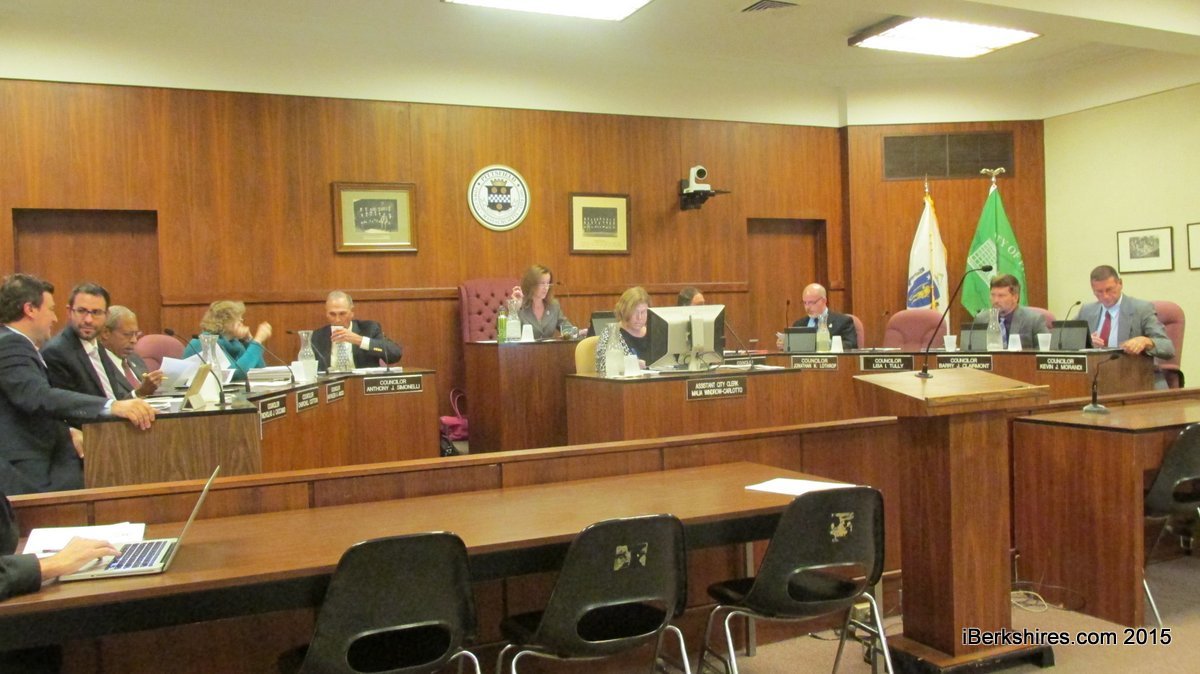
PITTSFIELD, Mass. — The City Council on Tuesday night voted to endorse two State House bills related to natural gas infrastructure.
The petition submitted by Ward 6 Councilor John Krol asked the council to support the passage of H.2870, related to gas leaks paid by ratepayers, and H.2871, which would have gas companies audit and make any repairs to their their lines during road projects.
The council voted 8-2 to endorse, with President Melissa Mazzeo and Ward 4 Councilor Christopher Connell in opposition. Ward 1 Councilor Lisa Tully was absent.
"Essentially what this does is say two things, thus the two bills, No. 1, when there are leaks in gas pipes throughout the city of Pittsfield, it says the ratepayers shouldn't pay for that extra gas that's being leaked out," Krol said of H.2870. "That's not the case right now."
The councilor said it was an economic and financial issue as well as an environmental issue because gas companies used to find leaks by noting the dead vegetation above their lines.
H.2870 is supported by state Rep. Tricia Farley-Bouvier, D-Pittsfield, and Krol said state Rep. Paul Mark, D-Peru, is also in support.
The second part is when a city does road improvements, the gas company would have to survey its pipes and repair any leaks while the road surface is opened.
"[It is to] make sure this is a systematic approach to fixing the infrastructure in our city because it's the gas company's infrastructure but it's also our infrastructure," Krol said, describing the bill as long-term planning to ensure gas companies are allocating resources for maintenance rather than profit margins or CEO bonuses.
"I'm all in favor of saving the consumer from paying for something they're not using," said Connell, but he suggested tabling the endorsement until the council could hear from the other side. "In all fairness, I'm just going to suggest I'd like to hear from somebody from Berkshire Gas ... to find out what their game plan is."
Resident Alex Blumin, speaking at open forum, also asked the council to delay until a representative from Berkshire Gas could speak.
"I am asking you not to rush, we should know all data before making such a serious decision," he said.
Connell made a motion to table, which was defeated 8-2 with Mazzeo voting with him.
Edward Wall of Cambridge, representing the Sierra Club, was also in attendance to speak on the bills if the councilors had any questions, saying he'd worked on them. The councilors, however, had no questions.
In other business, the council:
• Accepted a Violence Against Women's Act STOP grant of $38,506.50 to be matched by the Police Department with $13,189.15
• Accepted a grant of $35,000 from the Massachusetts Cultural Council.
• Referred an order authorizing the city to become an electrical aggregator to the Community and Economic Development Committee.
• Continued three public hearings: the proposed Dunkin' Donuts drive-through on Tyler Street to Dec. 8 and two special permit applications for a Cumberland Farms on First Street (operation of an auto service station and storage of inflammable materials) to Nov. 24.
Tags: endorsement, natural gas, State House,