image description

Pittsfield School Committee Endorses Moratorium on Charter Schools

By Tammy DanielsiBerkshires Staff
Print Story | Email Story

PITTSFIELD, Mass. — The School Committee on Wednesday night endorsed a joint statement with United Educators of Pittsfield to support a moratorium on charter schools.

State Senate bill 326, filed by state Sen. Marc Pacheco, D-Taunton, seeks to halt the state's granting of charters to Commonwealth charter schools until September 2018.

The move comes on the heels of two reports questioning the efficacy of charter schools and the Department of Elementary and Secondary Education's oversight of their legislatively-mandated goals.

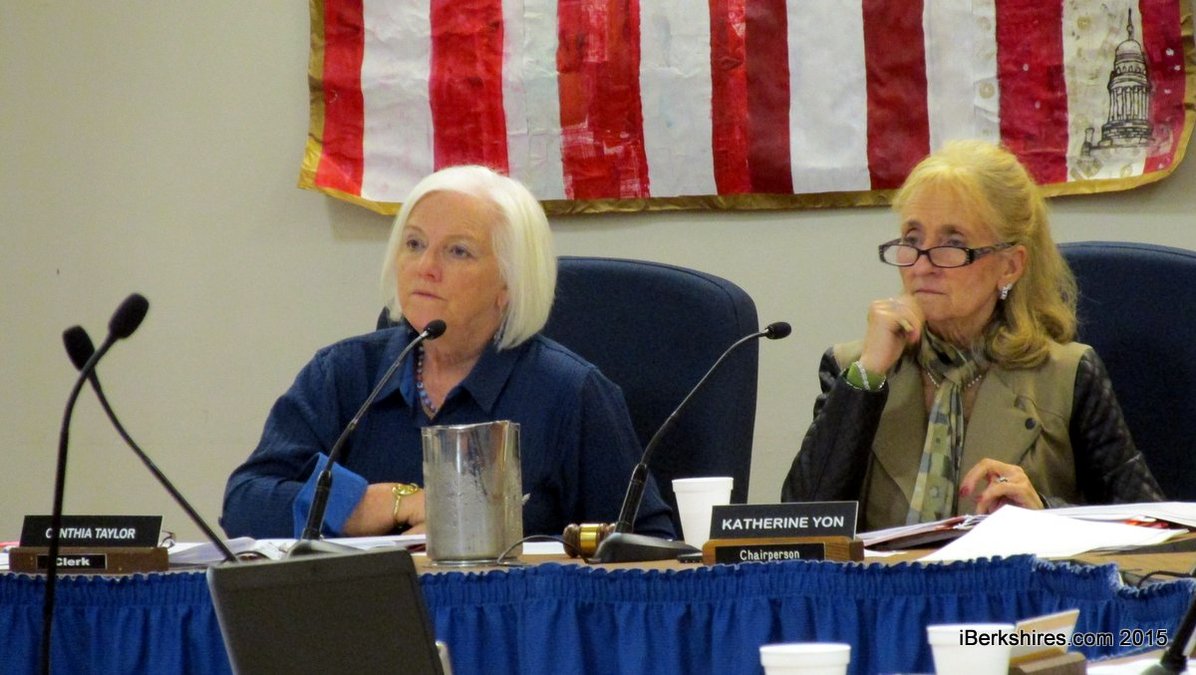
"This moratorium will allow time for an independent evaluation for our charters schools to determine whether charters are meeting their intended goals on improving education for all students," read Chairwoman Katherine Yon.

Yon and committee member Cynthia Taylor said they had attended the Massachusetts School Committee Association's conference on Cape Cod last week at which the association's new report on charters, "Who's Being Served," was discussed.

Yon said the concern is that children with disabilities, who are living in poverty and who are English language learners were not being equitably served by the state's 81 Commonwealth charters, exacerbating rather than closing the achievement gap. Charter school teachers also do not have to meet the more rigid and ongoing licensure standards as other teachers in the state.


At the same time, the funding mechanism continues pull critical education funds from public sending districts, with some $419 million in Chapter 70 aid expected to go to charter schools this year. Pittsfield was charged $2.6 million in charter school reimbursements this fiscal year; Adams-Cheshire Regional and North Adams, about $700,000 each.

The Berkshires has only one charter school but it affects the whole county, Yon said.

Late last year, State Auditor Suzanne Bump released a report criticizing DESE for failing to adequately document the innovative programs and best practices that charters were supposed to create as models for public school districts and to maintain reliable data, including on enrollment, to analyze their performance.

Bump last month testified before the Joint Committee on Education, Yon said, quoting her: "I have a responsibility to the taxpayers and to our kids to speak up when I see such enormous sums of taxpayer dollars put into private hands without evidence of its benefit."

The statement passed unanimously with little discussion and will be submitted to the city's state representatives. Taylor said state Sen. Pat Jehlen, D-Somerville, vice chairman of the Committee on Education, recommended the School Committee speak out

"She really stressed that we can have a voice in the Berkshires," she said. "You really have to make yourselves heard by your legislators over and over and over. She stressed that to everyone."


Tags: charter school,   legislation,   moratorium,   Pittsfield School Committee,   

If you would like to contribute information on this article, contact us at info@iberkshires.com.

Social Service Organizations Highlight Challenges, Successes at Poverty Talk

By Brittany PolitoiBerkshires Staff

Dr. Jennifer Michaels of the Brien Center demonstrates how to use Narcan. Easy access to the drug has cut overdose deaths in the county by nearly half. 

PITTSFIELD, Mass. — Recent actions at the federal level are making it harder for people to climb out of poverty.

Brad Gordon, executive director of Upside413, said he felt like he was doing a disservice by not recognizing national challenges and how they draw a direct line from choices being made by the Trump administration and the challenges the United States is facing. 

"They more generally impact people's ability to work their way out of poverty, and that's really, that's really the overarching dynamic," he said. 

"Poverty is incredibly corrosive, and it impacts all the topics that we'll talk about today." 

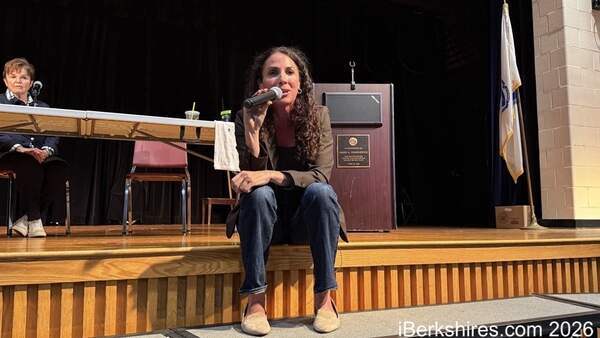
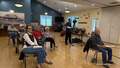
His comments came during a conversation on poverty hosted by Berkshire Community Action Council. Eight local service agency leaders detailed how they are supporting people during the current housing and affordability crisis, and the Berkshire state delegation spoke to their own efforts.

The event held on March 27 at the Berkshire Athenaeum included a working lunch and encouraged public feedback. 

"All of this information that we're going to gather today from both you and the panelists is going to drive our next three-year strategic plan," explained Deborah Leonczyk, BCAC's executive director. 

The conversation ranged from health care and housing production to financial literacy and child care.  Participating agencies included Upside 413, The Brien Center, The Food Bank of Western Massachusetts, MassHire Berkshire Career Center, Berkshire Regional Transit Authority, Greylock Federal Credit Union, Massachusetts College of Liberal Arts, and Child Care of the Berkshires. 

The federal choices Gordon spoke about included allocating $140 billion for the U.S. Immigration and Customs Enforcement, investing $38 billion to convert warehouses into detention centers, cutting $1 trillion from Medicaid over 10 years, a proposed 50 percent increase in the defense budget, and cutting federal funding for supportive housing programs. 

Gordon pointed to past comments about how the region can't build its way out of the housing crisis because of money. He withdrew that statement, explaining, "You know what? That's bullshit, actually."

"I'm going to be honest with you, that is absolute bullshit. I have just observed over the last year or so how we're spending our money and the amount of money that we're spending on the federal side, and I'm no longer saying in good conscience that we can't build our way out of this," he said. 

Upside 413 provided a "Housing Demand in Western Massachusetts" report that was done in collaboration with the University of Massachusetts at Amherst's Donahue Institute of Economic and Public Policy Research. It states that around 23,400 units are needed to meet current housing demand in Western Mass; 1,900 in Berkshire County in 2025. 

View Full Story

More Pittsfield Stories