image description
Macy's at the Berkshire Mall is closing with a liquidation sale to begin Monday.
Updated January 06, 2016 04:39PM

Macy's at the Berkshire Mall Will Close

Staff ReportsPrint Story | Email Story

LANESBOROUGH, Mass. — The Berkshire Mall is about to take another hit with the closure of Macy's in the next couple months.

Employees were reportedly told on Wednesday that the store would close after nine years. A formal announcement is expected Thursday. Macy's reported the closure in a release on its website on Wednesday afternoon.

iBerkshires also has reached out to the mall's owners and Macy's for confirmation.

Macy's, with nearly 800 locations, is the largest department store by sales in the nation. But it's been battered over the last year by dropping sales and declining foot traffic at malls. It has closed 52 stores in the past five years, although opening 12 new ones, and indicated it would close another 40 in the early part of January.

"In light of our disappointing 2015 sales and earnings performance, we are making adjustments to become more efficient and productive in our operations," said Terry J. Lundgren, chairman and chief executive officer of Macy's Inc., in the release.

Thirty-six stores will be closed by early spring, with four other stores closed this past fall. Macy's said associates may be offered jobs at other stores (the closest are in the Springfield and Albany, N.Y., area) and eligible workers will be offered severance benefits. The Eastfield Mall in Springfield is among those closing.


According to CNN Money, these weaker stores "account for 1 percent of total sales, even though they make up more than 5 percent of Macy's locations." Like many brick and mortar chains, Macy's was also hit by a surge in online buying, up 20 percent this holiday season.

The chain's last quarterly report noted sales had dropped over three consecutive quarters, with the third quarter down 5.2 percent over the same time last year.

The Macy's space in the Berkshire Mall initially had been filled by Steiger's, one of the mall's founding anchors, until Steiger's sold its stores to Filene's in 1994. It transitioned to Macy's in 2006.

The contents of the store are expected to be liquidated over the coming months with the exception of some products, such as cosmetics and fragrances. Clearance sales are expected to begin on Monday, Jan. 11, and run between eight to 12 weeks.

The loss of Macy's as an anchor is troubling for the mall, which saw the departure of Best Buy at the end of October.

The mall is the largest commercial property for the town of Lanesborough but Town Manager Paul Sieloff says he has no concerns about its future. At the time of his statements, however, he hadn't heard that Macy's was in fact closing. He cited Target spending more than $1 million to upgrade its space and the Regal Cinemas investing some $2 million in recent years.

"Because of those investments that were made, I don't have concerns about the mall," Sieloff said. "We monitor it and watch out for it. ... But, I do not lose any sleep over it. I just hope the economy improves."

Sieloff said the Best Buy closure was a surprise but changes in tenants can be expected in any shopping center. He said various store closings have been a reoccurring rumor.

"The mall is a real rumor mill," he said. "It's amazing how often that starts churning."

Updated with information from Macy's press release.


Tags: Berkshire Mall,   store closings,   

If you would like to contribute information on this article, contact us at info@iberkshires.com.

Dalton Planners Hold Public Hearing on Tiny Homes Bylaw

By Breanna SteeleiBerkshires Staff

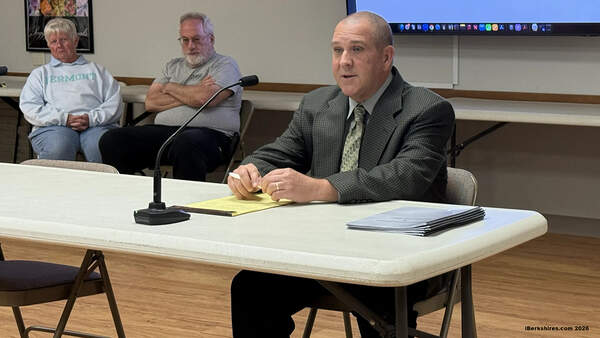
DALTON, Mass. — The Planning Board held a public hearing last week on a bylaw for mobile accessory dwelling units (ADU) that will be brought before a special town meeting.

For nearly two years, Amy Turnbull has been trying to amend the current ADU bylaws to allow mobile tiny homes.  

A movable tiny home is defined as a unit under 400 square feet that meets all of someone's daily needs, including sanitation, cooking, and other facilities, and which is also mobile. Most homes considered "tiny" are built on a trailer so they can be towed.

Her proposal defines a movable tiny house as a "residential property with an existing primary house, intended for year-round living," and outlines eight conditions for approval.

Among these conditions: the unit must adhere to accessory dwelling unit regulations, undergo site plan review, be licensed and registered with the state Registry of Motor Vehicles, have approved energy, water, and wastewater systems, and comply with American National Standards Institute 119.5 and National Fire Protection Association 1192 safety requirements.

Additionally, the unit must be certified for ANSI or NFPA compliance by a manufacturer or third-party inspector, including adherence to Appendix Q and the International Residential Code's structural guidelines and energy efficiency standards. The tiny house cannot move under its own power, and its undercarriage, wheels, axles, tongue, and hitch must be concealed from view. Wheels and leveling or support jacks are required to rest on a level gravel or paved surface.

Turnbull has gotten enough signatures for her petition to amend the current bylaws to add her definition of the mobile ADUs. Last Wednesday, the board held a public hearing on the petitions, which will be voted on at a special meeting.

Turnbull says she has two reasons for wanting to add this to the town's bylaws: aging in place and affordable housing.

"We need a variety of housing types in Dalton, and that we also need to address the idea that you know nearly 30 percent of our population by 2035 is going to be over 65 years old, and it's problematic because  ... there's not enough choice for these people to to age in place,"she said. "What movable tiny houses does, is it provides a less restrictive ADU. It's much cheaper to place, and it's easier to place, less time consuming. And what it offers to people is it offers people who are owners a place for their children to come and live, or a caregiver to come and live, or for the people who own their own house to come and live while they rent out their maybe their three bedroom home to a new family who wants to attend to Craneville simultaneously."

She said people need to move away from calling and treating the tiny homes as though they are trailers, as one former Planning Board member has voiced opinions on.

"That is an opinion, and I think we need to get over that, because I want to say that these are foundation homes, and that the chassis is a foundation, and it's a stick-built home on a chassis, and in very many ways it's like a modular house. I think we will not be surprised in the next 10 years if we see the market turn around and start to make smaller, tiny modular homes, but that is not the case right now, and we have a dire need for affordable housing," she said.

At a former Fire District meeting the Water Department drafted regulations for water hook-ups for these types of homes. The superintendent sent a letter to the Planning Board to be read at the meeting stating it will not be a hindrance for sewer system connection.

"The Department of Public Works does not feel that mobile ADUs will be an issue with the town sewer system. The homeowners will be responsible for any issues outside of the sewer main and connect and responsible for connecting in, so that would address any permits, fees, or anything like that would be added to that," the letter states. 

"The Water Department, as we've stated previous, and as you stated, the water department has come up with their own set of SOPs, standard operating procedures, for hooking up a an adu and a mobile adu, which will then have to meet winterization and all those, but they've laid out a plan for that, that they have, so I'd like to point that out," board Chair Robert Collins said.

One concern was raised that if someone can have a mobile ADU could they also have another tiny home on their property, including the main house. That situation is not likely, said Turnbull, as it would cost a considerable amount of money. Town Manager Eric Anderson also stated that in his former community when they adopted similar laws their first one wasn’t put in until a couple years later and then maybe one a year.

View Full Story

More Lanesborough Stories