Mount Greylock School Committee Approves $11M Budget for 2017
WILLIAMSTOWN, Mass. — The Mount Greylock Regional School Committee approved a fiscal 2017 budget of $11 million on Tuesday night, up $413,000 over this year.
The approval followed public hearings held on Monday in Lanesborough and prior to the regular School Committee meeting on Tuesday.
Williamstown will see its assessment to the regional district rise to $237,328, or by 4.79 percent, over this year; Lanesborough will see a reductions of $13,549, or minus a half percent.
The split in appropriated assessments this year of 31.8 for Lanesborough and 68.2 for Williamstown is based on calculations of minimum required spending, the five-year rolling enrollment average and equalized property values, and capital spending.
The total assessment to Williamstown is $5.2 million and to Lanesborough, $2.7 million.
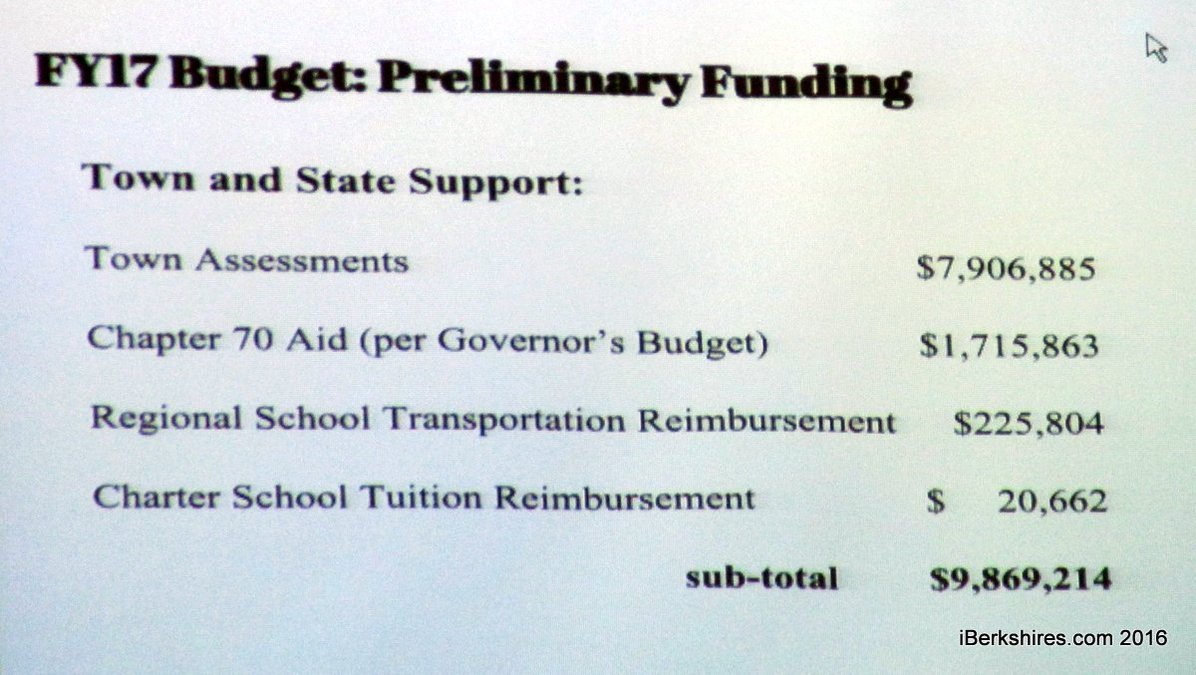
Combined with state Chapter 70 education aid and transportation reimbursement, down 15 percent at $2 million, the total state and appropriated portion of the budget comes to $9.869 million.
The balance of the budget is being funded by $352,000 in school choice, $591,000 in tuition, $25,000 in Medicaid reimbursements from the town, and $50,000 from the Williams College gift toward capital debt. Another $100,000 is being used from the excess and deficiency fund.
The biggest driver in cost in increases is health insurance, an issue that other school districts and municipalities are dealing with. Fixed, or contracted, charges are up $325,000, or more than 13 percent over this year, to $531,000 with insurance responsible for $285,683 of that. Another factor is the final payment on the locker room repairs of $116,000, which will not return next year.
"We are trying to find ways we can consolidate, find alternative revenue sources, and ways to potentially contract our budget and get that increase down so as to recognize those challenges in each community," Superintendent Douglas Dias said.
Starting from a level-funded budget, fixed costs added a half-million, or just over a 5 percent increase. Dias said the goal was to provide some consistency in educational programs, but also limit budgetary effects on the member towns.
As he explained on Monday in Lanesborough, the school is not replacing a math teacher who is retiring (saving $88,760), is reducing a reading specialist position ($68,041) and replacing a retiring wellness teacher at a lower salary ($16,804).
The budget also zeroes out classroom and instructional software that will be purchased through Williams College's gift of $200,000 a year to support the school.
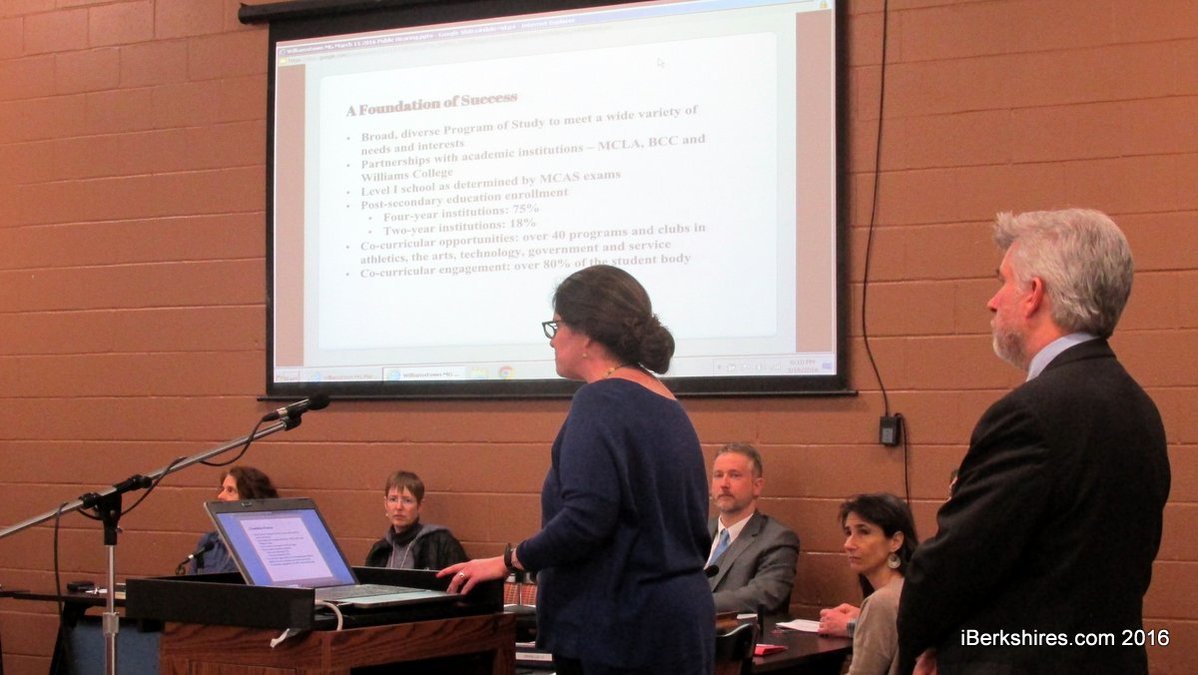
Principal Mary MacDonald said the foundation of the budget is driven by data compiled through testing, input from parents, faculty and students, partner organizations, and graduates who have used their education.
"We're proud of our programs and we look at them carefully," she said "It's very much a market driven component."
The "tiny school" offers a lot opportunities, including through its partnerships with Williams College and Massachusetts College of Liberal Arts, MacDonald said, continues to be a Level One school, although maintaining that level can be difficult.
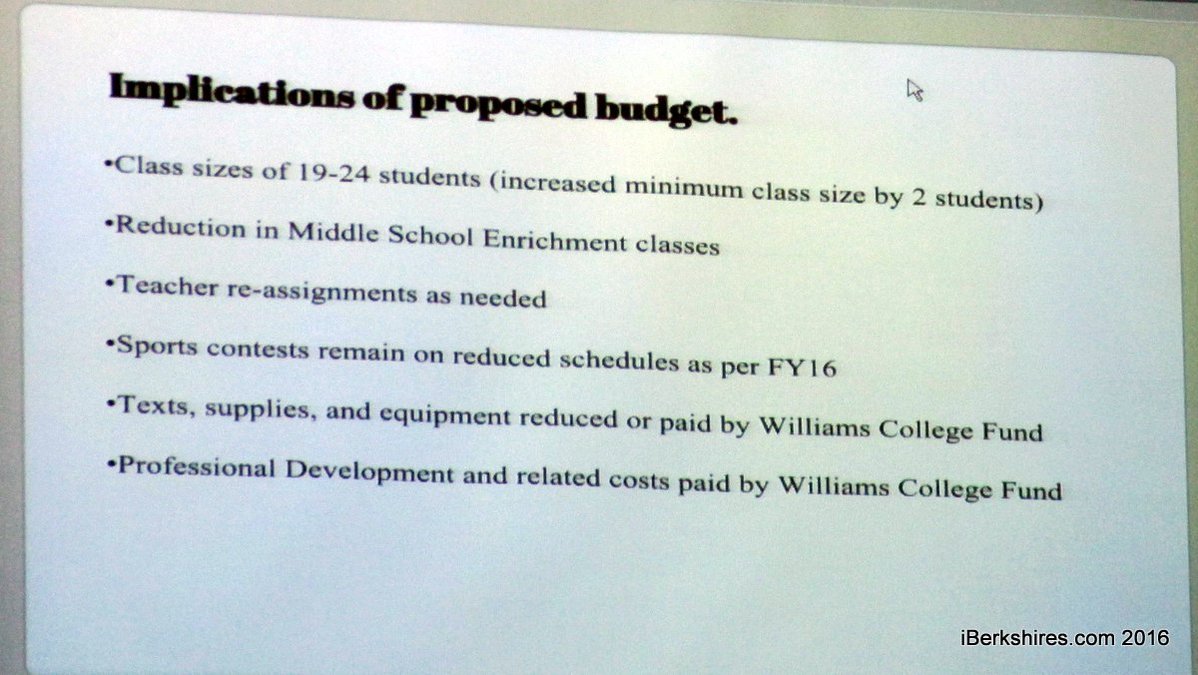
"The implications of this budget means that the class sizes at Mount Greylock may shift," said MacDonald. "As I said, we are a small school with rigorous courses. At present, our range is 17 to 21 ... We may be looking a new range from 19 to 24."
Dias said he felt strongly that the budget, albeit tight, was appropriate. "We will continue to look at other revenue sources that we can tap into," he said.
The budget will be presented to the Williamstown Finance Committee on March 23; no date has yet been set for the Lanesborough Finance Committee.
In other business, the committee approved Dias' recommendation for 18 school-choice slots, up five overall. Thirteen school-choice students will be leaving or graduating this year.
Committee members discussed the use of the Williams College gift, and how the $200,000 toward the operating budget should be distinguished from the $5 million capital gift toward a new school.
The conversation on investment and disbursement of the capital gift was deferred until it was sure there would be a new school (the committee shortened its monthly meeting considerably to be at the Lanesborough polls for the passage of the debt exclusion vote). School Committee Chairwoman Carolyn Greene, however, thought that the annual gift should be included as a line item on the budget.
MacDonald said the committee is provided with a presentation on its use annually.
"It wasn't put in as a line item for income in part because we weren't sure how it was going to be used and it can't be used to offset capital funds," she said.
The committee briefly discussed how both Williams funds might be managed until putting conversation off to another time. Dias suggested that finance subcommittee review the process and provide recommendations.
Preliminary Mount Greylock FY17 Budget
Tags: fiscal 2017, MGRSD_budget, school budget,