National Squash Program Promotes Sports, Scholarship
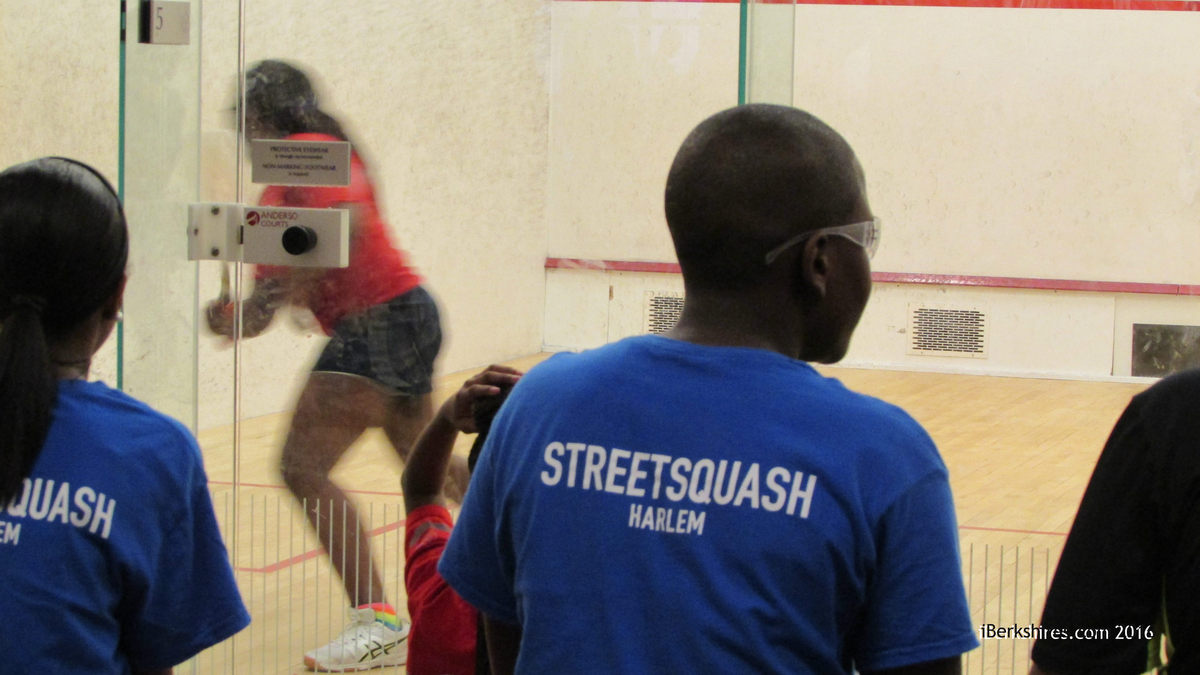
True, their focus was the Urban Individual Nationals squash tournament. But it was apparent that the event was hosted by the National Urban Squash and Education Association, and the “education” part was key.
On the walls of the Simon Center lobby were a couple of dozen essays that made the cut as finalists in a contest conducted by the NUSEA.
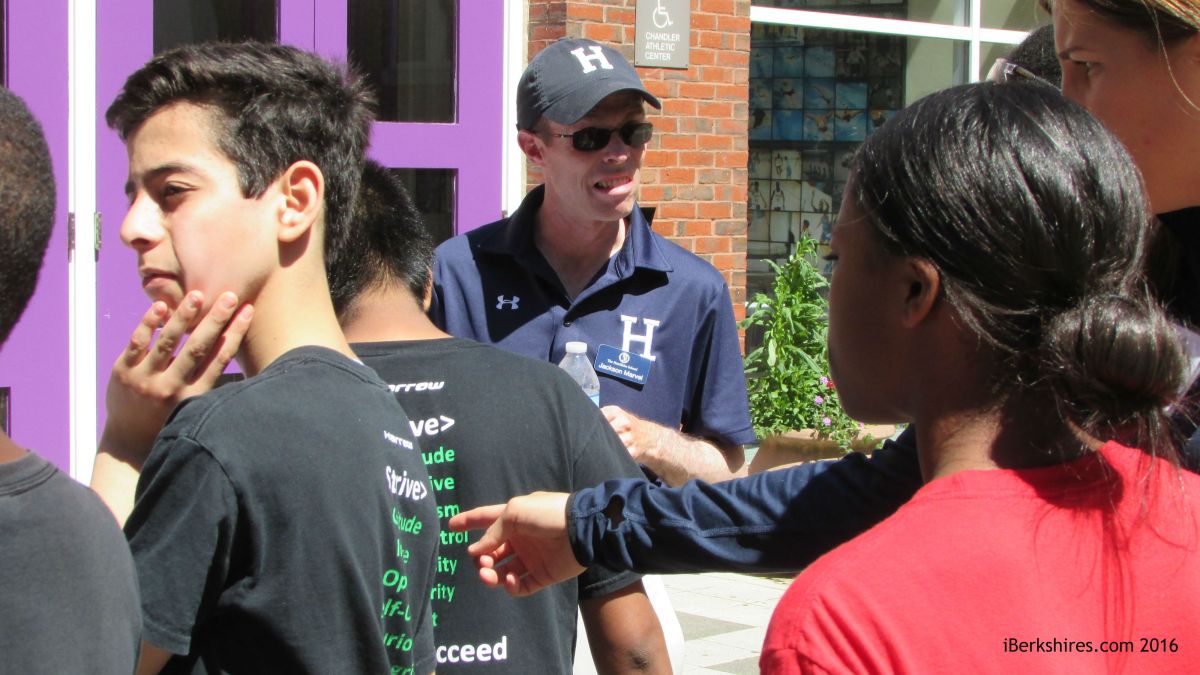
And in the courtyard outside the center, a Saturday morning meet-and-greet was held with recruiters from prep schools throughout New England.
The championships brought together elementary through high school students from 18 urban squash programs around the country for three days of competition.
The director of one of those programs explained that he did not even have a squash background when he started with Brooklyn’s City Squash. He was a teacher when he joined the program that, along with its 14-year-old partner in the Bronx, serves 180 New York City youth.
“Academic enrichment and homework help are part of the program,” explained Peter Feldman, who is entering his sixth year directing the Brooklyn program. “So when kids come to practice, we split them up. Half start with squash. Half start with the academic block. And then they swap.
“We always are trying to link the two, and the character traits and skills that lead to success in one are transferable to the other.”
Feldman said alumni of City Squash who have gone on to attend prep schools and colleges are shining examples to the youngsters coming up the ranks behind them. Likewise, the players currently in the program are the best recruiters for the next crop of young participants.
“At the Bronx partner schools, for example, we’re a known entity,” Feldman said. The kids see the older kids walking around with squash rackets sticking out of their bags. It’s one of those things they’ve heard of even before we go in in the fall and present to the classrooms of the grade that we’re recruiting.”
And lest you think squash is not the kind of sport that draws the attention of inner city kids, Feldman said it is a more natural match than you may think.
“In some ways, it works to an advantage early on that the kids get to play a sport that not many of their friends plan,” he said. “And it’s a fun sport. They’re excited. The fact that squash is traditionally more of a white privileged sport doesn’t enter into their calculations about the sport because they’re having fun, and they’re with their friends.
“The Urban Squash movement is making squash more diverse and opening up the sport to more people than it ever used to be. In a lot of ways, we’re hoping that will be less of an issue going forward.”
More photos of this event here.