Williams College, Chamber Discuss Downtown Parking with Selectmen

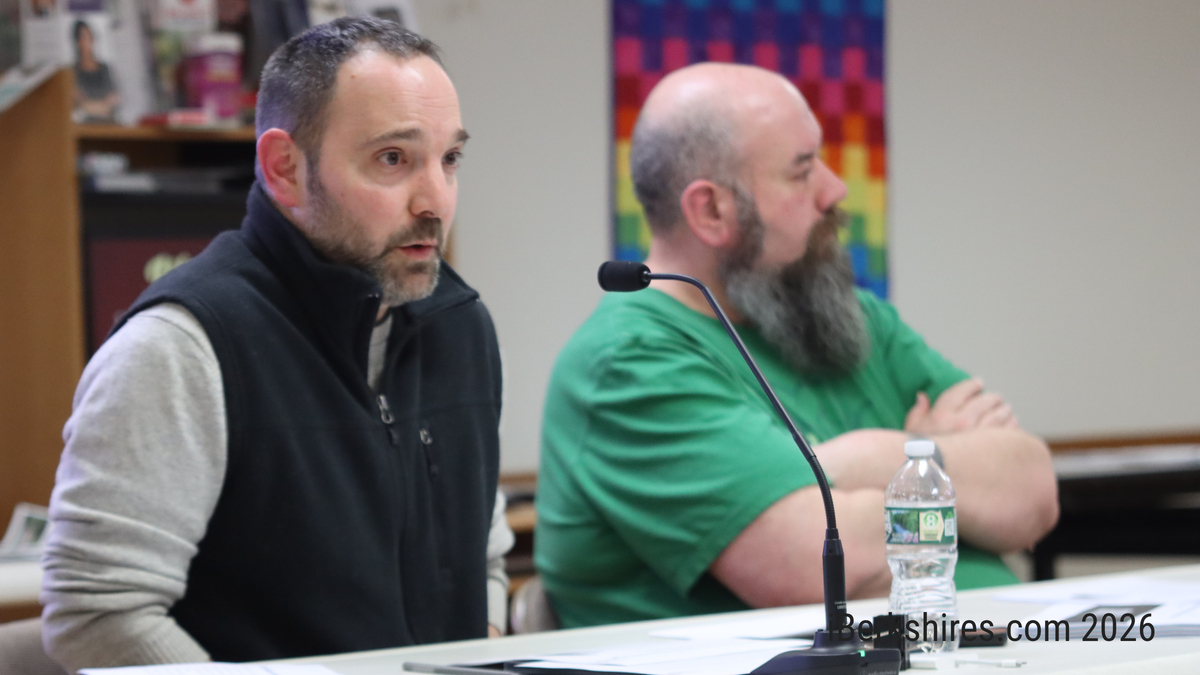
Williamstown Chamber Director Emily Watts and Jamie Art, director of real estate for Williams College, explain parking plans during the college's construction around Spring Street.
In 2015, parking inventory in the Village Business District was squeezed by construction vehicles related to the college's renovation of the Log pub on Spring Street. That project is completed, but downtown business owners have been concerned that two larger projects — the new Spring Street college bookstore and the new Science Center off nearby Walden Street — would create even bigger problems.
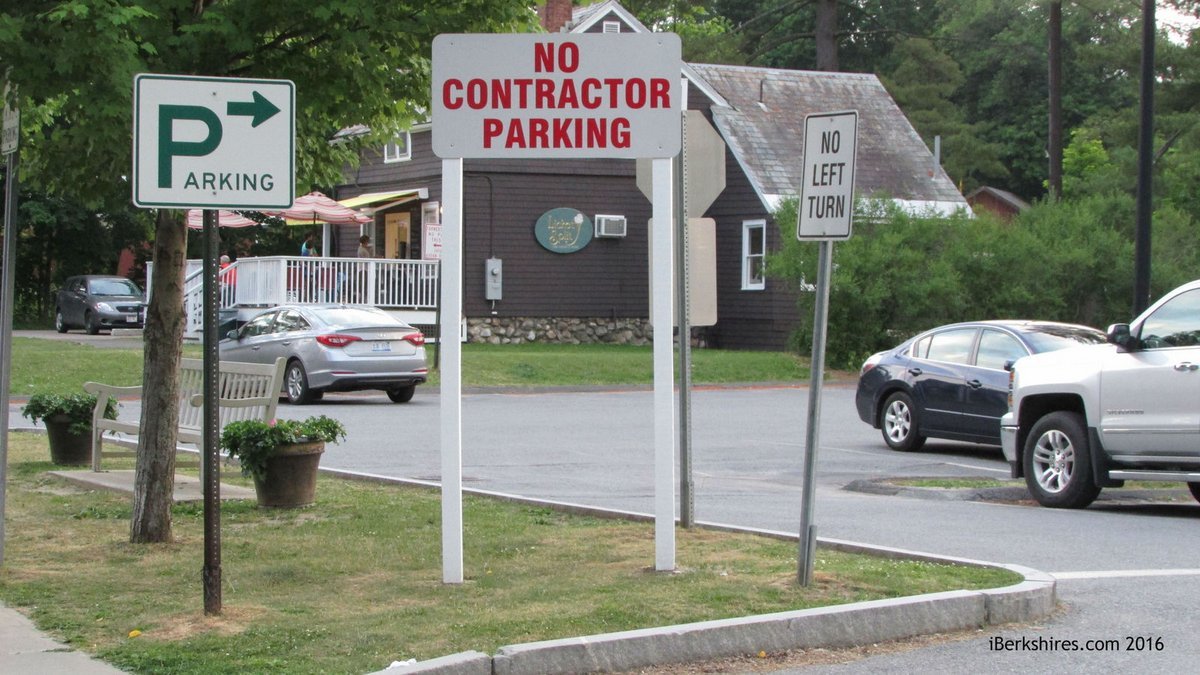
On Monday, Williams' director of real estate told the Board of Selectmen that the college has a two-pronged approach to make sure that does not happen: keep the contractors out of public parking spaces and encourage downtown workers to utilize nearby alternatives to the prime parking spaces they'd rather give their customers.
"It's written into contracts: There is a prohibition on contractor parking in those lots," Jamie Art said, referring to the existing municipal lot at the bottom of Spring Street and two nearby college-owned lots. "There's a three-strikes-and-you're-out regimen."
Contractors and their employees will be issued stickers for their vehicles. If those vehicles are parked where they don't belong, they will be subject to a $25 fine for the first offense, a $50 fine for the second offense and a $250 fine for the third offense, "and that person is off the job [on the third offense]," Art said.
"We feel there's really a serious enforcement program in place," he added.
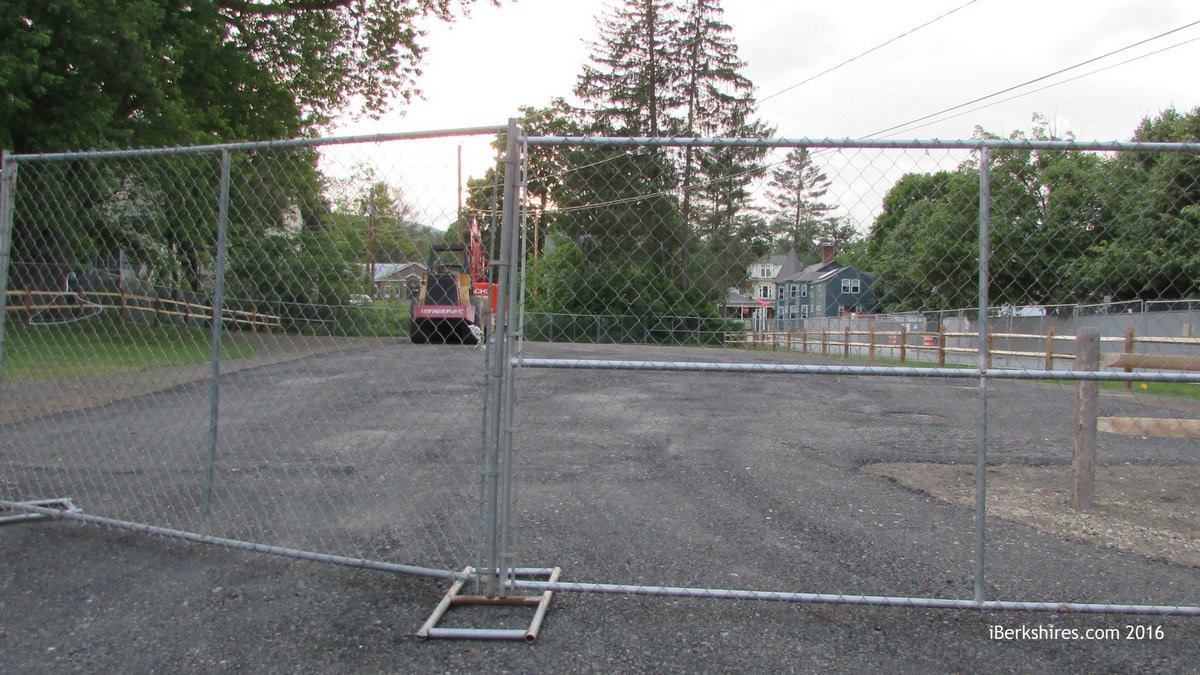
The contractors are being directed to park in the old Town Garage site on Water Street, and this summer the college will be removing some red barns south of Spring Street to open up 100 more spaces for construction parking.
"And there are other even more remote locations where, if needed, we can provide contractor parking and a shuttle," Art said.
But contractor parking is only one impediment to opening spaces for visitors.
Williamstown Chamber of Commerce Executive Director Emily Watts joined Art at Monday's Selectmen's meeting to talk about a recent parking study conducted by the school and the chamber.
Watts said the chamber is concentrating its efforts on educating business owners and employees about the benefits of parking their cars a little farther away from their place of employment.
Watts said a visitor coming down Spring Street from Main Street is confronted first with the area outside Lasell Gymnasium, where parking spaces tend to fill up quickly, then the middle part of the street, where there is no on-street parking allowed in front of the post office and lastly with the municipal lot that often appears more full than it is because many daylong users (i.e. Spring Street employees) park in the spots closest to the road.
"From casual conversation, we find that owners and employees park at the front of the parking lot or on the street and move their car around during the day," Watts said, alluding to the the limited time parking on Spring Street. "Some of what we're looking at is how to educate business owners and employees.
The chamber also is looking to educate visitors with new maps that indicate walking times in the fairly compact business district in hopes that once a visitor is parked he or she not feel it necessary to move his or her car to, say, go to the Williams College Museum of Art after lunching on Spring Street.
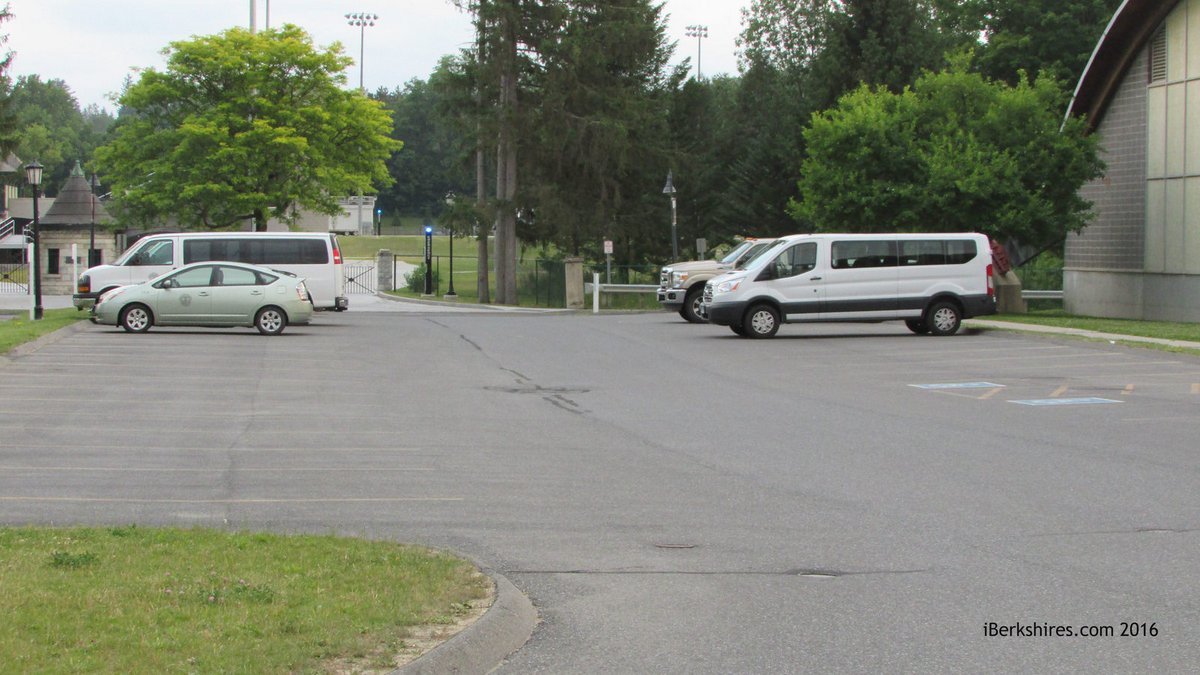
Watts said the chamber is going to distribute a flier to downtown businesses to encourage employees to park either at the back of the municipal lot or in one of two nearby lots. Art said Monday that the college is going to install new signage in the lot behind Towne Field House to make it clear that it is open to the public, and it has added a temporary parking lot on Walden Street — just beyond and connected to the municipal lot — with an added 18 spaces.
"That's 64 spaces that should now be more available to the public within a two-minute walk to Spring Street," Art said, referring to the 46 spaces in the field house lot. "Combined with keeping contractors out of the municipal lot, I think we're in as good shape as can be expected going forward to the summer season."
In other business on Monday, the board discussed the possibility of using tax-increment financing to spur economic development.
Selectman Jeffrey Thomas, who chaired the ad hoc Economic Development Committee last year, asked that the town consider using the tool in light of neighboring North Adams' recent implementation of TIFs to aid the development of the former Redwood Motel and Greylock Mill properties.
"Wouldn't it be nice if someone who was thinking of doing something in Williamstown could come to our town manager … and have the town manager say one of the things we've talked about and might be able to support as a community is a TIF?" Thomas said.
Thomas' colleagues and Town Manager Jason Hoch all agreed that a TIF could be one possible tool. Hoch noted that there is another mechanism, a special tax assessment, which the town has used in the past.
"Generally, these are used for much larger projects," Hoch said, mentioning projects on the scale of the recently opened Cable Mills apartments. "But if the opportunity comes up and we're looking at numbers with someone, it's a tool we'd look at."
Tags: construction, parking, science center, spring street, tax incentive, Williams College,