Documentary Explores Good Life in the Berkshires
NEW MARLBOROUGH, Mass. — A documentary film examining what it takes for a life well-lived has focused on several Berkshires residents to illustrate its ideas.
"A Small Good Thing" won best documentary at this year's Boston International Film Festival. Among director Pamela Tanner Boll's previous credits is as a producer on the Oscar-winning documentary "Born Into Brothels." "A Small Good Thing" has a screening at the New Marlborough Public Library on Tuesday, July 26, at 7:30 p.m.
Her path to making "A Small Good Thing" began with questions and concerns about her own life. Despite doing exactly what she should have done, worked hard and found success, there was this nagging feeling that there was more to life.
"I did have a lot of great successes in my life, but it didn't seem to inoculate me against this feeling of, 'What? Is this it?' which would pop up after some big win," Boll said.
Boll had become interested in happiness research and found that it was generally agreed that a well-lived life was contingent on one very important factor — community.
"What really makes people feel good about their lives is funny things like sharing them with others," said Boll. "That seems so banal, and also so common sense, something that we know but people don't act that way. We don't really build into our lives times when we can share things. High-achieving people don't necessarily seek out a community of people that they can spend time with."
Boll found this to be the case across the board, regardless of employment situation or education, regardless of income, regardless of relationship status. She had spent time in the Berkshires and as she moved toward making a film about the idea, she concluded that the Berkshires were the perfect place to pursue the types of people she needed to examine what it takes to have a life well-lived.
"The Berkshires happen to be a place where there's a lot of people who know each other," Boll said. "It just seemed like it was a small enough community or close enough or something that made it possible for people to run into each other on the street without having to set up some kind of planned event."
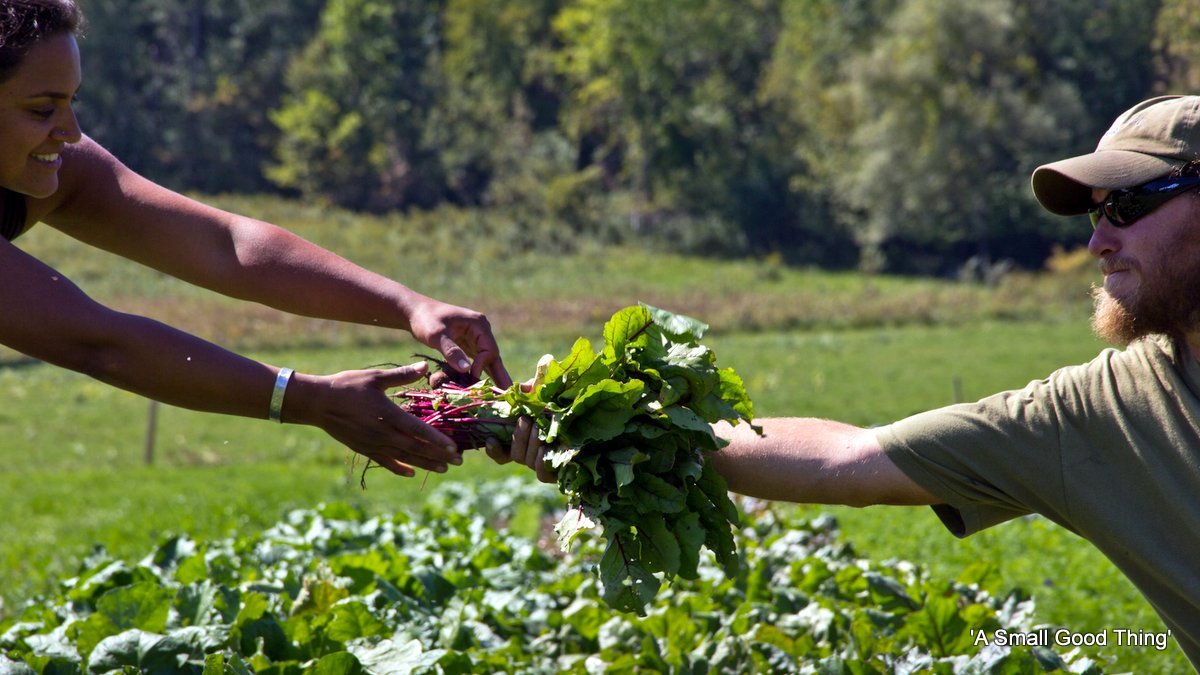
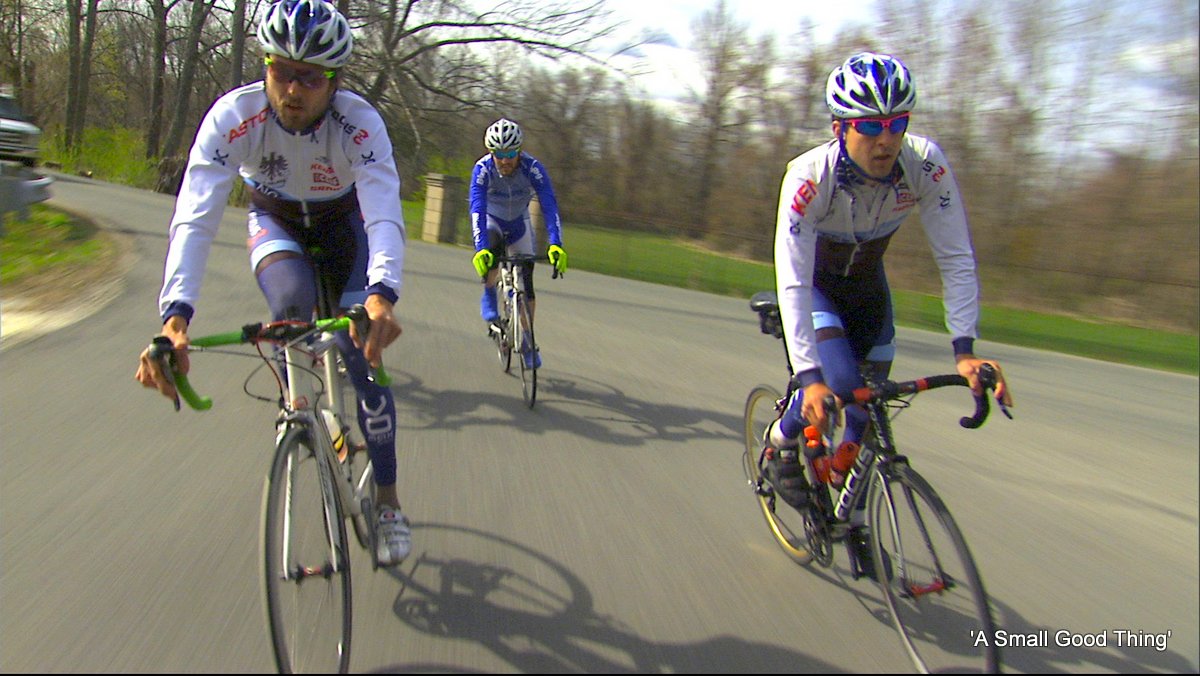
And it was through these community connections that she found the people who ended up in her film: former military man and actor turned yoga instructor Mark Gerow; Pittsfield community activist working with youth Shirley Edgerton; Jen and Pete Salinetti, successful landscapers turned self-sufficient farmers and community-builders; and bicyclist and Native American Tim Durrin, who strove to control his PTSD from his military service to become a social work student.
"None of these people are incredibly rich," Boll said. "That sounds so banal. Money does always bring happiness. It just doesn't. You think so. You think your life will be simpler, but instead you get different problems."
Boll says what each person in the film has done was find a community they could rely on, people they could count on to share their journey through life with — and with for they could do the same. To do this, each took a leap of faith from their old life in order to make change.
"Each of them have come to a point to say, 'I want something different,' " she said. "That requires a certain amount of admitting that you failed, or it requires being vulnerable. When you think you've got it all together and you don't tell anybody when you're not sure or you don't know or you're suffering, that's why your life doesn't really change for the better. A good life involves admitting you don't know what you don't know."
These are lessons that Boll has learned for herself, she says, and offers her film subjects as examples of how anyone can do the same. They don't lay out specific plans for self-optimization and happiness, but they do offer a general mindset that can bring people to a good life on their own terms, and to figure out what the parameters of that life would be with whatever pieces they work with.
"These are hard for most people to talk about, but without them, we don't have a real connection to ourselves and with each other," said Boll. "A good life means addressing and admitting the things that you often want to cover up and hide."
You can find out more about the film and watch the trailer here.
Tags: documentary, film,