image description
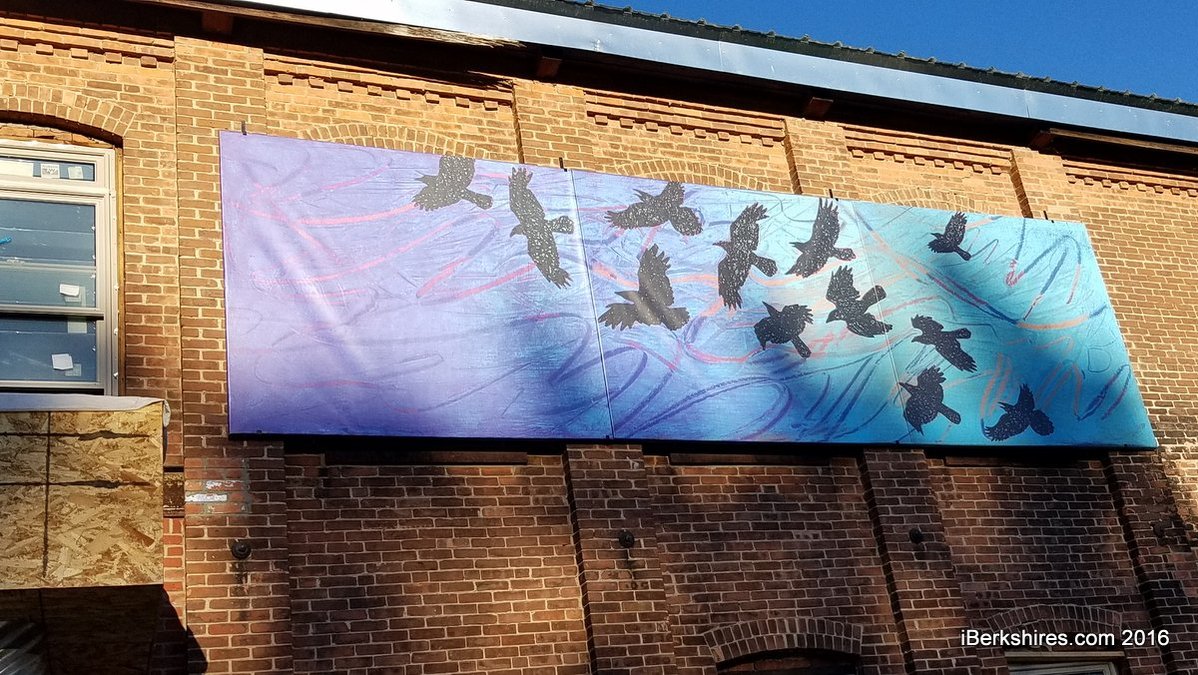
'Crows Local' at 13 1/2 Grove St. is the first Art on the Trail installation.
image description
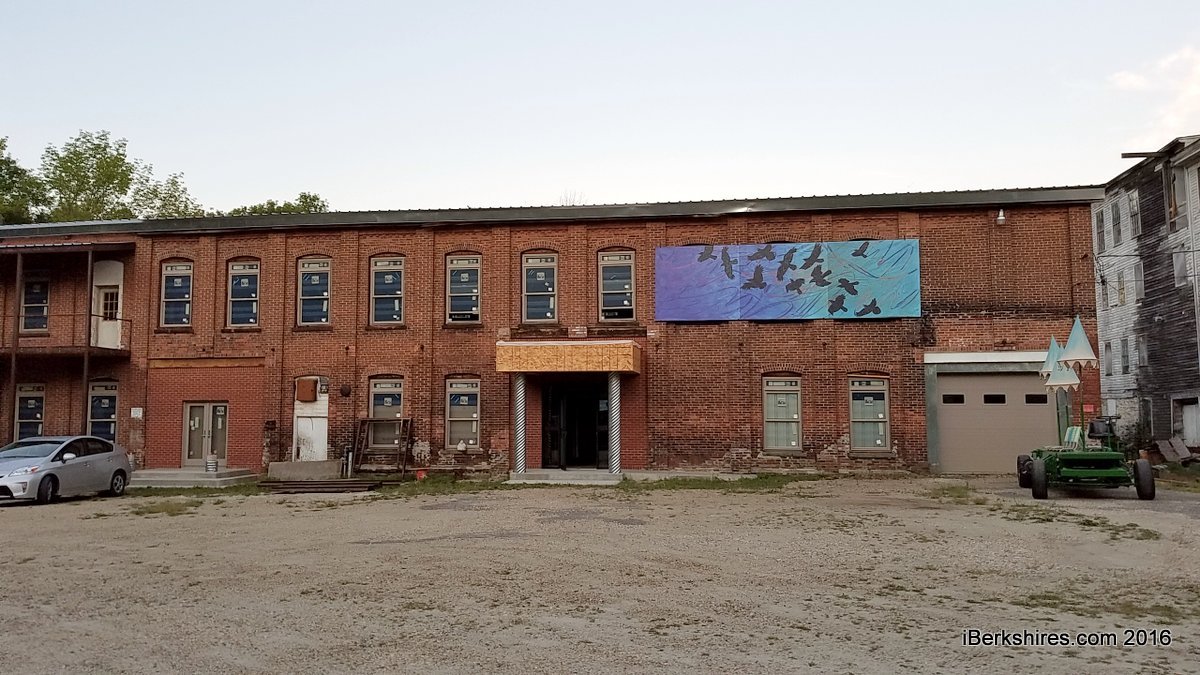
The mural is located on the second story of 13 1/2 Grove St., which is being renovated into work/live space.
image description
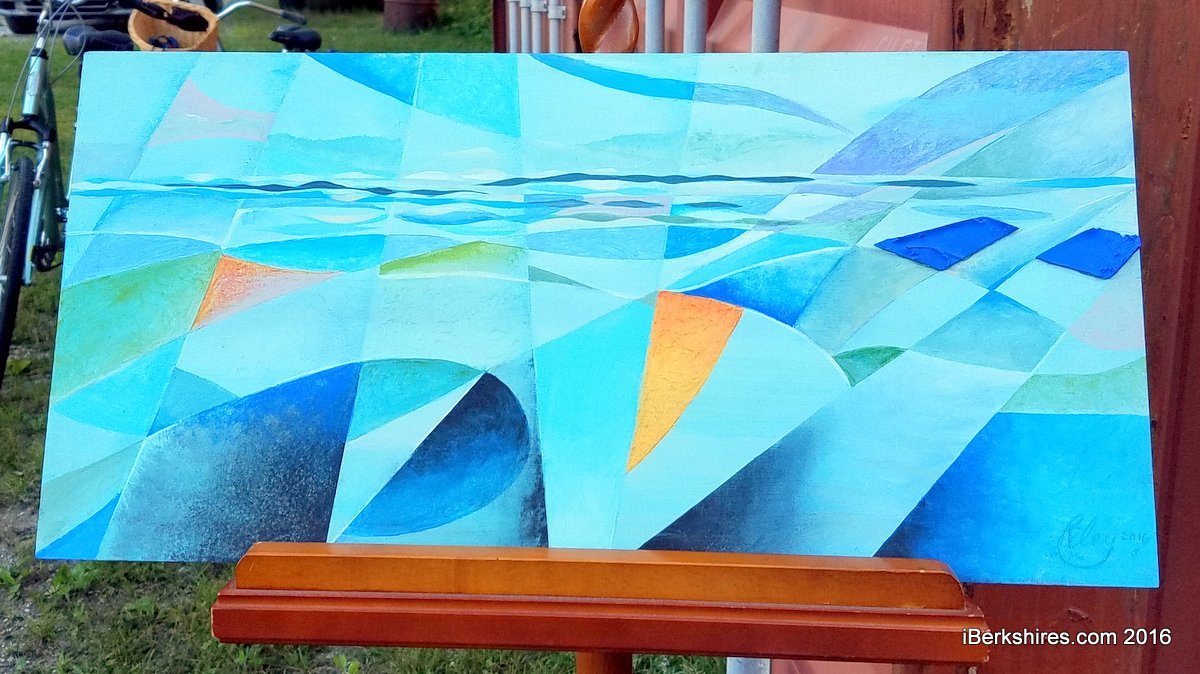
The second mural is an abstract piece for the treatment plant.
image description

Adams' Art on the Trail Initiative Unveils First Mural
By Tammy DanielsiBerkshires Staff
Print Story | Email Story

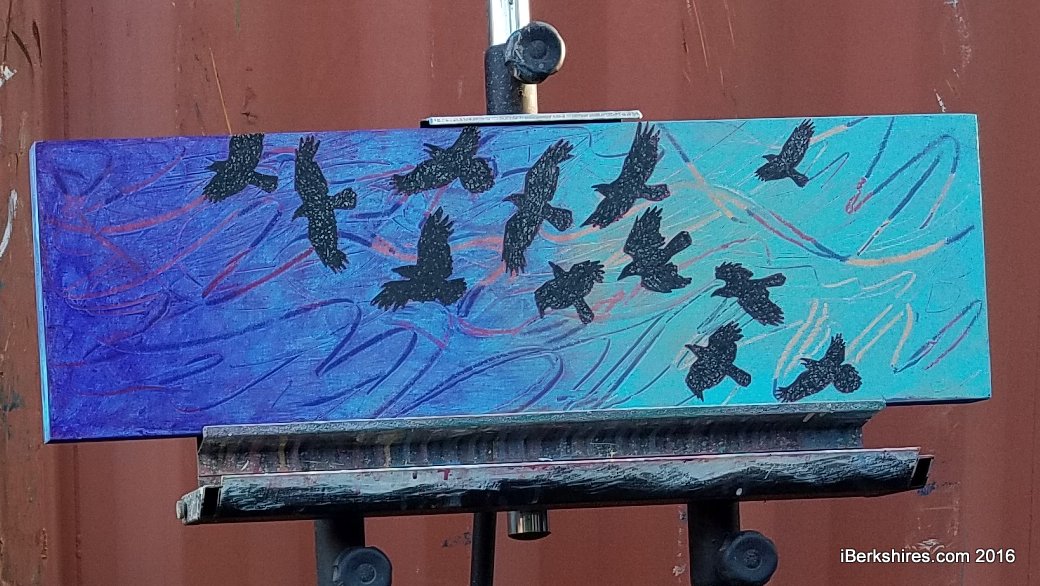
The original of 'Crows Local' on display at the opening reception.

ADAMS, Mass. — Walkers and bikers along the Ashuwillticook Rail Trail have a view of the first of what's hoped to be many art installations along its several miles.

"Crows Local," a murder of crows taking flight against a deepening sky, was unveiled on Friday evening at 13 1/2 Grove Art Works.

"This is one of the first experimental murals," said the artist, Patricia Fietta. "We wanted to try it out on our building first. But the next one is going to be at the water treatment plant in Adams."

The 24-by-7-foot triptych was blown up from a smaller work created by Fietta. The artworks building, a former mill at 13 1/2 Grove being renovated by Fietta and her husband, George Lemaitre, is tucked in behind the auto works on Grove Street and faces the trail.

The initiative is one of many efforts being made by the Adams Arts Advisory Board to stimulate creativity in the Mother Town. The board is also behind the pop-up window displays on Park Street, the recent Berkshire Mountain Faerie Festival and the upcoming Rising of the Corn Harvest Festival.

The idea for larger pieces was inspired by a smaller vinyl, removable installation placed on an empty Victory Street house last year to memorialize the street's World War II servicemen.

The crow mural was digitally printed on weather and UV-resistant vinyl and stretched on frames, making it both inexpensive and relatively simple to hang — although Fietta said it wasn't that easy to install the 8-foot long panels on the side of the two-story mill.

"It was something to hoist it up there," she said, adding that the use of a bucket truck had helped tremendously.

The large scale seems dwarfed by the 12,000-square-foot brick building but it's big enough to be easily seen from the rail trail.

Francie Anne Riley, of the advisory group, said the murals will be able to be moved around and switched out.


"Because they're not outrageously expensive to make, grants tend to be a good number for covering the cost," she said. Art on the Trail also hopes to add sculpture in the future. "That will be case by case along the trail because there's a lot of private land and we're working with the property owners."

The Art on the Trail initiative is being funded by a grant from the Cultural Council of Northern Berkshire; this installation was also supported by 13 1/2 Grove Art Works.

Fietta said there are specific sites already on the group's to-do list, including the back of the Topia Theater, the front of the Adams Visitors Center and the lawn along the Hoosic River off Park Street.

Next up is a 20-foot long by 10-foot high abstract water painting by Francie Ann Riley's husband, scenery designer William Riley. That one will hang on the east side of the waste-water treatment plant facing the Berkshire Scenic Railway. The rail trail will eventually parallel the track as it is extended to North Adams.  

As the sun set on Friday night, the mural changed as the slight droop from the sun heating up the vinyl tightened in the cooler evening. 

"What's interesting is that inside the building, you see the crows when the light shines through," Fietta said of the covered windows.

The century-old Krutiak mill is under reconstruction as a residence and workshop/studio, with a hoped for completion in 2017.

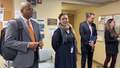
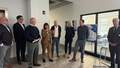
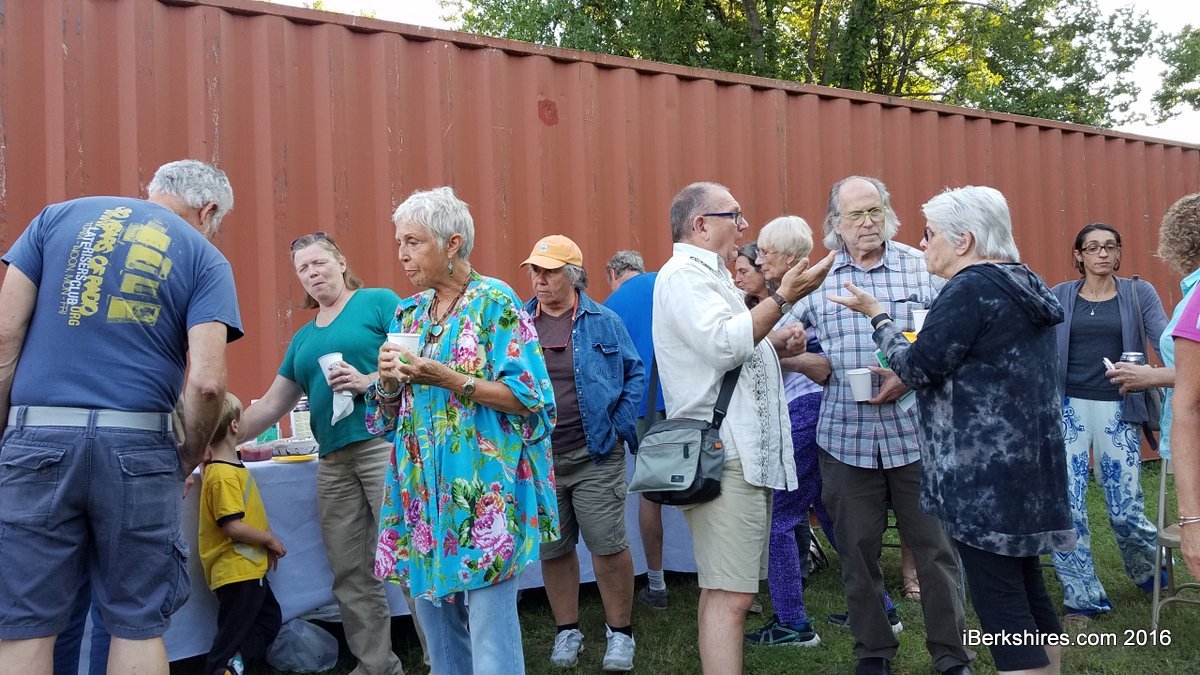
Friday's reception was attended by a number of local artists, enthusiasts and board members.

"We're thrilled at the opening of the first Art on the Trail project," said Town Administrator Tony Mazzucco. "We're looking forward to having more art along the trail in Adams and even art along the rail route ...

"We're just looking to cover the community in as much art as we can."


Tags: art installation,   arts advisory board,   Ashuwillticook Rail Trail,   reception,   
If you would like to contribute information on this article, contact us at info@iberkshires.com.

Cheshire Looks to AG's Office for Blighted Property Help

By Breanna SteeleiBerkshires Staff

CHESHIRE, Mass. — The Select Board heard a presentation last week from the state's Neighborhood Renewal Division program that could help rehabilitate two properties condemned by the Board of Health.

Janice Fahey, assistant attorney general for the division, explained program and what it means at last Tuesday's meeting.

"Our mission is to work with cities and towns in order to ensure safer neighborhoods by working with cities and towns to rehabilitate and bring them into compliance with the state sanitary code and to create safe, habitable homes," Fahey said.

At the March 17 meeting, Town Administrator Jennifer Morse said 200 School St. and 73 West Mountain Road were condemned by the Board of Health and a request was sent to the Attorney General's Office Division of Receivership Programs.

The program, active since 1995, has expanded to work with 169 municipal partners and 205 active properties, with 54 active cases in litigation. It has brought $714,000 into city and town coffers through tax and fee recoveries. The process involves identifying properties, conducting inspections, issuing orders to correct violations, and potentially appointing receivers if owners are uncooperative. 

Fahey said the division works with the local board of health to do a title search on who owns the property.

"If the owner is cooperative, then we will just work with them to bring the property up to the sanitary code. And it's uncooperative, we may file a receivership petition. So when first of all, who is a receiver? A receiver can be anyone who has knowledge and capacity to work with a property and bring it up to the sanitary code," she said.

Fahey said the cost to fix property cannot exceed the cost of its  market value as the receiver has to get paid.

"This isn't something that is going to be making the receiver rich. It's kind of going to be something that just basically cleans up the property, gets it rehabbed, gets it back on the tax rolls, and hopefully a family moves in, and there has to be the receiver, has to have funding. Sometimes there are grants that we'll talk about later as well, but in the end there, they have to have some type of ability to get loans or. Fund a project and get insurance as well."

After being appointed by the court, the receiver will do an inspection and create a budget and scope of work. Once property is brought up to standard sanitary code, they ask the court for authority to foreclose on the property to recover what they spent. In some cases, instead of foreclosure, there may be a fair market value sale approved by the court.

Once the property is sold either through auction or sale the town will get paid municipal fees and the unpaid property taxes, then the receiver will get paid.

Fahey said it takes a lot of work and showed pictures of some properties rehabilitated throught the program that she described as a team effort.

"That involves everyone. It involves the city and town. It involves the receiver, certainly, and it takes a lot of people to put this together, and the time range is pretty significant, from a couple of months to a couple of years," she said. 

View Full Story

More Adams Stories