Pittsfield Considering Major Changes to Curbside Trash Pickup
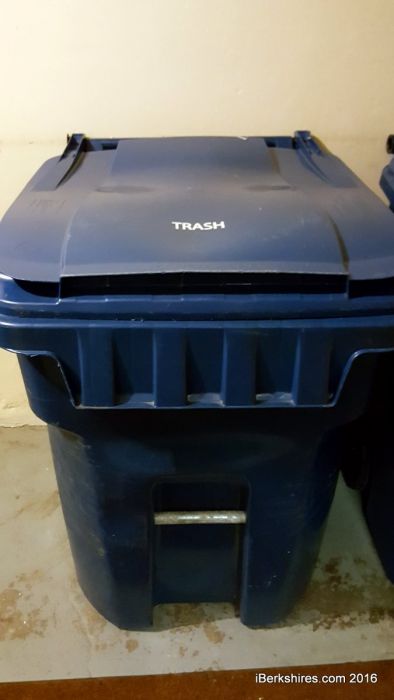
Residents would be given one tote for waste and one for recyclables.
Ward 3 Councilor Nicholas Caccamo has filed a petition to require the use of a toter system. Instead of piling up an unlimited amount of garbage on the side of the road, residents would be given two bins — one for recyclables and one for waste. Residents would be restricted to one bin full of each per week.
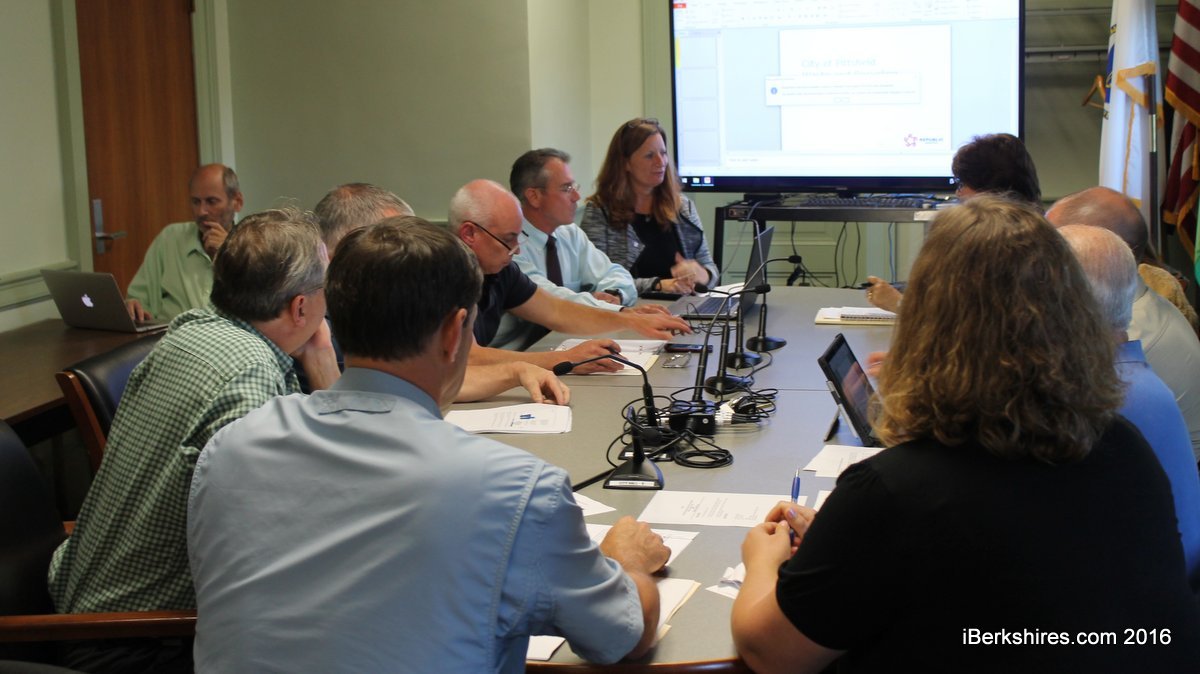
Republic Services, the city's contracted trash pickup operator, presented information about the system to the city's Resource Recovery Committee on Monday.
"It's going to be cleaner, it is going to be safer, it is more efficient," Deborah Bolesky, area sales manager for the company, said.
The concept is eyed to improve aesthetics, reduce health concerns, increase recycling rates, and ultimately save the city money.
"The intent of my proposal to move toward a two-toter system, which would be one toter for trash and one toter for recyclables, is that we could accomplish a number of things: Specifically, we could increase our recycling significantly around the entire city because limited trash removal would make residents, in order to meet that limit, recycle more. By doing both, two toters would be more than enough trash removal for a household. Certainly, there are health and beautification impacts," Caccamo said.
Dan Higgins, municipal services manager, estimated that the move would increase the amount the city overall recycles by 19 percent, or 2,800 tons per year. That would lead to a $174,000 savings in waste hauling, he said.
Bolesky said the most common practice is to provide residents with a 65-gallon bin for waste and a 95-gallon bin for recyclables. Those bins would be picked up by two separate trucks, being operated by a single person in each. Currently, there is a driver and often two other workers physically picking up the trash and throwing it into the back of the truck. That would be replaced by having the bins picked up with a hydraulic automated arms on the truck.
By doing that, not only will there be fewer workers needed — dropping overhead — but the physical labor of the workers would also be reduced.
"It just cut down on all of the physicality of it. The truck is doing all the work for you," said Tom Lennon, operations manager for the company's local office.
Bolesky continued to say the totes would create cleaner streets and a more uniform look — replacing the piles of garbage Caccamo says he sees often throughout the city with the current program.
"I think the system itself could use some retooling. My concerns are when residents literally dump bags of garbage on the sidewalk, which poses a health hazard and certainly an aesthetics hazard," Caccamo said. "Driving around the city, you see bags of garbage around and often animals will break into these bags. It makes the job harder for the contractors."
Higgins said some disadvantages with moving to the toter system include what would be an estimated $1.8 million upfront expenditure for the city to purchase the bins. He added that those bins can be linked to addresses, which would help enforcement of such things as residents putting the waste in the recycling bin.
Other disadvantages include a higher maintenance cost for the vehicles because of the hydraulic arms and a constant need for educating the public how the system works.
The idea is also coupled with a discussion on how to hand recyclables — whether than be a dual system or an all in one. Currently, recycle bins are made available from the city and the type of recyclables are picked up on an alternating basis — paper one week, plastic another.
Kimberly Olson, division sales manager, says now she sees in other people's trash bottles, cardboard, and soda cans, and says the easier way to encourage residents to recycle those is to make it easy.
"Another way to motivate recycling is by making it easier," she said.
The conversation isn't new. In 2009, a proposal was considered to make this same switch but was never passed. Director of Public Utilities Bruce Collingwood said this is the third time he's attempted to push the idea.
"This discussion to moving to a toter system is not a new one. We've had a couple iterations on this not only at this committee but at the City Council," said Director of Finance Matthew Kerwood, who sits on the committee, said.
The committee is going to pick through that proposal and return in two weeks to discuss it further. The committee was meeting for its first time in a number of years on Monday after being brought together by Mayor Linda Tyer to come up with recommendations on the city's trash pickup by Dec. 1.
.JPG)
Councilor Nicholas Caccamo put forward the petition to switch to the toter system.
"At this point, there are discussions that are happening, above me. We are cautiously optimistic," Collingwood said.
Collingwood says if the plant does close, the biggest impact the city would see is in the cost of transporting waste to another facility. Committee members said that additional burden could be somewhat offset by the savings seen through the toter system.
"We may find in our research that a toter system may play a role in how we solve the Covanta issue," said Rhonda Serre, who was picked to chair the committee.
While there is still a chance Covanta stays open, Serre said, "our role is not to cross our fingers and hope." The committee has just two months to come up with recommendations.
"There has been a fair amount of work done on this over the years, it just hasn't been able to cross the finish line. We're not building something from scratch," Kerwood said.
Another option was to look at a pay-as-you-throw program. That would have the city selling bags for trash disposal, which also provides the same incentive for recycling. Higgins said that program would reduce waste by an estimated 30 percent or by 4,459 tons, saving $270,000 a year. Plus, the city would see revenue from the sale of bags.
Collingwood said the last time that option was looked at, it was decided to charge enough for the bags to cover the cost of disposing of the trash.
Kerwood said whatever recommendations the committee decides to make, he hopes it would all be ready in time for when he starts to craft the fiscal 2018 budget in January.
"The mayor is looking for recommendations from this committee on this system and opportunities for cost reduction and revenue enhancement we could think about as we develop a FY18 budget," Kerwood said.
Tags: recycling, trash,