Village Ambulance Launches Fund Drive at Time of Critical Need
.JPG)
The nonprofit has started a non-emergency van service as way to help support its mission.
Because of changing trends in its industry, VAS is operating in the red and dipping into its reserves. It hopes the fund drive it kicks off this week will help make for a healthier bottom line.
"I don't think a lot of people in town realize that we are not subsidized by any town organization or any other organization," explained Dr. Erwin Stuebner, the president of the board of directors. "We rely entirely on our insurance reimbursements and some private pay and town donations, and we have not been able to impress upon the towns enough that is very important."
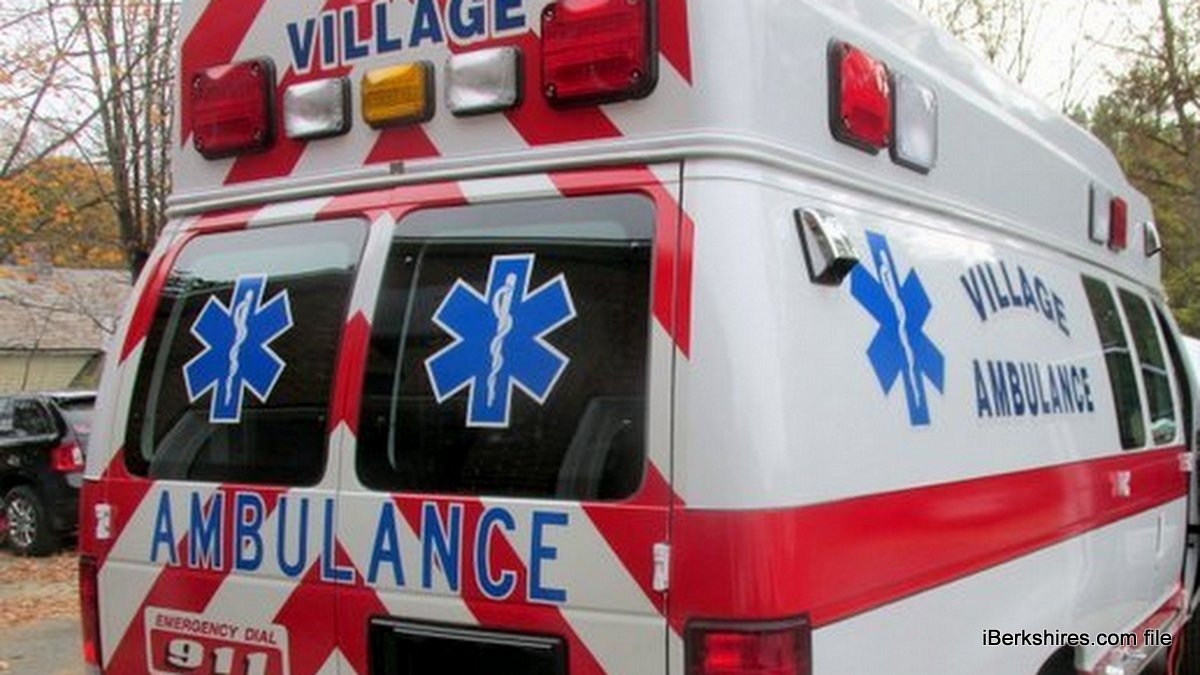
Village Ambulance serves the towns of Williamstown, Hancock and New Ashford from its headquarters on Water Street in Williamstown. Stuebner and first-year Executive Director Michael Witkowski sat down this week to talk about the fund-raising letter that will hit residents' mailboxes this week.
It is the first time in a couple of years that VAS has made a concerted effort to ask for donations, and it comes at a critical time. The problem is that insurance companies have shifted more of the financial burden for ambulance transport to patients, who are often unaware or unable to pay their increased share.
"The Affordable Care Act is killing us because all of the deductible plans hit this year," Witkowski said. "Everything went to full-scale deductibles. Every one of those plans has a deductible, and we fall under the deductible. We're not a doctor's office or a 'well visit' type of thing. Every plan has us under deductibles and copayments.
"Unfortunately, whether people understood it or knew it, we're not seeing the deductibles and copayments returned. We're billing them, but we're not seeing them back."
Stuebner said he suspects the failure to pay is a result of people not understanding the new reality of their plans.
"People don't realize about the deductibles, and we hate to go after our citizens for this," he said. "We'll approach them and remind them, but we certainly don't want to go to collections agencies and things like that.
"I think they just don't realize. I don't think it's intentional by any means."
At the same time that pressure hit, the ambulance industry is being squeezed by the federal government.
"Medicare's reimbursement is down 2.5 percent," Witkowski said. "And the General Accounting Office already acknowledged we were being compensated between 15 and 30 percent below our operating costs, depending on where you are geographically.
"That's why there have always been these 'fix bills.' The government has had to attack all these things to make Medicare pay 'rule mileage' and things like that — to try to close that gap so it's not so out of balance. But all those bills are set to sunset. They've already said we're not reimbursed the way we should be, and now those bills are sunsetting.
"It's a never-ending battle."
It is a battle that has seen some casualties already.
Stuebner said other non-profit, locally run services like VAS have been closing up shop and relying on other towns for coverage or selling out to for-profit ambulance companies.
"Some are regionalizing, and that might be an answer up here, but right now the politics of doing that present some pretty big hurdles," he said. "Consolidation is something possible in the future, but it's certainly nothing on the table right now."
What is on the table is economizing. Witkowski said VAS is running as lean as he can make it, and that includes reducing staff hours.
The service is hoping that the recently expanded non-emergency transport service will help to supplement the emergency side of the operation.
"The [Williams College] portion of [the non-EMT service] is completely subsidized, so there is no outlay for this organization," Witkowski said. "On the community side, we have, in the last six months, seen 100 percent growth in that. With that, we're almost break-even.
"It's headed in that direction [of turning a profit], but it's not there yet."
And the non-EMT service has been subject to economizing just like the rest of the VAS operation. Briefly, the service was renting property on State Road (Route 2) in North Adams to house the non-EMT vans, but it decided to move them all back to Williamstown — both at the cramped lot it shares with the Williamstown Fire District and to the town-owned former Town Garage site across Water Street.
As VAS makes its appeal to the communities it serves, it is worth noting that the area's largest employer already provides financial support to the service.
"The college has been a good partner," Stuebner said. "For our non-emergency van service, we have a nice contract with them. They give us a stipend every year [for emergency service]. And they allow us to be in this building rent free.
"We may, at some point, want to approach them for a larger subsidy, but they've been such good partners up to now, we don't want to take advantage of them."
And Village Ambulance does not want to cut back on any of the services it provides to the community, like first-aid training, blood pressure screening or child safety seat checks. Nor does it want to go the collection agency route or scare off any potential patients who may not be able to pay.
"We don't want someone on a fixed income who can't afford a ride to stop calling us," Stuebner said. "We're going to supply that service no matter what."
Tags: ambulance service, EMT, fundraising,