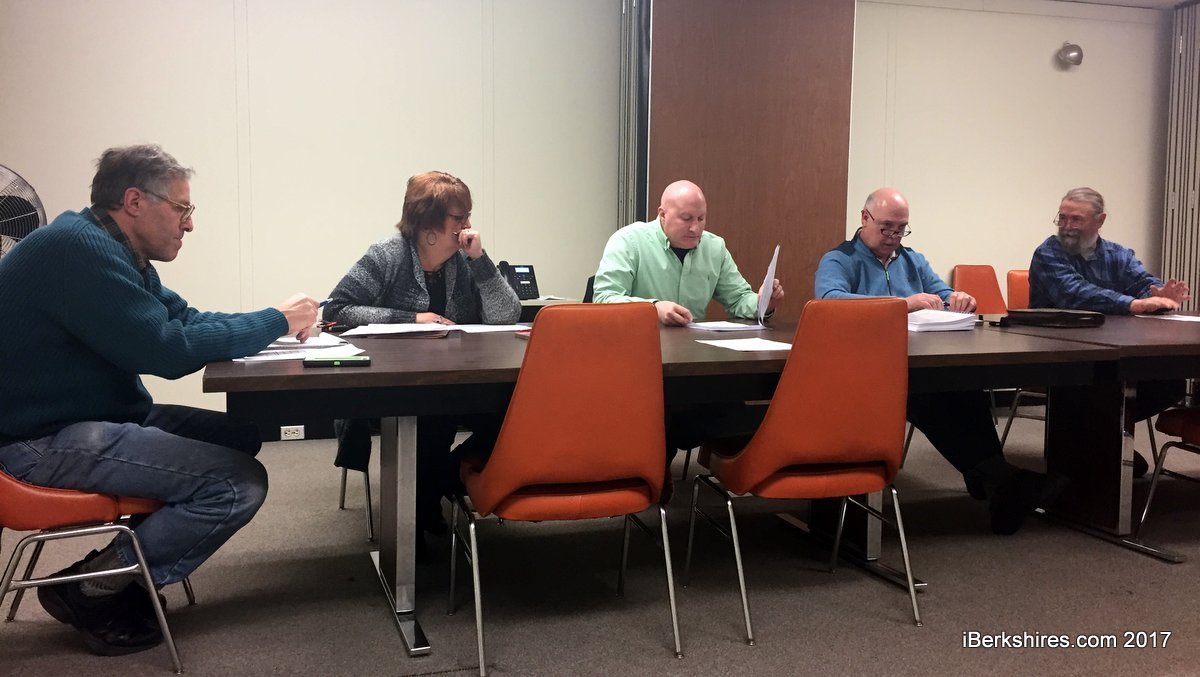
NORTH ADAMS, Mass. — The Airport Commission has voted to move all glider and tow-plane activity to the south side of the runway.
The commissioners unanimously voted on the issue Tuesday even though they had concerns about letting the tow plane operate in an area designated for ultralight aircraft.
"The whole point was to separate the planes by their speed and now you put the tow plane in with the gliders," Commissioner Trevor Gilman said. "Just because the glider pilots are familiar with it doesn’t make it any less of an obstacle in the pattern because it is still a 100-naught airplane on that side."
Initially, Gilman requested that just glider activity was just moved to the south side of the airport. He said the FAA cleared the change assuming they properly charted the operation.
He said as long as the gliders carry a handheld radio to contact other planes there should be no confusion with flight patterns.
Pilot Michael Milazzo suggested that all glider operation be set to the south side of the airport, including the tow plane for safety reasons.
"The tow plan has a tow rope and I have had instances where a faster plane is coming in and I have 200 feet rope dangling from the end of my plane," he said. "Now you don’t only have a plane that is 8 feet tall … but now you have 200 feet of rope hanging out there like fishing line."
He said tow planes always know where the gliders are and it would be safer to keep them with the gliders.
He added it would also help with noise abatement.
Gilman noted that the FAA were ok with glider operations on one side of the airport but he didn’t know how they would feel about throwing a tow plane into the mix. He also feared having a tow plane in the area would confuse transient pilots.
Gilman said he would be willing to bend to the request if the glider pilots followed the rules. He noted that pilots often line up their gliders on the edge of the runway in the safe zone for prepping.
"That is way inside the safety zone for planning traffic," he said. "If we have a King Air come into land and there are gliders on the edge they are literally within the wingspan. They need to be in the designated area."
Airport Manager Bill Greenwald added that the glider pilots should not have more than one vehicle in the infield.
Greenwald, who was also hesitant to allow the tow plane in, said if it doesn’t work they can revert to past practices.
Since there is no glider activity this time of year, commission members will meet with gliders and work out an agreement.
If you would like to contribute information on this article, contact us at info@iberkshires.com.
Your Comments
iBerkshires.com welcomes critical, respectful dialogue. Name-calling, personal attacks, libel, slander or foul language is not allowed. All comments are reviewed before posting and will be deleted or edited as necessary.
No Comments
BAAMS Students Compose Music Inspired By Clark Art
By Jack GuerinoiBerkshires Staff
BAAMS students view 'West Point, Prout's Neck' at the Clark Art. The painting was an inspiration point for creating music.
NORTH ADAMS, Mass. — The Berkshires' Academy for Advanced Musical Studies (BAAMS) students found new inspiration at the Clark Art Institute through the "SEEING SOUND/HEARING ART" initiative, utilizing visual art as a springboard for young musicians to develop original compositions.
On Saturday, Dec. 6, museum faculty mentors guided BAAMS student musicians, ages 10 to 16, through the Williamstown museum, inviting students to respond directly to the artwork and the building itself.
"As they moved through the museum, students were invited to respond to paintings, sculptures, and the architecture itself — jotting notes, sketching, singing melodic ideas, and writing phrases that could become lyrics," BAAMS Director of Communications Jane Forrestal said. "These impressions became the foundation for new musical works created back in our BAAMS studios, transforming visual experiences into sound."
BAAMS founder and Creative Director Richard Boulger said this project was specifically designed to develop skills for young composers, requiring students to articulate emotional and intellectual responses to art, find musical equivalents for visual experiences, and collaborate in translating shared observations into cohesive compositions.
"Rather than starting with a musical concept or technique, students begin with visual and spatial experiences — color, form, light, the stories told in paintings, the feeling of moving through architectural space," said Boulger. "This cross-pollination between art forms pushes our students to think differently about how they translate emotion and observations, and experiences, into music."
This is a new program and represents a new partnership between BAAMS and the Clark.
"This partnership grew naturally from BAAMS' commitment to helping young musicians engage deeply with their community and find inspiration beyond the practice room. The Clark's world-class collection and their proven dedication to arts education made them an ideal partner," Boulger said. "We approached them with the idea of using their galleries as a creative laboratory for our students, and they were wonderfully receptive to supporting this kind of interdisciplinary exploration."
Nearly a year of study and community input about the deteriorating Veterans Memorial Bridge has resulted in one recommendation: Take it down. click for more
The new thrift and consignment shop on Marshall Street is a little bit "Punky" with an eclectic mix of shiny, vintage and eccentric curated items. click for more
Federal pandemic funds made available during the Biden administration were critical to ensuring the continuation of Berkshire East, a major employer in the hilltowns. click for more