Fake News Not New But Can Be Combatted: Panel
WILLIAMSTOWN, Mass. — This article is not fake news.
How do you know? Well, for one, it's appearing in a reputable publication. Two, there's a byline at the top of the story. Three, there are actual real people quoted within the story.
Those are just three ways media consumers can judge the veracity of something they see online, according to a panel of media and education professors. The panel participated in a forum on Monday evening called "Fact or Fabrication in Today's News," jointly sponsored by the North Adams Public Library and the Milne Public Library in Williamstown.
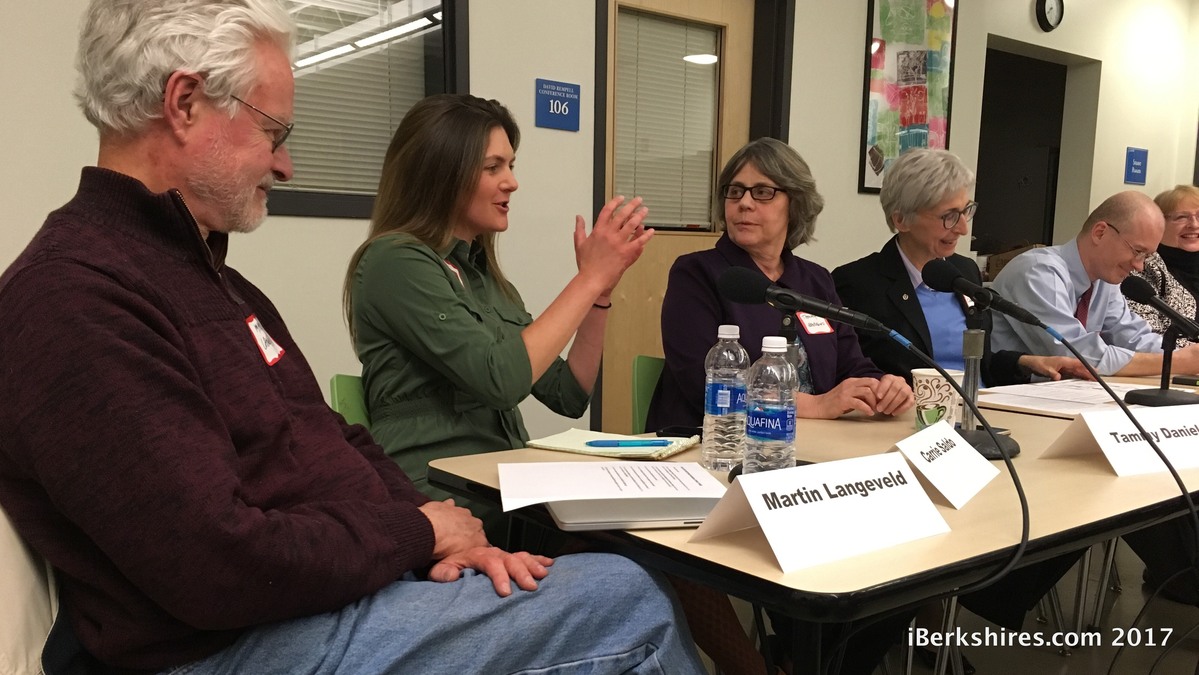
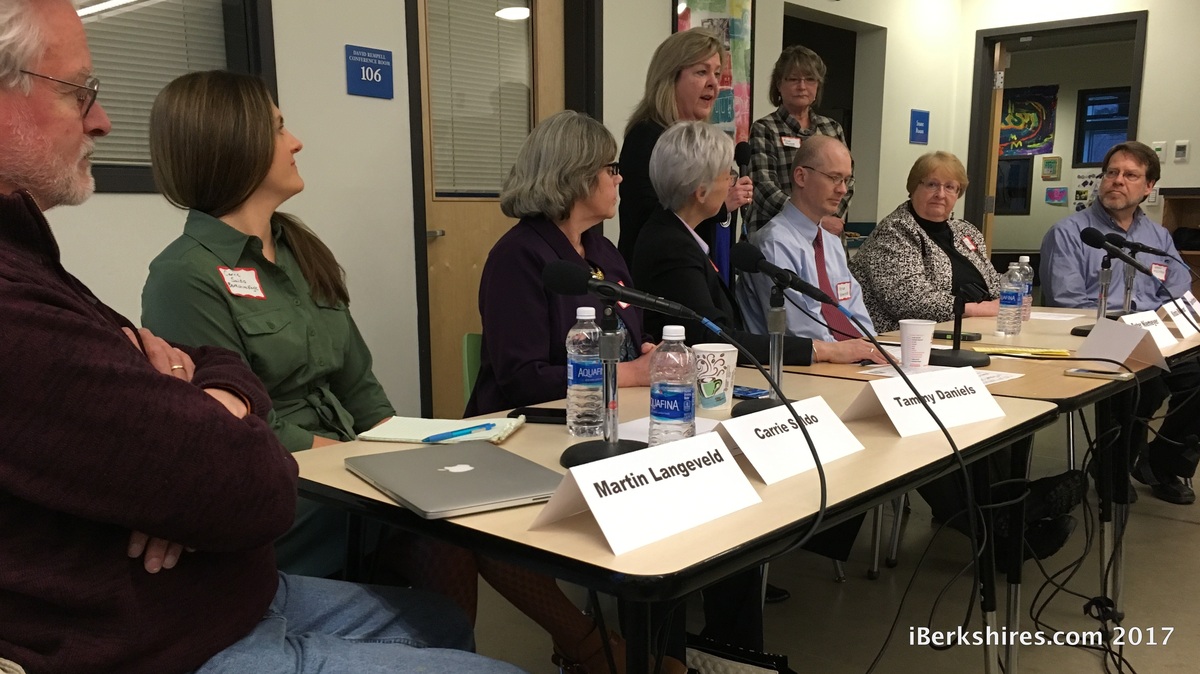
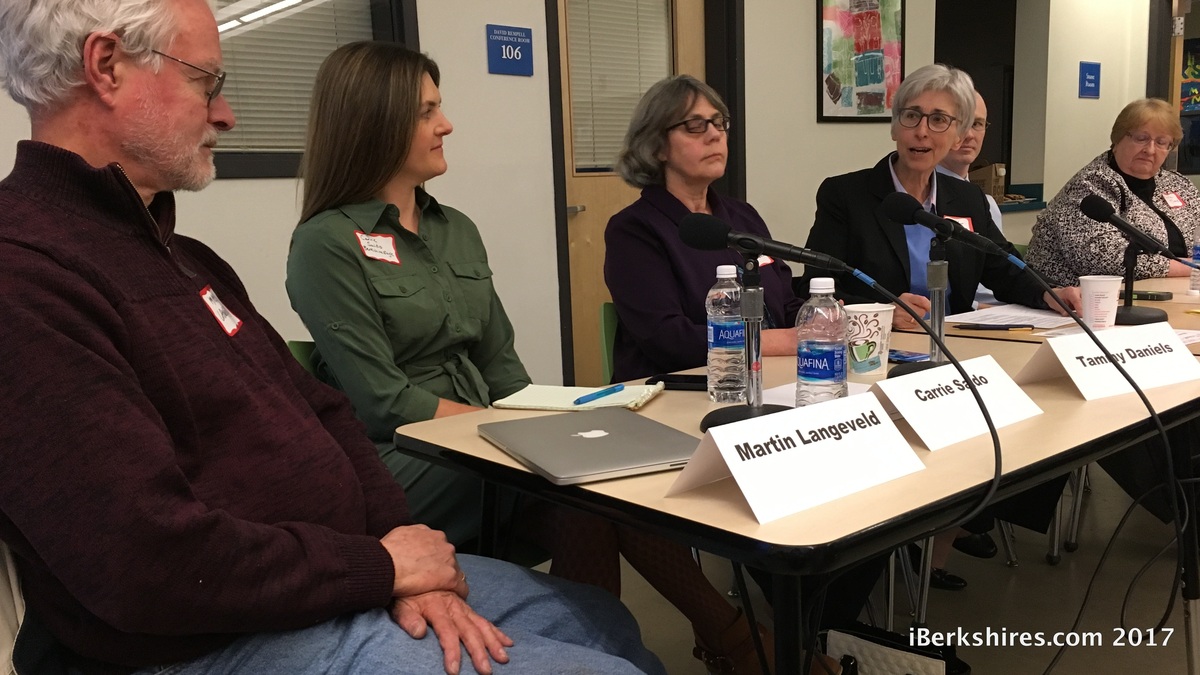
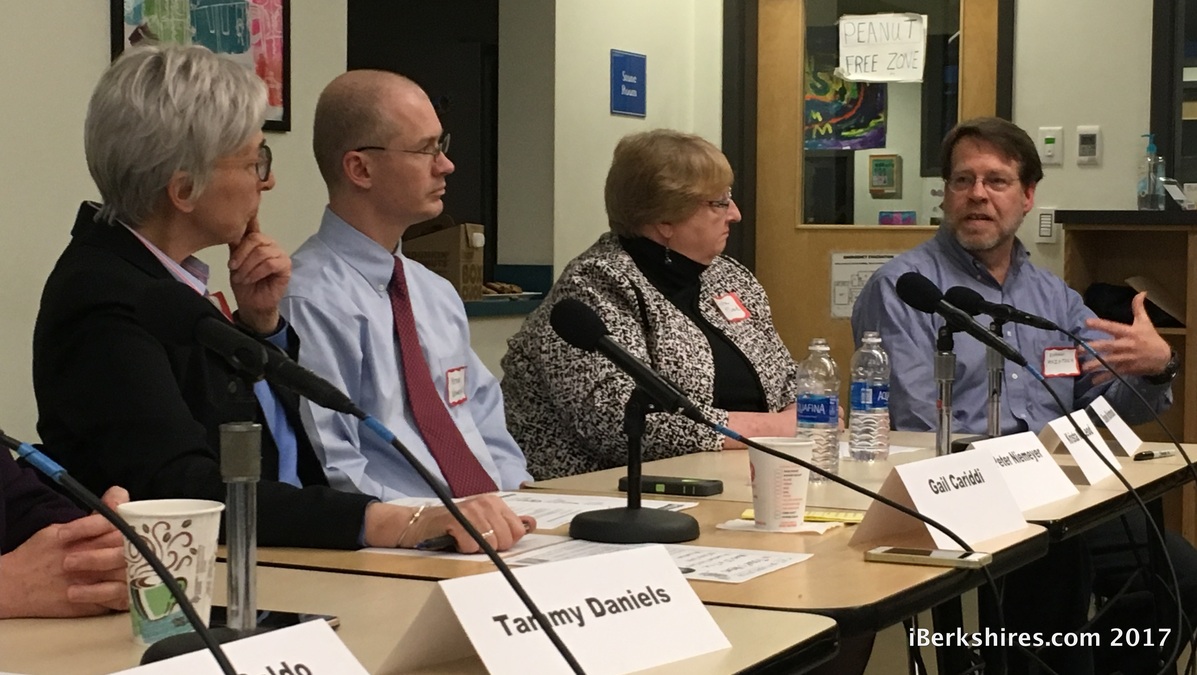
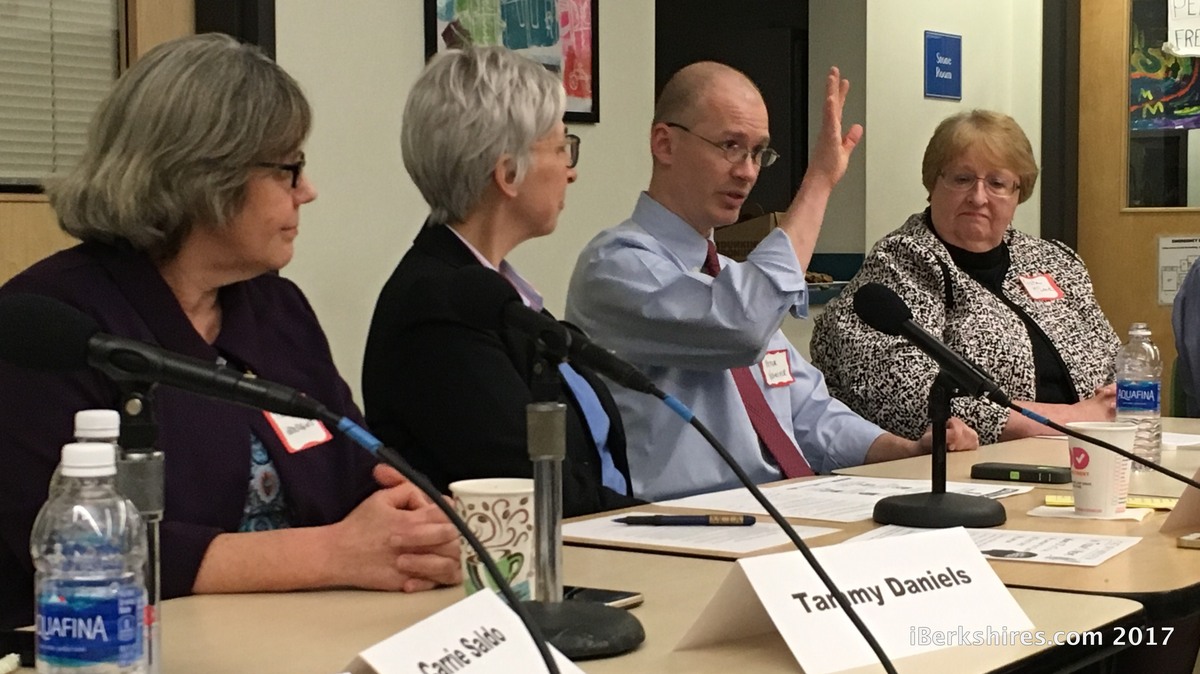
State Rep. Gailanne Cariddi moderated the panel, which included Tammy Daniels, managing editor of iBerkshires.com; Carrie Saldo, a Berkshire Eagle news reporter with a background in radio and television; Martin Langeveld, former publisher of The Eagle and The Transcript, who comments on the future of media in his blog "News After Newspapers"; Shawn McIntosh, a former journalist who teaches English and communications at the Massachusetts College of Liberal Arts and is the primary adviser to The Beacon student newspaper; Peter Niemeyer, history teacher at Mount Greylock Regional School and adviser to the Mount Greylock Echo student newspaper; and Krista McLeod, director of the Nevins Memorial Library in Methuen and a member of the Massachusetts Library Association Intellectual Freedom Committee.
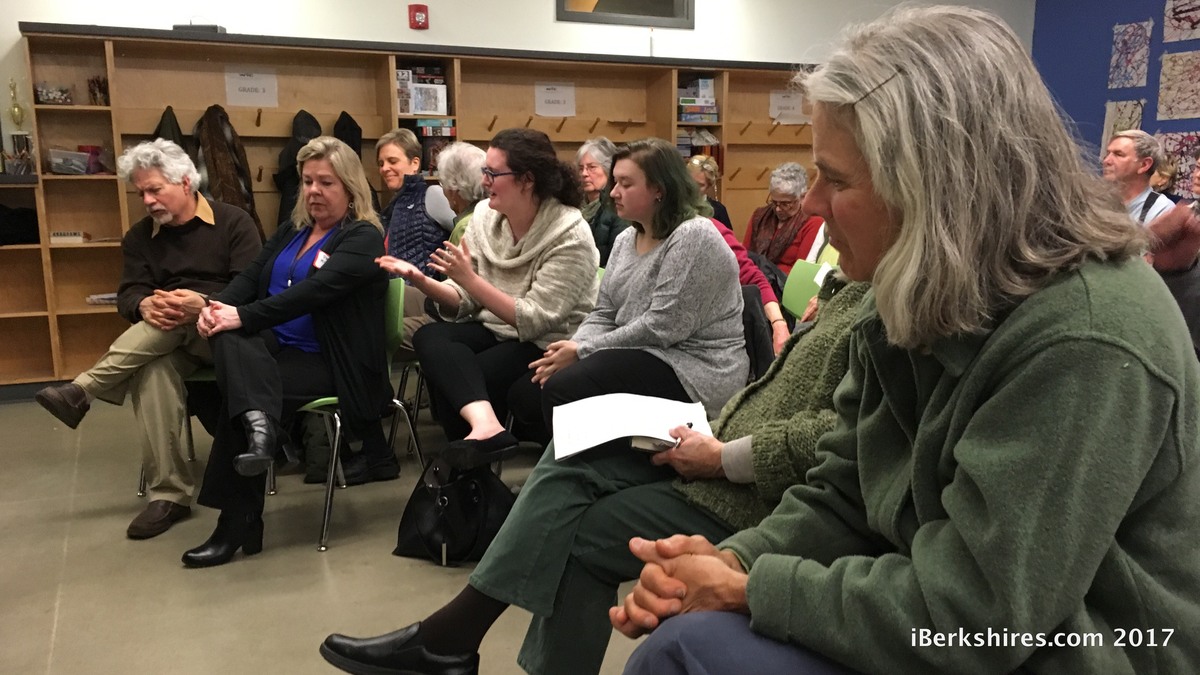
The forum was intended to be educational, not partisan, and thus the panel avoided wading too much into the political atmosphere that has sparked this most recent interest in what has been dubbed "fake news." Of course, fake news itself is not a particularly new phenomenon, history teacher Niemeyer told the audience of about 50 people at the Williamstown Youth Center.
Niemeyer called himself the "optimist" of the group and did not see a terrible crisis resulting from the increased concern over fake news, which he likened to the "yellow journalism" of the late 1800s as well as the subjective media that existed during the founding of our democracy. In comments at the beginning and the end of the forum, he said he could see the positives of the current atmosphere.
"The fact that everyone is freaking out is excellent," he said when answering the first question about what exactly constitutes fake news. Later, he added, "This is not a crisis. This is people waking up. … There might be a really heavy dose of democracy coming out of it."
The panelists mostly agreed that the rise of the Internet, particularly social media sites likes Facebook and Twitter that allow stories to be shared very quickly, as well as the 24-hour cable news cycle, have changed the media landscape. As recently as 50 years ago, most people consumed media diets made up of a nightly news program and one local daily newspaper.
"We knew where our news was coming from," Daniels said. "You trusted these people … to give you the truth."
Now, there are multiple media outlets spread across multiple platforms, and the traditional role of journalism gatekeepers who curated the news has been replaced.
"You're seeing the same story but talked about in very different ways," Saldo said.
"Anybody can share any news with anyone," Langeveld added. "Anybody can manufacture any news and share it with anyone."
Niemeyer again countered the idea that this is a new phenomenon, insisting media consumers "have to adjust to the tools" we have, which include not only multiple streams of news, some from questionable sources, but also multiple ways to discover if something is real or fake.
"A lot has changed because we're trying to drink from a fire hose," he said, adding later in a discussion about Facebook's role in the spread of fake news that while he uses Facebook he "loathes" it.
"Is is absolutely an echo chamber," he said, adding that he regularly tries to fool the algorithms of what posts to show to what people by deliberately opening up articles that differ from what he might normally want to read. And if something doesn't seem true to him? "I go to one of four or five newspapers. I look to the Times, the Wall Street Journal. One of the big names has to run the story or else I don't believe it's true."
But that kind of active approach to verifying news might not work for everyone. McIntosh cited a study that indicated people are more likely to trust news depending on who it came from than the media brand itself.
"If it came from a friend, they were much less critical of it," he said.
McLeod, the librarian, said she wasn't worried about the panel, or even the audience, which was obviously drawn to the forum by an interest in becoming more educated in the topic. It's the lady at church or the man in the supermarket she worries about.
"How are we going to educate the general public … going forward about what to look for?" she asked.
That question can be addressed by trying to educate the next generation of media consumers, and studies have suggested that even waiting until high school is too late. McIntosh cited a study from SUNY-Stonybrook about teaching media literacy that suggested education has to happen early and often.
"It has to happen regularly," he said.
Niemeyer said he is frequently asked by parents what the schools are doing to teach kids to tell the difference between real and fake news, and he said he always tells the parents that they themselves need to practice the behavior they want to teach their own kids.
"It's the grownups often who are modeling this," he said, adding that his more media-savvy students tend to come from household where their parents watch or read multiple sources of news opposed to getting their information from just one source.
In addition, McLeod mentioned a Pinterest site that includes activities to help educate people in a fun way about fake news, and several panelists mentioned Wikipedia, which has grown to be considered a fast-moving, up-to-date site of verifiable facts where mistakes are corrected almost immediately, and fact-checking sites like Snopes and factcheck.org.
"If you want to educate yourself and get out of your echo chamber, there are ways to do that," McLeod said.
McLeod also championed an old-fashioned way of expanding your horizons: talk to actual people, even people who don't think like you do.
"My concern is that we're not talking to each other," she said, saying that with all the talk about Facebook algorithms she believes it's important to keep a kind of "human algorithm" as well. "We have to keep the human touch in our media and in our education efforts."
Daniels, a longtime journalist, said she simply recommends people using the "five-second rule" in analyzing news.
"Sometimes you just gotta step back and say there's something wrong here," she said, adding that she believes all journalism has bias but that a bias isn't necessarily a bad thins. As long as people are aware there is a bias, they can read one source one one side and another source on another side and form their own opinion. "Somewhere in the middle, you're going to get some truth."
And that leads to perhaps a concern bigger than just a single fake news story here or there: the idea that different sites go beyond just having a slant to actively pushing a particularly narrative.
"It should be easy to tell the difference between truth and opinion," Langeveld said - and that tends to be true on legitimate sites. Those that push a narrative are often harder to discern, giving the example of "news" sites that claim that the 9/11 terrorist attacks were an inside job or the more recent "Pizzagate" controversy. "They're not pushing one fake news story at a time. They're pushing a narrative. … I know people who are totally media literate … but they have bought into that narrative because it is internally consistent.
"All of this is serving to polarize us more and more," he said later in response to a comment by a member of the audience. "How to break out of that is really the challenge."
Tags: news media,