National Advocacy Group Weighs in on Mascot Ban Proposal
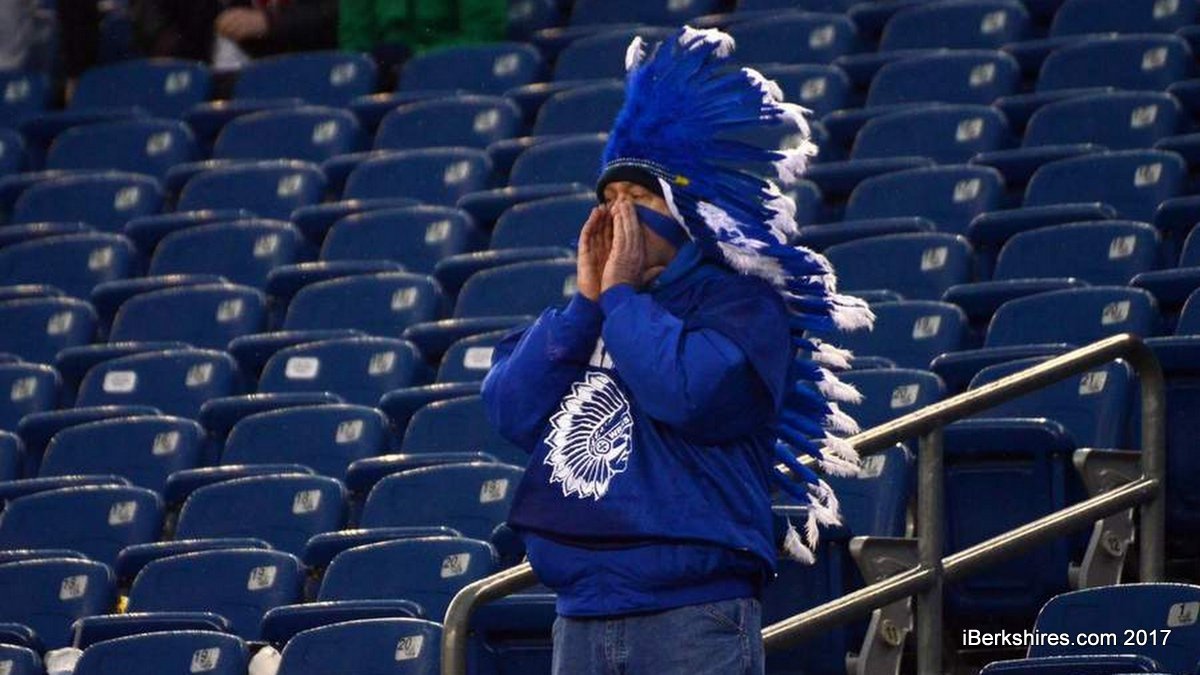
PITTSFIELD, Mass. — Even as the Turners Falls Indians softball team, Grafton Memorial Indians boys lacrosse team and Taconic Braves baseball team vie for state championships on Saturday, there is a move afoot in Boston to make sure that those teams never take the field again … at least, not with those nicknames.
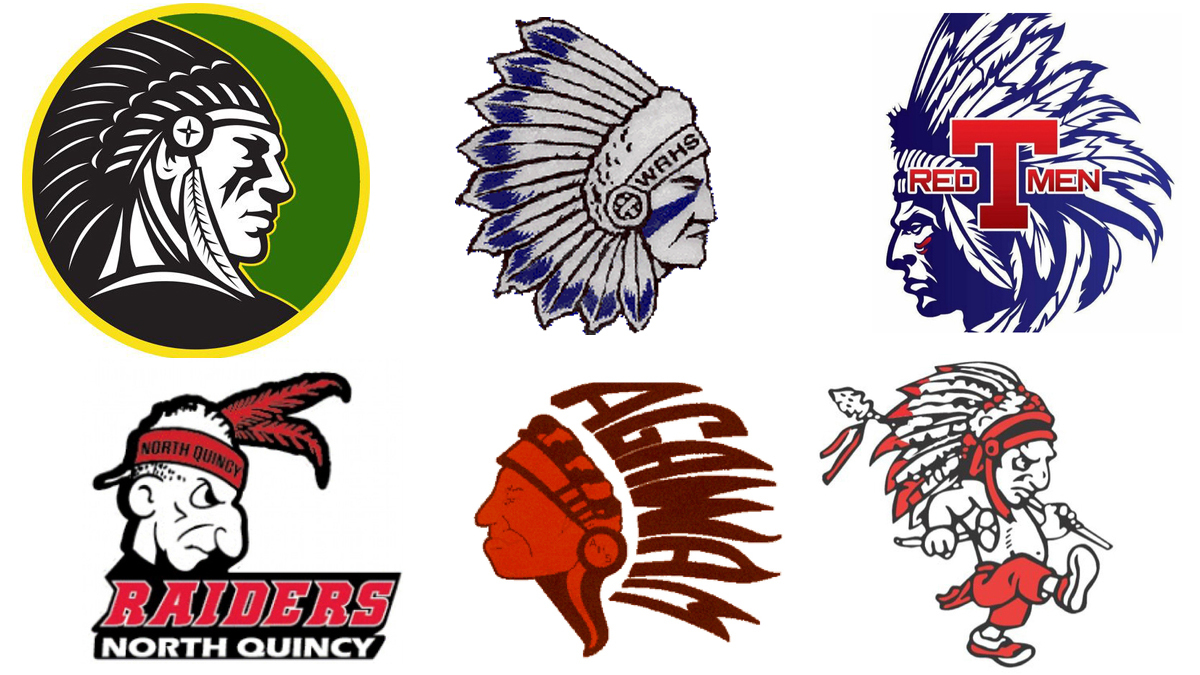
A longtime national discussion about the appropriateness of Native American-themed nicknames and mascots has reverberated this spring in the Bay State, where a bill on Beacon Hill would prohibit "the use of any Native American mascot by a public school in the Commonwealth."
The Pittsfield School Committee is considering taking action at the local level no matter what happens in Boston, and the reaction on social media has been swift and severe to the notion.
Comments on a June 15 iBerkshires.com story have been running largely in opposition to the idea of ditching the "Braves" mascot at the Pittsfield high school. Several of the commenters have contended that the name honors Native Americans and have suggested that the effort to remove the moniker is driven by "politically correct" activists without ties to the Native American community.
That would be news to Joel Barkin, who is a spokesperson for Change the Mascot, a non-profit closely allied with the National Congress of American Indians.
Barkin said Thursday afternoon that while there is a difference between terms like "Braves," "Warriors" and a "dictionary-defined slur" like the nickname of the NFL's Washington, D.C., franchise, the bottom line is that any such nickname demeans and marginalizes people of Native American descent.
"I think what many school districts around the country have have done is say: First and foremost, it starts with, What does the public health research show?' " Barkin said. "The American Psychiatric Society, the American Sociological Association and others have said that these types of mascots cause harm to children's self-identity and self-perception. There has been decades of social science research on this.
"The question becomes: Is it a appropriate for a state to spend taxpayer dollars on something that the very same institutions that determine the curricula these schools teach say does great harm to children?
"That's a pretty basic question."
So while the NCAI, founded in 1944, may get its biggest headlines when it discusses high-profile cases like Washington's NFL team or Atlanta's and Cleveland's Major League Baseball teams, some of its biggest success have come among high schools and colleges, including North Adams' Massachusetts College of Liberal Arts, Stanford University and Dartmouth College. Earlier this year, the school committee in Montague decided to drop the "Indians" nickname from Turners Falls, a move that prompted a non-binding May resolution in which voters preferred to keep the nickname by a ratio of 3-to-1, according to media reports.
"It's all legacy and attachment," Barkin said of the defenders of "traditional" nicknames. "Often what happens, having worked on this issue a long time, is people say to themselves, 'Well, I'm not using this offensively,' and 'I look at this as a positive.' And because of that, they think everyone should look at it that way. But it's not the aggrieved party who is saying that.
"If we know there's even the slightest bit of psychic damage that this is causing, why would we do it?"
The NCAI's website puts it this way:
"Specifically, rather than honoring Native peoples, these caricatures and stereotypes are harmful, perpetuate negative stereotypes of America's first peoples, and contribute to a disregard for the personhood of Native peoples," the site reads in part.
"As documented in a comprehensive review of decades of social science research, derogatory 'Indian' sports mascots have serious psychological, social and cultural consequences for Native Americans, especially Native youth."
Berkshire County could play a role in whether the Massachusetts mascot bill advances.
State Rep. William "Smitty" Pignatelli is one of 17 members of Beacon Hill's Joint Committee on Education, where the bill currently resides.
The Lenox Democrat said this week that he does not know whether the committee will vote to recommend it to the full Legislature this session or refer it for further study, a move that could push it into a subsequent session.
Pignatelli also indicated that while he finds some of the targeted mascots and nicknames offensive, he would prefer to seem them dealt with at the local level.
"The testimony was very powerful on both sides of the issue," Pignatelli said of a June 6 hearing held by the Joint Committee. "There are some names of these mascots that I personally believe are very offensive. Do you do a statewide ban or try to generate it very locally? I'm a local guy."
Pignatelli said that he personally is offended by the nickname of his alma mater, Lenox Memorial High School, where the sports teams are known as the Millionaires. His understanding is that term and others — like Taconic's and Wahconah's — are credited to a longtime sportswriter at the Berkshire Eagle in the 1950s and '60s.
"Taconic and Wahconah are very respectful [in their use of the names]," Pignatelli said. "The Tewksbury Redmen, for example, is very offensive.
"If you want to acknowledge a Native American and be respectful as the Berkshire County schools do, I'm all for it. I don't know if we need a statewide ban."
Pignatelli said that as a member of the Joint Committee on Education, he has been lobbied by people around the commonwealth on the issue, but as of Wednesday morning when he was interviewed for this story, he had not heard from a single constituent. His district includes Washington, one of the towns in the Central Berkshire Regional School District, where Wahconah is the high school.
Barkin, who did acknowledge that there are degrees of offensiveness, still maintained that even terms that people mean to be respectful serve to objectify Native Americans.
"People assume that warriors are savages," he said. "That's a very antiquated way of depicting native people. The 'warrior' creates a certain kind of stereotype of a savage on the warpath, and it reverts back to native people sadly being seen as mascots or some relic of the past.
"And when you do that … Indian country suffers some of the largest health and economic disparities of any group in America, and when you portray a group of people as relics and mascots, they're not really people. The needs of those people become trivialized."
Barkin said it will always be possible to find some Native Americans who are not offended by any of the nicknames, but those voices do not represent the mainstream, he said.
"If it is so appropriate, give me the comparable community that's also characterized and portrayed this way," he said. "Are African-Americans or Asian-Americans or Jewish Americans portrayed like this? No.
"What is the intellectual argument to say, 'It's OK with this one group and with every other group, it's not OK'? There's an inconsistency there."
Tags: high school sports, mascot, Native American,