Williams Professor Wins Grants to Study Evolutionary Genetics
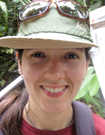 |
WILLIAMSTOWN, Mass. — Two grants from the National Science Foundation (NSF) will support ongoing research by Luana Maroja, associate professor of biology at Williams College, into evolutionary genetics. The grants, totaling $137,315, were recently approved by the NSF.
The grants will support two projects Maroja is working on related to speciation and genetics. The first grant, for $91,173, will support collaborative research Maroja and her students are undertaking with Cornell University on the importance of sex chromosomes in speciation, specifically looking at whether genes that do not transfer genetic information from one species to another during hybridization are concentrated on the X chromosome. The project will provide important insights into the genomic architecture of speciation, the role of the X chromosome in reproductive isolation and divergent adaptation, and will contribute to ongoing debates about how differentiation accumulates in genomes over time.
As part of the project, Maroja and her students will develop evolution workshops aimed to help educate middle and high school students.
The second grant of $46,142 will support a project in collaboration with Union College to understand processes that cause speciation. The project will test if chromosomal rearrangements (CRs) are involved in speciation using three distinct races of fruit flies. Maroja and her students will genetically map speciation phenotypes, male courtship song and female mating preferences for male song between two pairs of fruit fly races to determine certain traits are shared across the species. The project also will test whether CRs act to reduce gene exchange between nascent species by comparing patterns of genomic divergence inside CRs.
As part of this project, Maroja will develop evolution lab workshops aimed to help educate middle and high school students in Williamstown. She also will continue to develop workshops and labs for underserved girls and minorities in a partnership with the Flying Cloud Institute.
Maroja has taught at Williams since 2010. She has a bachelor's and master's degree from the Universidade Federal do Rio de Janeiro, and in 2008 she received a Ph.D. from Cornell.
Tags: Williams College,