
North Adams Library Mulls Restoration of Landmark Cupola

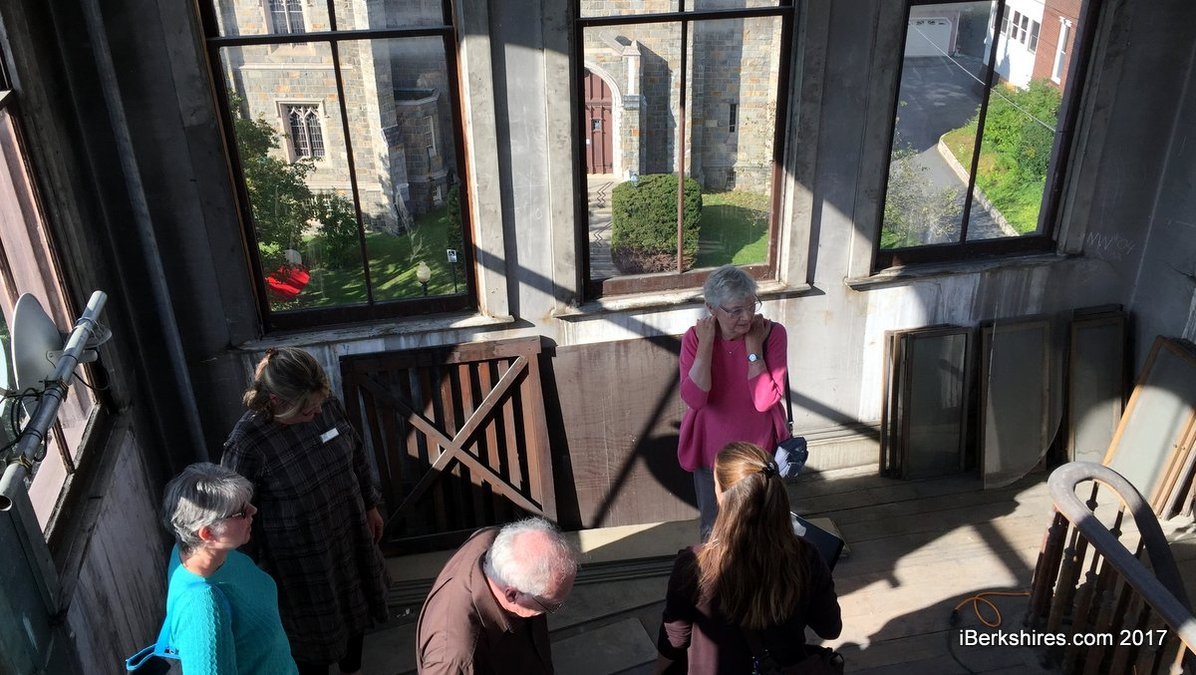
The trustees meet on the renovated third floor of the building.
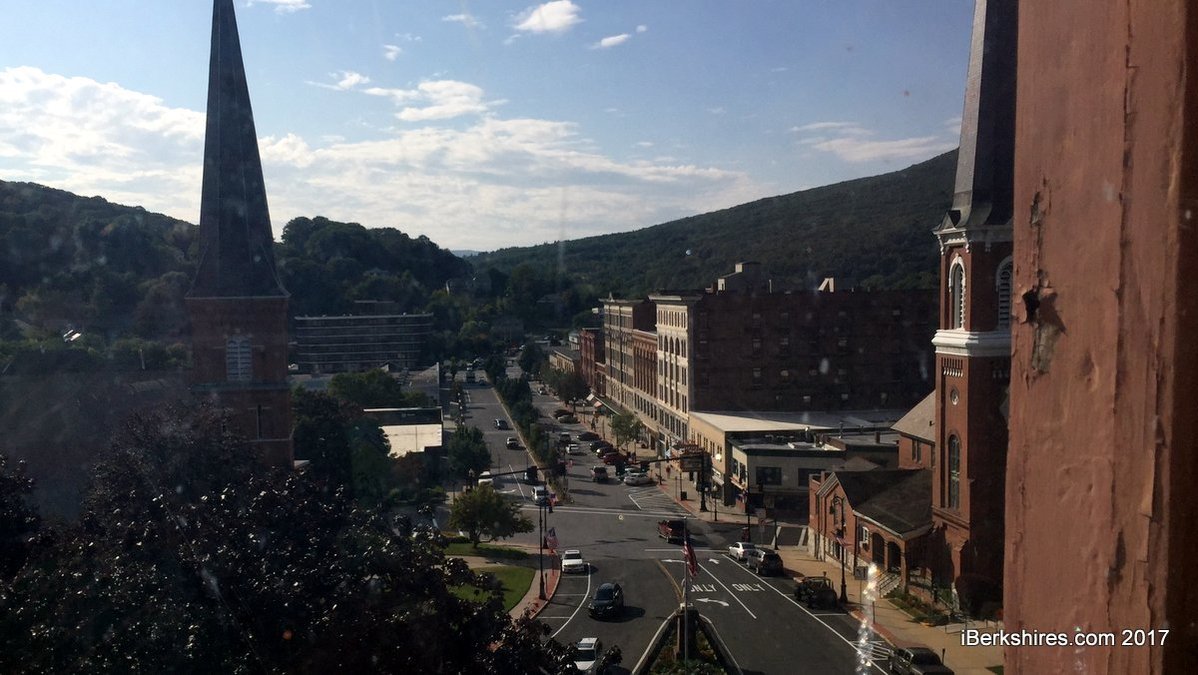
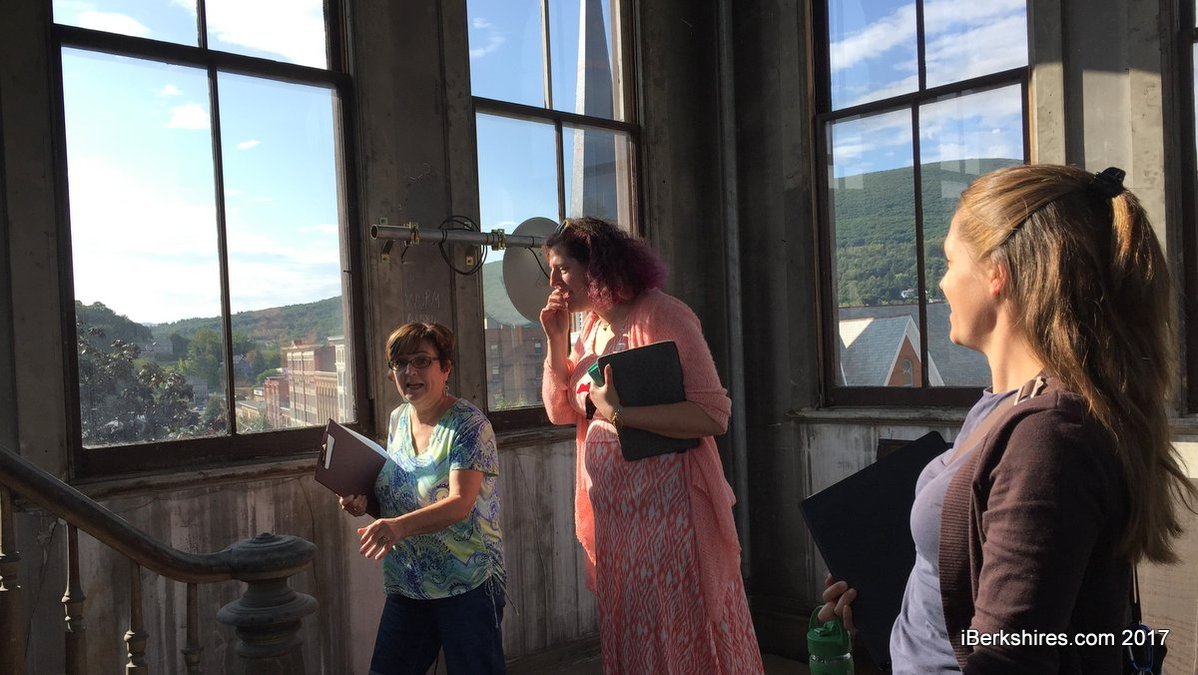
The Blackinton Mansion's two-story cupola offers an expansive panorama of the city's downtown and its circling mountain range. It's a sight that few have seen in the 120 years since the private residence became the North Adams Public Library.
Tara Jacobs is hoping to change that.
The city resident and School Committee member wants to see this long unused section of the historic mansion brought back to life, possibly through a series of fundraising events to restore the distinctive tower and open it to the public.
"I was just thinking of ideas of how to reach the broader North Adams and Northern Berkshire community to raise funds to restore the cupola," she told the library trustees on Wednesday. "It is more of a vague idea right now but it could become something more with more support from the library community."
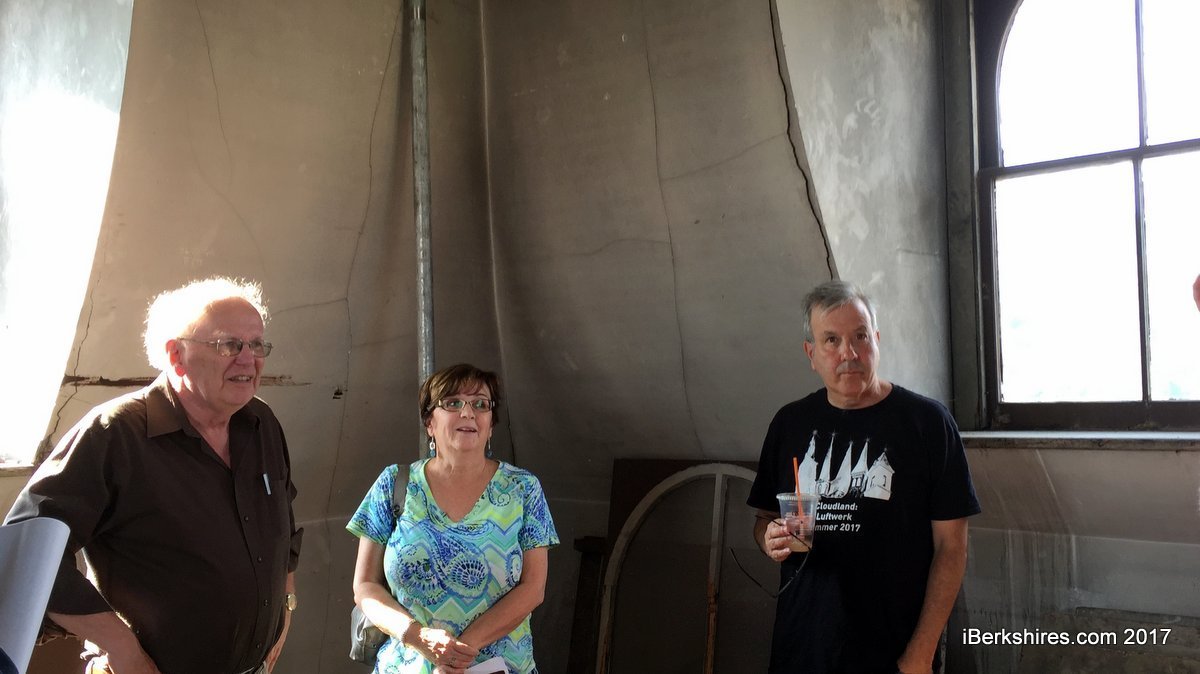
The cupola was not renovated during the overhaul and addition to the library a decade ago and although it is structurally sound, it is deteriorating. The plaster walls are cracking and the wooden laths are exposed in some spots, it has no heating or air conditioning, and the paint is peeling from the exterior window moldings. A handcarved, dust covered winding staircase connects the two stories.
The third floor, which was renovated into meeting space, and the tower had long been used for storage. In 1955, a group of Williams College students removed tons of abandoned books from the tower "which had piled up such a crushing weight that library officials feared for the safety of the structure," according to the North Adams Transcript.
The cupola was a favorite architectural feature during the 19th century; a number were removed from other North Adams buildings, such as the Blackinton Block, as time went on. The library's was designed by Marcus Cummings of Troy, N.Y., the architect for the 1865 Second Empire manse who also designed the Cascade School Supplies mill on Brown Street.
Jacobs said she does not have a solid plan yet but thought the original library doors stored in the cupola could be given to artists and later auctioned off.
"We could get our local artist community to take them and make them special and auction them off in ... some nice venue where we can have an event," she said. "It can elevate the event and make it something special and bring a large group together."
The trustees supported the idea of fundraising for a restoration and said it was something they would like to flesh out.
"Having been involved in fund raising for the library before ... I think it is a terrific idea," trustee Hulda Hardman Jowett said. "There are steps you have to take to get some sort of a foundation, but ... I think it's great idea."
In other business, Trustee Robin Martin asked if the library could set a policy to help staff distinguish between service animals and emotional support animals.
"This summer a number of staff people mentioned to me that people come in with their pets claiming they are service animals," she said. "What I was hoping was we could come up with some small thing so that if a person comes in here with a pet snake that the staff can just hand over the guidelines."
She said her gripe was not with service animals that can legally go anywhere, but emotional support animals that are often just pets.
"Anything can be emotional support," she said. "My cat is emotional support for me, and I am not going to take it into a restaurant. She would eat everything on my plate but there seem to be more and more people coming in here with pets."
Martin said the library can legally only ask what service the animal provides and how they provide it. Also, according to the Americans With Disabilities Act, only dogs are recognized as service animals, although miniature horses are permitted where reasonable.
She said emotional support animals do not have the same rights as service animals and cannot accompany their owners in all public places.
It's typically easy to distinguish service animals because they are well behaved, said the retired librarian.
"When I worked here it was easy to tell the difference between service animals and pets because a service animal is on the job," Martin said. "They stay with you, they don’t bother with anyone else and they are leashed."
Martin said people have claimed they needed their companion animals in the library in the past and they are clearly not service dogs.
"We had one guy who would use the bathroom and his dog would wander around the stacks," she said. "We even had one dog growl at a patron .. service dogs don't do that. They are amazing."
Library Director Mindy Hackner suggested posting "Service Dogs Admitted" as a reminder that emotional support animals are not permitted as well as having the ADA guidelines for a service animals at the desk so staff can distinguish between the two.
Tags: historical building, NAPL,