Healey Told Resources Lacking to Combat Opioid Epidemic
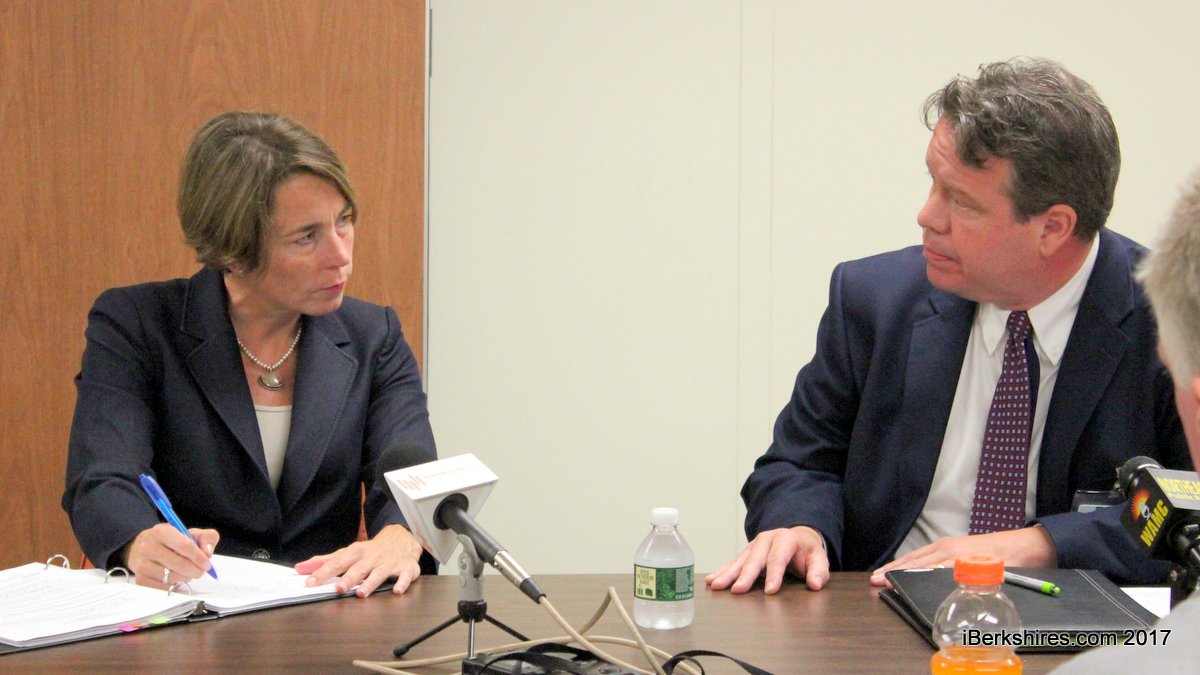
Paul Hickling of the Brien Center talks about his organization's initiatives, including a new recovery center for new mothers.
But while the partnerships are strong, a lack of resources has left this fragile safety net overwhelmed and with too many gaps for those seeking help to fall through.
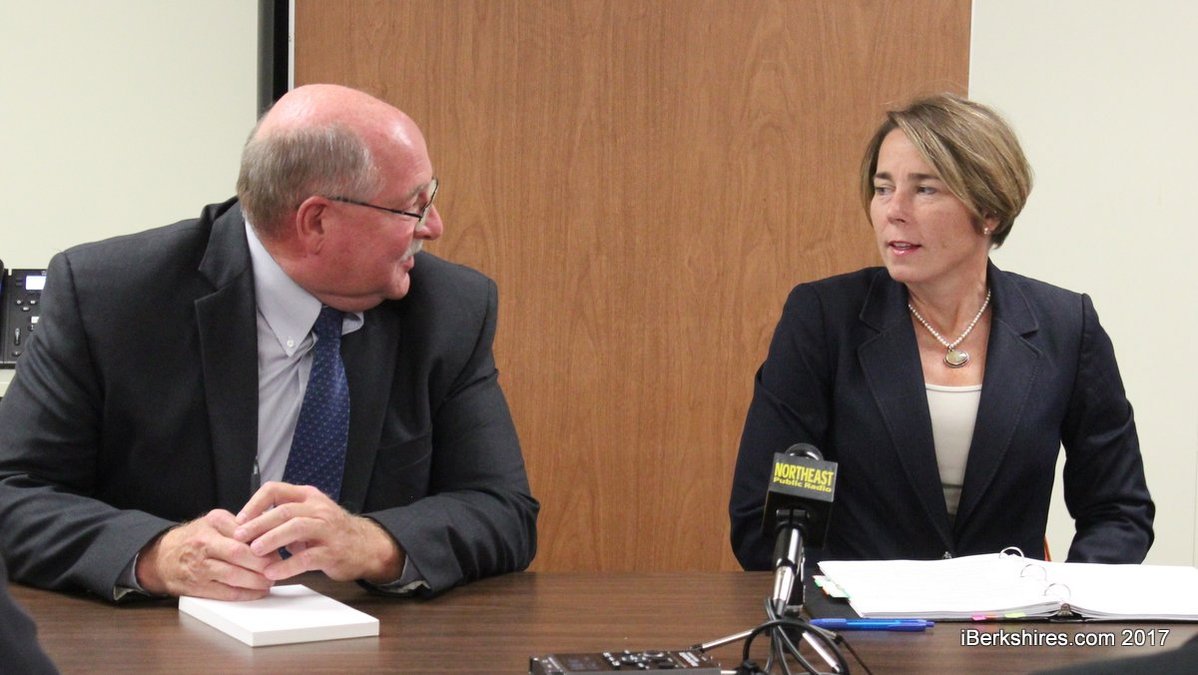
"You need help and that's what I hear loud and clear," Attorney General Maura Healey said on Monday after an hourlong meeting at City Hall with community, recovery and public safety leaders.
Alcombright afterward said Healey has been a real champion and supporter on this issue.
"I think the cry around the table was for prevention and recovery and the fact that we don't get funded, we don't think, proportionally at the same level as other areas of the state," the mayor said. "And I think the attorney general needed to hear that message. ... Hopefully, she can help us out a little more."
Healey was looking for a "candid conversation" on Monday, she said. "Don't hold back."
The city's Police Director Michael Cozzaglio was blunt: "It is a battle."
North Adams was among the first in the state to have its public safety agencies distribute naloxone, or Narcan, which can reverse an overdose.
"We've had five doses [of Narcan] in the last week. ... We saw more overdoses and two deaths in a 10-day period. That's very high for us but it occurs," Cozzaglio said, describing the numbers as cyclical. One growing concern is the use of fentanyl, a rapid-acting narcotic, and other deadly compounds used in lacing heroin. "They're always chasing after the best high for the best dollar. They want the good stuff and the good stuff has fentanyl in it ... so now for the addict who's shooting up, the best high is when you're ready to fall off that cliff and die."
Western Massachusetts and Berkshire law enforcement has been pooling resources to make things work, Adams Police Chief Richard Tarsa said. "The collaborative we have formed has been a necessity because we don't have the reources to do it alone."
He stressed that the opioid crisis affected a community at every level, telling how he lost a relative to an overdose. The individual had been clean for two years but when something happened to a friend of his, he shot up and went into a coma.
"This was a good kid, I knew this kid," Tarsa said. "It devastated not just the family but everyone who knew him."
There's been a concerted effort to reach people before they become addicted or to prevent them from relapsing. But those efforts are hampered by a lack of resources in the geographically large but population-small county.
"We've really seen the opioid epidemic hitting this area really hard," said Paul Hickling, vice president of service operations for the Brien Center for Mental Health and Substance Abuse. "Part of what we have been focusing on is bringing services closer to the people where they live."
The center has added a 17-bed recovery home for pregnant women and those with newborns in Pittsfield, which has become the hub of recovery efforts largely because of location and population.
"We would love the idea of a recovery home here," he said. "Again, the problem with our recovery home system is the waiting list is so long and hour to hour, people are really struggling with these addiction problems."
The center is also looking at competitive grants for a peer-run recovery center and has been working with Berkshire Health Systems on several efforts, including grants and telecommunications accessibility so families can connect with their loved ones in treatment centers in Pittsfield.
"As a community we're working very well together but we're having some challengs as regards to our resources," Hickling said.
Both he and representatives for the Berkshire County sheriff's office pointed to the lack of transportation and the distance to reach services in Pittsfield, about 25 miles away.
Alan Bianchi and Frank Busener, reintegration officers for the sheriff's office, work with the Brien Center and other agencies in helping former inmates with addiction and mental health issues return to their communities. The sheriff's office runs programs at its Second Street facility in Pittsfield.
"We see they do better the longer they do services with us," Bianchi said. "It's hard for them to get back to the center to see us ... it would be good to have a center in North and South County but there's only two of us."
It's not just about getting clean, it's about continuing support and teaching life skills and job training to prevent former inmates from sliding backward, they said. Another concern is the increase in prostitution by women addicts.
"I've been working in this county on addiction for 28 years and it's getting worse," Busener said.
The hope is to educate about the dangers of addiction early on, including an evidence-based curriculum through the district attorney's office that's being slowly rolled out across the grade levels. It may take years for that to bear fruit and Superintendent Barbara Malkas worries about the traumas already being inflicted on young children because of family addictions.
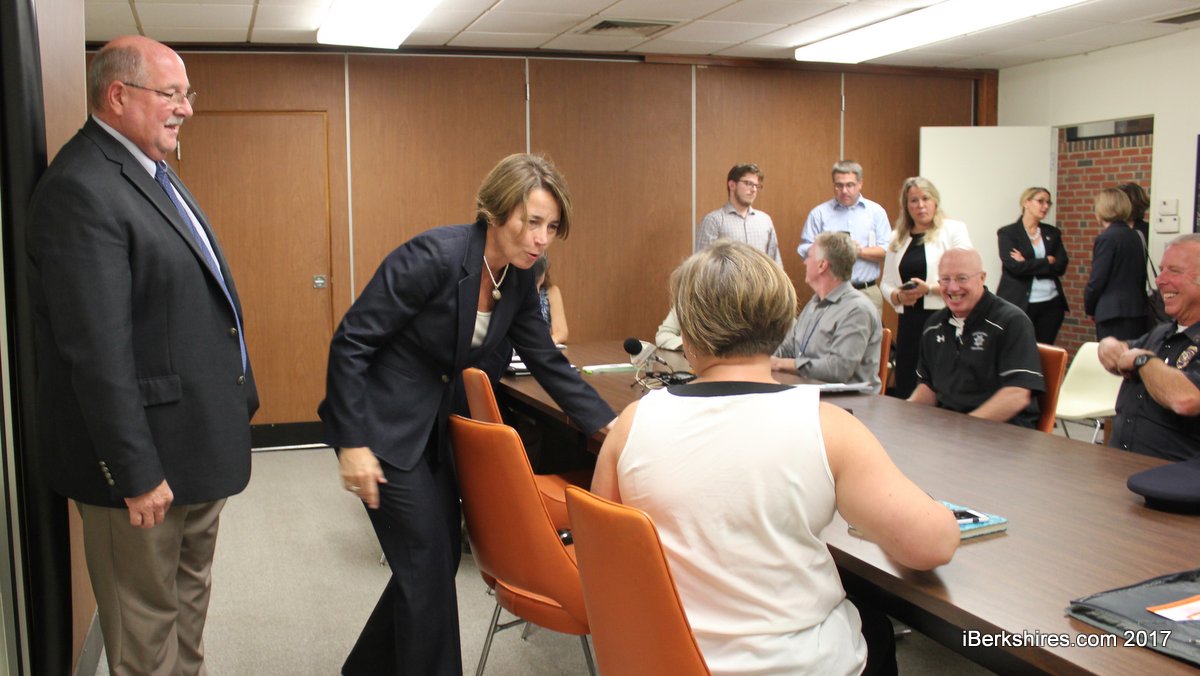
Healey greets Amber Besaw of the Northern Berkshire Community Coalition.
She and Wendy Penner, director of prevention and wellness for the Northern Berkshire Community Coalition, also spoke to the "laissez faire" use of other substances, such as alcohol, which can have long term consequences and act as gateway drugs. The legalization of marijuana also creates a challenge when trying to educate young people are about the dangers of drug use.
"They're dying longer, slower deaths from related health problems," Penner said. "Alcohol is routinely used and abused."
The area's approach to the crisis has been a patchwork of education, law enforcement, and social and health services. There's been a pooling of resources and outreach between agencies, as well as highly visible forums, walks and vigils to bring awareness to the problem.
"I don't think any of us have the silver bullet but you have to throw everything against the wall when you're in the middle of a crisis," state Sen. Adam Hinds said.
Underlying all these efforts are the effects of poverty and generational substance abuse. The county's main issues that have been articulated at every level — jobs, job training and education, health-care access and transportation — are again the fundamental challenges for its marginalized populations when it comes to substance abuse.
"If we're not talking about equity issues, we can keep doing the same things over again but we're not going to see any change," Jennifer Kimball, project coordinator for the Berkshire Opioid Abuse Prevention Collaborative, said.
Healey agreed that foundation issues were critical in solving the crisis. The lack of care for those suffering from mental health issues is manifesting in the criminal justice system, she said, and there's a lack of urgency at too many levels.
She told of a woman who had called her office wondering what to do with the 40 pain pills she'd been prescribed when she only need four — this despite a bill passed in the state last year limiting prescribers.
Later in the afternoon, Healey laid the crisis at the federal level, calling on the Trump administration to back up words with action.
"The president declared this a national emergency weeks ago but hasn't done a darn thing," she said. "He hasn't supported us with money or resources."
Instead, Healey said, he'd hypocritically tried to sabotage the Affordable Care Act that directly affects people's ability to receive care and treatment.
"We need support, we need resources for the opioid epidemic here in Massachusetts and across this country and it is time that the administration step up and deliver," she said.
Tags: attorney general, healey, heroin, opiods, Opioid abuse, substance abuse,