Adams-Cheshire May Become Hoosac Valley Regional School District
CHESHIRE, Mass. — An advisory committee is recommending a new name for the regional school district: Hoosac Valley Regional.
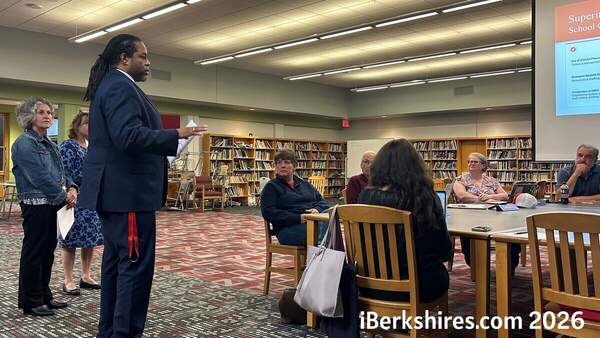
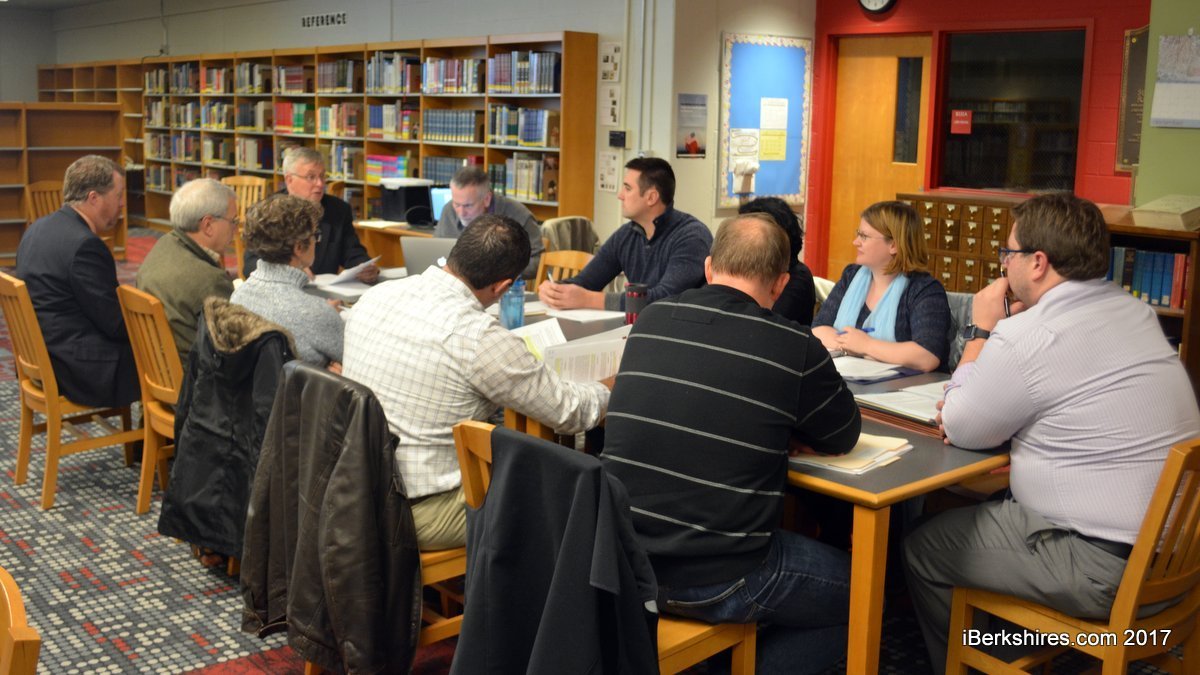
The suggestion was made at the second meeting of the Regional Agreement Amendment Committee, which is reviewing the documents regulating the Adams-Cheshire Regional School District.
"It just makes sense and it would add some continuity," committee member Erin Milne said. "It is more flexible if towns want to leave or join 20 years down the road."
The School Committee showed interest in making this change last year but agreed to only change the name of C.T. Plunkett School at the time to Hoosac Valley Elementary. The RAAC, formed to amend the agreement that was last updated over 10 years ago, took this charge and agreed to add the name change to the agreement that will ultimately be voted on by both towns.
The panel also looked at Section One of the agreement that spells out the composition of the School Committee, how its members are elected and their powers and responsibility.
The amendment committee agreed to change the definition of a quorum so that a quorum can only be achieved if members from both communities are present.
"Basically, it forces both towns to reach across the aisle to come to an agreement," committee member Edmund St. John IV said. "I think 98 percent of the votes taken are unanimous anyways, but this would force .. cross-community communication when voting on something."
The seven-member School Committee needs four members to have a quorum and could theoretically hold a quorum with just the four Adams representatives and none of the three Cheshire representatives.
The panel agreed that the new policy would level the playing field and committee member and School Committee chairman Paul Butler said he has often put off votes if there was no Cheshire representation at a meeting.
St. John also suggested changing voting requirements so that a vote can only pass if both Cheshire and Adams members vote in the affirmative. He said this would make it so the School Committee could not vote a town line as it originally did when members voted to close Cheshire Elementary School.
Hemman suggested not having a blanket voting policy because it could "hamstring" the School Committee. He said there could be specific votes such as hiring a superintendent where this policy applied or it could require a supermajority.
"Just remember one thing it sounds good, but you are sort of tying yourself up ... because the major vote that you make is certifying the budget and in that case, it doesn't matter. You need the supermajority and you need both representatives from both member towns," he said. "You are going to hamstring yourself if it is every single vote."
Hemman asked that the committee make a list of what these votes would be for next meeting.
Committee member Justin Kruszyna asked if the School committee could just decrease a number so the membership is split equally.
"I think we want to avoid a situation that already happened when we closed the school. The vote was down the town line," he said. "We are looking for middle ground here where we can all be happy and work together where one town can't control the direction of the school district"
Committee member Michael Mucci said he felt the School Committee should continue to have membership representative of the towns' populations.
"I am just getting at everything I have read it all seems to go back to population data," he said. "To go to a three to three when you have a 75 percent to 25 percent population that's contrary to every plan we are looking at it ... it doesn't seem like the way to go."
Beyond cleaning up the organization of the section and wording, Hemman suggested clarifying policies that may have been historically practiced and placing them in the agreement.
"You may have procedures that everybody might know but in 20 years different people will be sitting at this table," he said. "You want them to have a clear direction in how they are supposed to operate."
Hemman suggested clarifying who tallies votes and who declares the victors on the School Committee after elections. He also suggested adding a policy that outlines what to do if there is a tie and how to fill a vacancy.
The biggest change the committee agreed to in Section Two, which spells out the makeup of the district and grade levels, was to make it Section One instead of the school committee section.
Hemman said this organization would add a more proper introduction to the agreement.
"I like that idea and Section Two really explains what the school district is," Butler said. "It seems like it would make more sense."
The third section of the agreement outlines the buildings in the district, how the district leases them from the towns and who is responsible for repairs and maintenance.
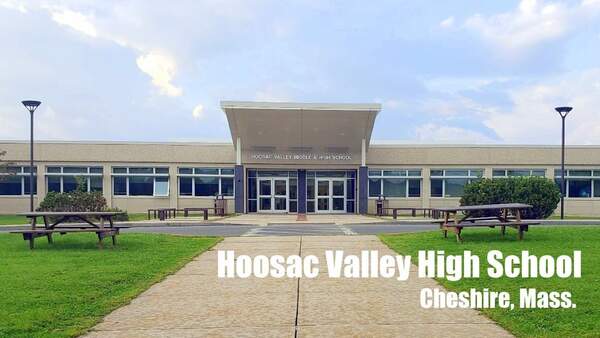
Currently, the district owns Hoosac Valley High School, but the town of Adams owns Hoosac Elementary and leases it to the district.
With the preferred option to move the entire district up to the Hoosac Valley High School campus in the future, the committee agreed to only note in the policy that the district owns the high school and if a school is owned by one of the towns, there can be a lease.
"If someday we decide to reverse course and we open a school in Cheshire and close the one in Adams or move it all up to the high school all of it is still possible," Committee member Tim Burdick said.
Hemman will send the changes to the state Department of Education for its approval. Ultimately DOE will have to sign off on the amended agreement and the two towns will have to vote on the changes.
Tags: ACRSD,