Taconic Principal Plotting Use, Scheduling of New High School
PITTSFIELD, Mass. — More than 100 tradesmen have been on and off the site of the new Taconic High School getting the building ready.
And inside the current building across the driveway, Principal John Vosburgh has been doing the same. Vosburgh has been meeting with faculty, staff, and parents to devise a plan on how to layout and schedule operations in the new Valentine Road school.
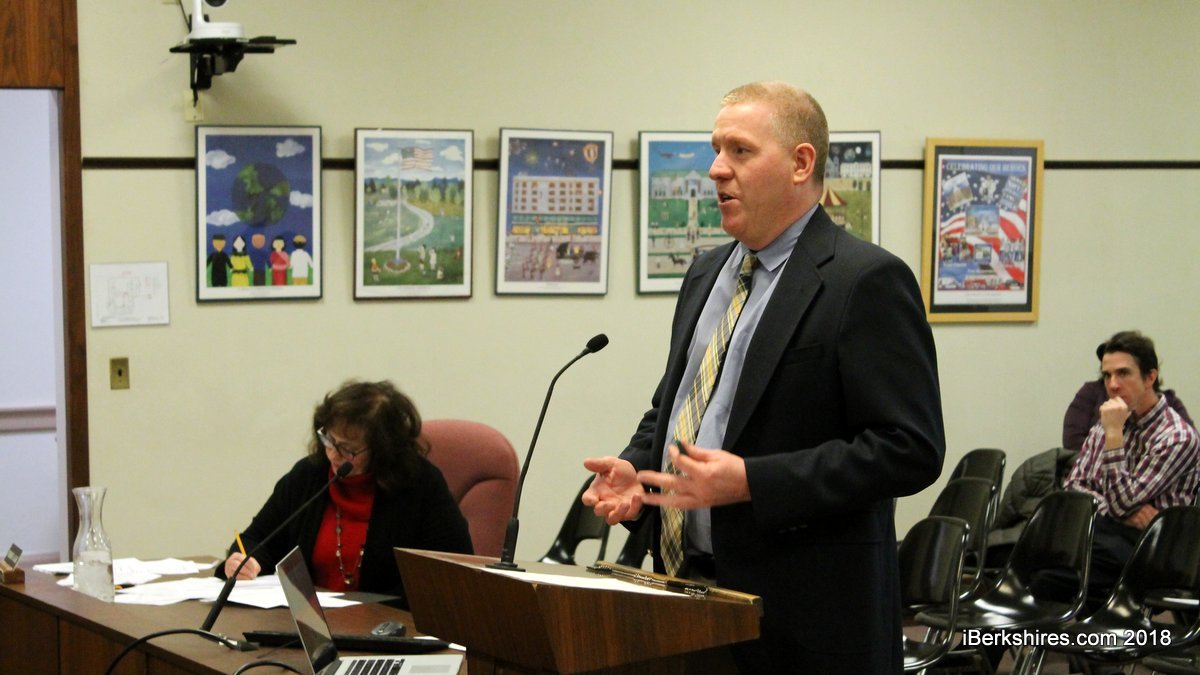
"I hope we can get it right the first time and if we don't, we'll fix it," Vosburgh told the School Committee on Wednesday night.
The biggest struggle relates to the cafeteria. The capacity is only 300, which means the school will have to have three lunch periods instead of two. That creates a headache all of its own when scheduling class times.
"It is muddy at best to figure out a schedule that will work," Vosburgh said, and later adding, "it is doable. We are going to have a creative fourth and fifth period, which is our lunches."
Between the vocational options such as a week on and week off program, teachers shared with other schools, and students on rotation, working out a time for everyone is posing a challenge. Vosburgh is now working with the cafeteria staff to figure out the time needed between lunches and hopes to craft workable schedules soon.
"It is tricky to accommodate a large number of students with the number of various programs we offer," he said.
Vosburgh said there is an urgency to figuring it out because students will be registering for classes in a little over a month. That also means figuring out where all the classrooms will be located.
The new building has two pods of classrooms off from the main hallway on each of the second and third floors. The classrooms surround common workspaces — a design the School Building Needs Committee had particularly fought to keep. And now Vosburgh needs to decide whether those classrooms are grouped by class or by subject matter.
If it is aligned by grade, Vosburgh said teachers of the same students can more easily collaborate and the teachers will be seeing the students in the hallway much more often. It also reduces the number of times the student needs to transition to other parts of the building and gives a little more consistency in parents dropping students off in the area where their classrooms are located.
But, there is a question of whether it is good for the children to be grouped with the same peers for most of the day. Vosburgh said it is important for the younger high school students to mingle with the older ones so they can see the more mature behavior of older students. The principal said he modeled 15 student schedules for ninth-graders and, with the exception of three or four classes, the students do move around the building often, which alleviates that concern somewhat.
If the rooms are grouped by subject, that too allows for teachers to share materials more easily. But, the individual teacher will only interact with the student in the class because that student will be in other parts of the school for other classes.
In the current building, the teacher areas are grouped by subject but the classrooms aren't necessarily. He said the classrooms themselves are a bit mixed.
School Committee member William Cameron suggested considering doing a similar model with the new school. The teacher workrooms are in the middle of each grouping and Cameron suggested that grouping the faculty space by discipline.
"If the faculty is grouped by discipline, that would facilitate interactions of teachers teaching the same subject regardless of where the classrooms are," Cameron said.
The staff had also been active back in June in determining the furniture and equipment. And every Wednesday, Vosburgh says he holds an option meeting with staff members to discuss the new building's operations.
The new $120.8 million school will welcome its first class of students in the fall. Vosburgh is hoping to get everything planned out ahead of time to ease any worries staff might have heading into that school year.
"We want this to be an exciting opportunity, a positive move and not something the folks will be anxious about," Vosburgh said.
School Committee member Cynthia Taylor said it is already an exciting time. She said every Taconic staff member she's spoken to has raved about moving to the new school. Meanwhile, School Committee member Dennis Powell is glad that Vosburgh is including students in that planning process.
Tags: Taconic school project,