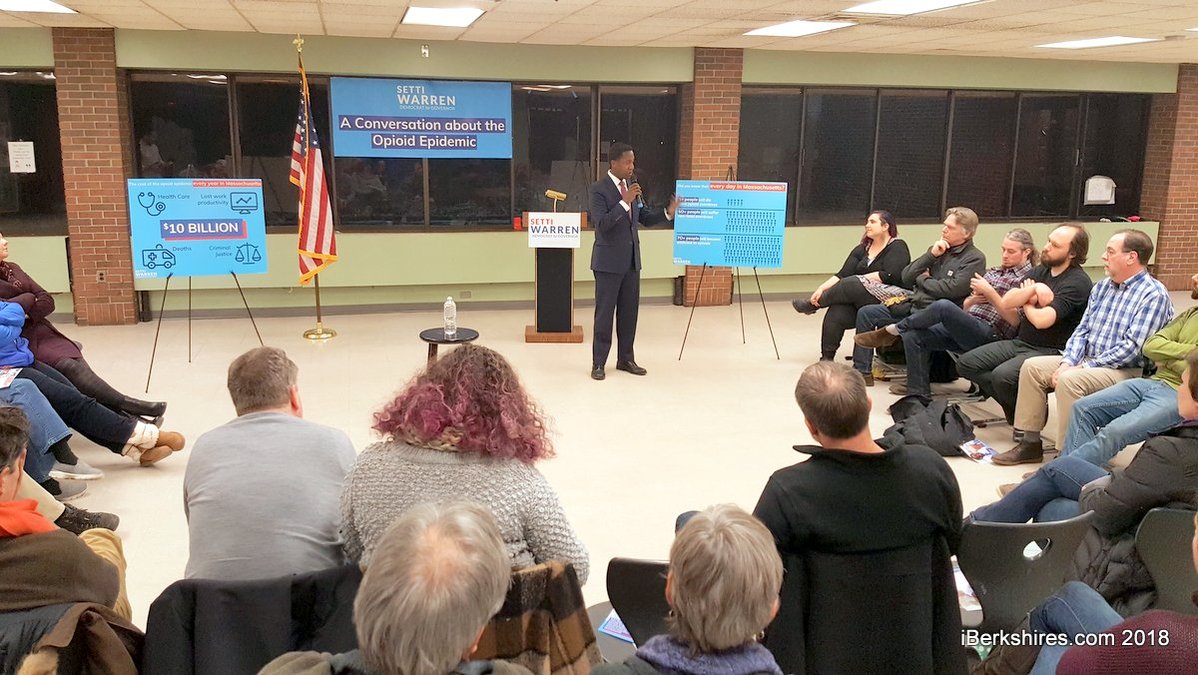
Gubernatorial Candidate Warren Talks Opioids In Pittsfield
.jpg)
After brief opening remarks, the Democrat opened the floor to the community to hear what their thoughts on the best way to tackle the issue.
"In 2014, Gov. Deval Patrick declared a state of emergency around opioid addiction. We were the first state in the country to do so. Since then, 6,000 people have died of opioid addiction in our state, 250,000 are living with addiction in our state right now and that number is growing. Over five people a day are dying from opioid addiction or are sick. This at a cost of $10 billion annually," Warren said.
Those numbers are what started him on hosting a series of forums across the state. The former Newton mayor said he had first recognized the issues in his hometown and his campaign for governor has shown him that the issue of opioid addiction isn't confined to pockets in Massachusetts, it is everywhere.
"We started to put some programming together in my own hometown, a path to bring people to treatment. When I announced for governor, I started moving around the commonwealth. I've been in over 150 communities. There was not one setting where someone didn't raise their hand in a public setting or come to me privately and say 'what are you going to do about opioids?'" Warren said.
The Democrat's approach to dealing with it would be based on three keys: ridding the stigma surrounding it, bringing in "the best ideas possible," and additional resources. He said the concept of addiction needs to be viewed more as a disease. He said there are not enough beds, stays, and time for detoxification. And it will take new ideas.
"This is going to take some new thinking, it is going to take new resources so that we have community-based, lifelong, wraparound services," Warren said.
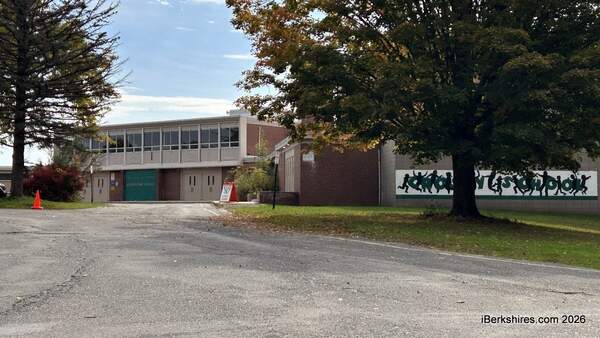
To get those ideas, he is asking for assistance from people across the state. About two dozen Berkshire residents joined him at Conte Community School on Sunday night for an open discussion on the issue.
"We need a major cultural shift in how we view addiction. Addiction is a lifelong disease, it is not a moral failure," said Tess Lane, who introduced the gubernatorial candidate.
The group then dug into the weeds somewhat. A woman who works in the field told stories of how the bureaucracy of MassHealth often serves as a barrier for someone getting treatment. She said the paperwork involved can be tricky for someone looking to treat their addiction and becomes another challenge pushing them away from tackling the issue.
Meanwhile, she said there are insurance companies that will pay for visits but not medication. The medication can costs around $30 a day, making it difficult for those to stay with the program. At the same time, if they work too many hours, then they will no longer qualify for MassHealth and can't afford the care. She asked that doctors and clinicians have more discretion with the medications they prescribed and MassHealth should cover those medications.
Warren said the confusion over insurances can be eased by moving to a single-payer system. That way the insurance offerings are focused on results.
"Our system needs to be based on health outcomes for people not based on an insurance company's willingness to provide you access to services," Warren said.
Another man said back in the 1970s, he got addicted while in the hospital. He had to be weaned off the painkillers. And just last year, without being asked a doctor prescribed him more - even though he didn't want them. He ultimately filled the prescription and took the remainders to the prescription drop box at the Police Department.
Another resident added that doctors often do that because they have so little time with patients - treating the pain becomes easier. That resident added that acupuncture and other alternative pain treatments are available, but they are much more expensive and insurances won't cover many of them.
On the other hand, another man said his partner lives with chronic pain and opioids are what helps her. But, she now struggles to get access to those medications. He said there is a "witch hunt" going on in which doctors are afraid to prescribe them for fear of lawsuits.
"There needs to be some real training around opioids and prescribing. There are people who need opioids for pain," Warren responded, saying the "one size fits all approach" is wrong.
A nurse, meanwhile, said she has seen the occasions in which judgments were made automatically on someone seeking medication for pain.
"I have witnessed co-workers, and even myself cast judgment. They come in seeking pain medicine and that stigma and that judgment is there," she said, adding that there needs to be education around the issues of chronic pain.
But, she also saw the other side of the issue. She said back in 2013 she remembers in nursing school seeing a video shown in class claiming that opioids were not addicting — so there needs to be a better understanding of what prescribing them truly means as well, she said.
Meanwhile, a representative from the Brien Center said getting enough qualified workers is posing a challenge to those in the recovery field. She is also looking for additional funds for such things as a peer recovery center, which Berkshire County lacks.
"We can't fill positions for skilled providers of recovery care and we can't pay them enough," she said.
Warren agrees saying, "we're going to have to make some investment in growing those numbers of clinically trained people to do the kind of work we are talking about."
A North Adams woman suggest bringing more resources to the community, such as by providing information at places like libraries. It would be an attempt to reach people where they are at, rather than relying on them seeking out clinical care.
"Resources are scarce but they exist and a lot of times people don't know where they are," she said.
And to pay for those resources, Warren said he is supporting efforts to get that money from the wealthiest in the state.
"We are going to have to ask people who are doing really well in this state, making a lot of money, to contribute more so we can invest in people's lives," Warren said.
Warren is facing Bob Massie and Jay Gonzalez in the Democratic primary for governor.
Tags: Democrat, election 2018, governor,