Mount Greylock School Committee Decides to Post Superintendent Position

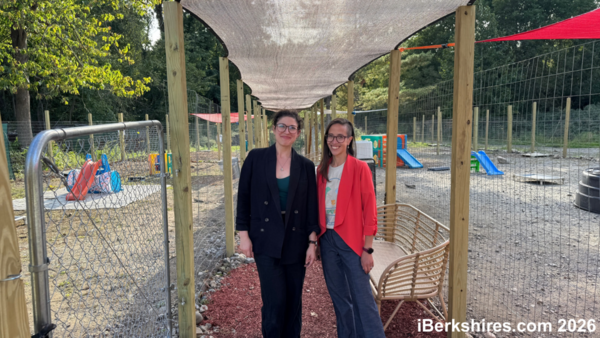
Mount Greylock students Jacob Hane and Morgan Pannesco, along with Joshua Duncan, presented the committee with a petition signed by more than 350 Mount Greylock students encouraging it to offer Kimberley Grady the job.
On a vote of 4-3, the committee decided not to offer the job to interim Superintendent Kimberley Grady, who stepped into the post on short notice when the then-Tri-District abruptly parted ways with Douglas Dias at the start of the second year of his three-year contract.
Although no one on the committee expressed dissatisfaction with Grady's performance, and although the majority of the feedback from public pushed the committee to offer her the job, the majority of the committee decided to honor previous commitments to engage in a search process for a permanent superintendent after voters decided whether to fully regionalize the PreK-through-12 school district.
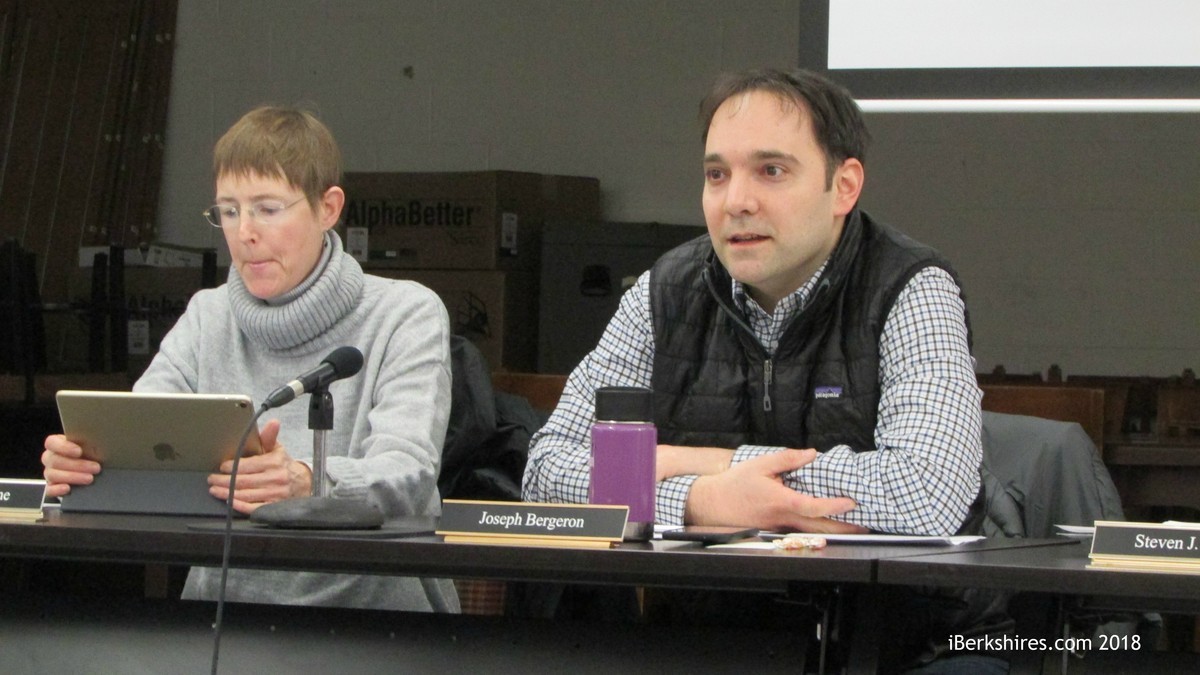
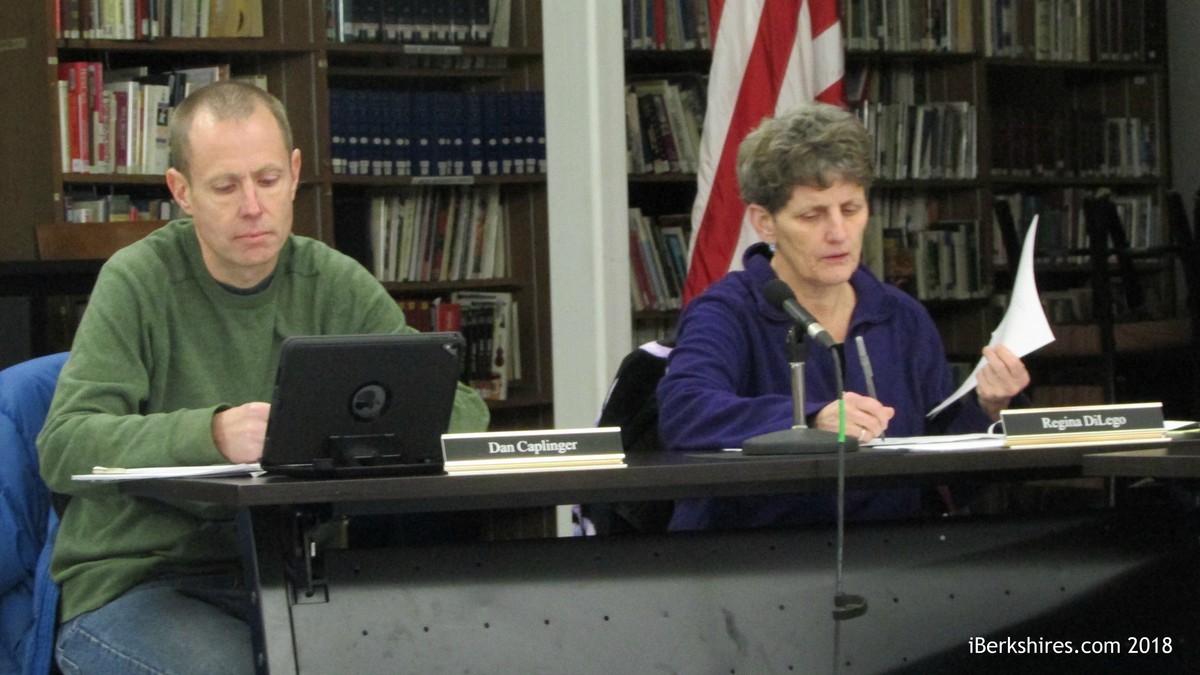
Transition Committee Chair Joe Bergeron was joined by Carolyn Greene, Steven Miller and Al Terranova in voting to post the position. Dan Caplinger, Regina DiLego and Chris Dodig voted against the step.
In a separate motion, the committee unanimously decided that its advertisement for candidates should include language about the presence of a strong internal candidate.
After the meeting, Bergeron confirmed that Grady has indicated her interest in applying for the position, even if it was opened to a search.
Grady did not attend Thursday's meeting. Bergeron explained at its outset that her absence was because of a previously planned leave "and not for any other reasons."
Two of those voting in the majority to post the positon talked about their struggles with the issues.
"I've tried to look at the positives and negatives of each path, and it's complicated," Bergeron said. "The fear is that, somehow, we lose what we have, which the public has said and we have clearly stated ... is great.
"The other side is, we do an appointment [of Grady] and, six months from now, people are asking, 'How did that happen? How did you hire that person?'
"Where I'm headed is, I don't want whoever is in the superintendent role to have people nipping at their tail saying, 'What's the process? Why did the School Committee do it that way?' I don't want the School Committee to be in a position where people say we didn't do it the right way."
Greene alluded to the advice the Transition Committee received from a representative of the Massachusetts Association of School Committees: that a district in the middle of full regionalization and a building project can benefit from continuity in the corner office.
"I can live going either way," Greene said. "I think a lot of people can't live with us doing the search. Even if we do a limited search, it would cause a lot of agony, and we don't need agony right now. [Dorothy Presser of the MASC] was saying we were in a unique situation.
"Now that we've regionalized, we know we have three million other things to do, and it's all time constrained. ... I don't know that the thing that makes the most sense logically, which for me is the search, makes the most sense holistically."
Greene appeared to be persuaded by Bergeron.
"I have a lot of faith in our administration, and whoever assumes that role of permanent superintendent for many years to come, and in our ability to navitgate that [search] quickly and put this to rest," Bergeron said. "I've definitely seen the volume of the public that says, 'What are you thinking?' But I'd rather have them say [if Grady emerges as the top candidate], 'I told you so' and have us say, 'Aren't you glad we did that and for three years have it not be a question?' "
Three years is the standard length of a contract for a district superintendent.
"Since you're the one most in the trenches, that's good enough for me," Greene said, just before voting with Bergeron on the motion to post the position.
Wednesday's meeting began with a plea from three Mount Greylock students, who presented the committee with a petition signed by more than 350 of their fellow students urging the retention of Grady.
Jacob Hane, Josh Duncan and Morgan Pannesco addressed the committee.
"Over my tenure at Mount Greylock, we've had the opportunity to see a plethora of different administrative individuals who have come and gone," Duncan, a senior and former student council president said.
"While it hasn't greatly affected our academic record ... I think it has affected our culture here at Mount Greylock. More importantly, it's had a lasting impact on the Mount Greylock community."
Hane echoed that sentiment.
"We think Kim Grady has done a wonderful job here," Hane said. "We would like to see her stay.
"We would appreciate it if you forego the process and appoint her for all the good work she's done and all the good work we know she will do in the future."
The most consistent voice on the Transition Committee pushing for a hiring process was Terranova, who again Thursday explained why he believes the process matters.
"I think the protocol is: When openings happen, we post jobs," Terranova said. "That's the way it is. When we post a job, it involves people. It gets the community involved, it gets parents involved, it gets the administrations from the towns involved. It gets everyone involved. Not just the seven of us."
In the end, the committee ended up favoring an "expedited search" model the MASC offered as an alternative to the more involved process where the district appoints an ad hoc search committee that brings in other stakeholders. As discussed on Thursday, the seven-member Transition Committee will be both search committee and hiring authority.
But Terranova offered other reasons why the exercise of a search can benefit the district.
"When you post a job it forces everyone to think about ... what we want in a superintendent for the next three, four, five years," he said. "It forces the search committee to focus on what they want. ... I think that process helps everybody, including the superintendent.
"The other thing it does is give us the opportunity to hear people from outside the community speak. Even if we don't take that candidate as a superintendent, we may say, 'Do you remember when that candidate said X? Let's see if we can incorporate that idea into one of our plans.' "
DiLego, one of the Transition Committee members who is a veteran of the district's last superintendent search, was at the opposite end of the spectrum.
"I know Al favors a search committee," she said. "I'll say my opinion is a search committee hindered our last search, and we all know how that went."
Dodig also pointed to the district's recent history: Dias' departure.
"I think an appointment of Kim is probably the best thing for our school and our students at this time," Dodig said. "A big reason is administrative support. ... The last superintendent, when we parted ways with him, it was based on lack of administrative support. Here, the [school principals] are telling us we can get where we want to go educationally with these schools with what we have."
Dodig also said his personal opinion was that the district would not find a better candidate than Grady.
"If we form a search committee, we're effectively saying there are one or two persons out there we'd hire ahead of her — or why do it?" Dodig said. "There are a couple of superintendents I know and respect in Berkshire County. ... And I thought about, if they applied, would I hire them over her? And I wouldn't."
Miller, like Terranova, emphasized the importance of following process, and reminded his colleagues that when Grady was named interim superintendent, even she did not see it as a stepping stone to a permanent appointment.
"The upside [of a search] is if we do pick the internal candidate, it puts them in a stronger position," Miller said. "I do think we promised the towns years ago that we'd be doing a superintendent search. I do think we committed to doing that search.
"I think a targeted search is a way of fulfilling that promise."
Bergeron and Greene agreed to touch base with MASC about the next steps for launching a search and develop preliminary language for a job description for the full committee to consider at a special meeting next Thursday, Jan. 25.
Tags: MGRSD, search committee, superintendent,