Eagle Street, Brayton Hill on North Adams Block Grant Application

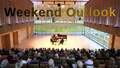
Ribbon cutting for the pavilion at the Pittsfield Common in 2014. North Adams is looking to do something similar and plans to use CDBG funding for a feasibility study.
The two feasibility studies, totaling $25,000 each, would come out of the city's fiscal 2018 Community Development Block Grant funding. The application is due March 2.
The city is expected to get $825,000, the same as last year, from the U.S. Department of Housing and Urban Development's Mini-Entitlement Program. This year's grant will fund seven projects, up from five last year.
The largest portion of the grant will be used toward the planned improvements at Noel Field Athletic Complex. Some $378,100 will be put up as the match to the $400,000 already received through the Parkland Acquisitions and Renovations for Communities grant program. The entire cost of the spray park, courts for basketball, bocce and pickleball, and other amenities is pegged at $778,000.
New projects this year include the funding for the two feasibility studies, the first of which would look at turning Eagle Street into a European-style "woonerf," or shared space, using paving and landscaping to slow traffic.
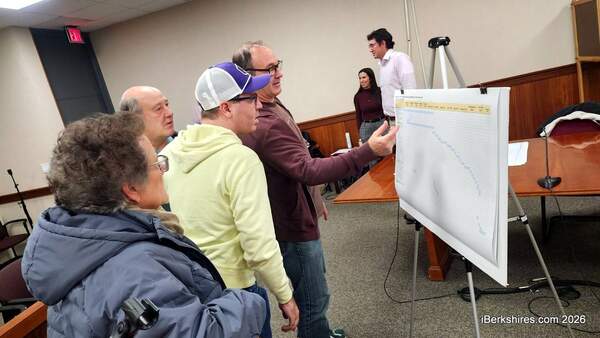
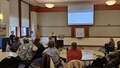
"This is just a feasiblity study to see if something like this would even be possible on Eagle Street," said Director of Community Development Larysa Bernstein at last's week block grant public hearing. "But we believe this will really highlight the beauty on Eagle Street and make it more of a destination. ...
"It's something we would like to at least explore."
The study will look at traffic, design, engineering and cost, and do some outreach to engage the community and businesses.
Quite a few ideas have been floated over the decades for developing Eagle Street, which contains a number of historic buildings, including its landmark flatiron. Concepts have ranged from making it pedestrian-only to transforming it into a covered atrium. But a major issue has been what to do with the southbound traffic on the one-way street and how it could affect parking for the street's businesses. A woonerf would allow traffic flow but also create more flexible pedestrian spaces.
The second feasibility study would look at where an outdoor theater space could be located, similar to the pavilion built at Pittsfield's Common a few years ago. That theater hosts musical and dramatic performances during the summer.
"We think that will be an asset to the community, we think that a lot of different community groups," Berstein said, ticking off a list that inlcuded the city's departments and schools, Massachusetts College of Liberal Arts, church and nonprofit groups, and local musicians and drama groups. We think this would be an enjoyable venue and attract people into the downtown."
Some $85,000 is earmarked for design, engineering and costs for making Ashland Street from Main Street to the train trestle by Davenport more pedestrian and bicycle friendly in line with the state's Complete Streets program.
The city two years ago used funding through the Massachusetts Downtown Initiative for intial stages of the streetscape design.
The goal, said Bernstein, is "to really build and enhance the corridor and the connection to MCLA and the Ashland street community to the downtown."
The grants are being used to address two target areas — the larger radius that ecompasses the downtown and the smaller Brayton Hill neighborhood target area on the edge of the larger block grant's perimeter.
Some $100,000 will be spent on the city-owned Brayton Hill Playground for an updated with a new play area. The playground equipment will be in line with those installed at Kemp Park and Windsor Lake. The project will also include landscaping.
"I think it will be a nice playground for that area, there's really not much there now," Bernstein said. "We want to make it something that can be used by all ages, so there's a smaller playground for the younger kids and something bigger for the older kids."
The Brayton Hill target area was created in fiscal 2017 as part of a longer term plan for future improvements, including rejuvenation of the basketball court.
The block grant application also puts aside $30,000, $10,000 more than last year, toward social service programs ($5,000 each to six programs) that will have to apply to the city for the funds and $58,150 for demolition of blighted properties. General administrative costs take up balance of $123,750.
Bernstein said the elements of the application are based on the city's planning documents, including the Master Plan finalized in 2014.
"It's something we depend on a lot now because it's a really strong working document that we're trying to bring to life here with the help of the block grants," she said.
Tags: CDBG, Eagle Street, Noel Field, playgrounds,