Regional Science Fair Draws More Than 60 Budding Scientists
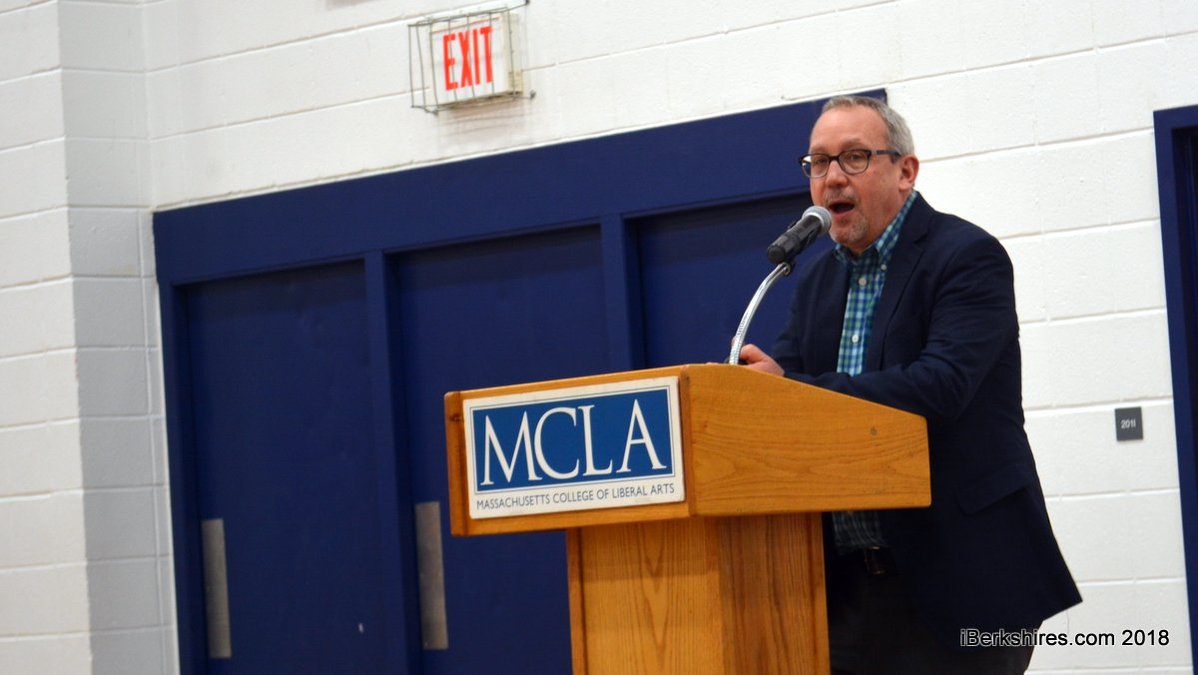
Jeffrey Thomas of Lever shares his lab experience with the students on Friday.
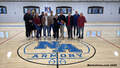
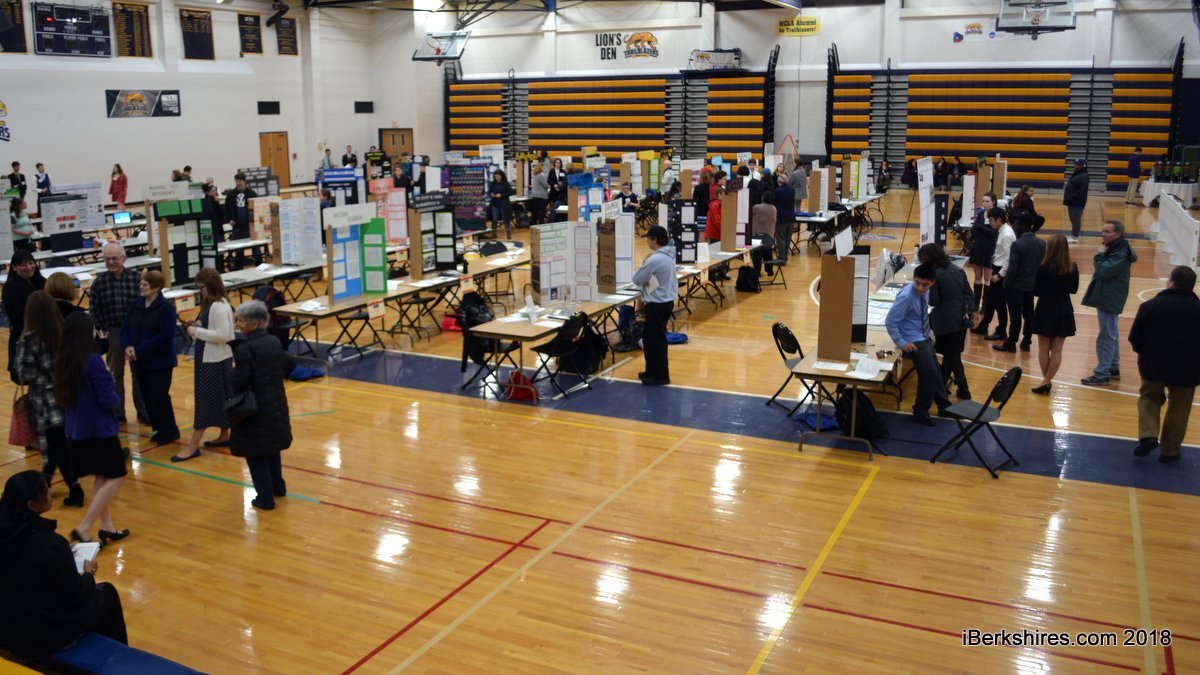
High school students from Berkshire, Franklin, Hampden and Hampshire counties gathered in the Massachusetts College of Liberal Arts gymnasium Friday to vie for a spot in the state science fair and heard from keynote speaker Jeffrey Thomas, founder and executive director of Lever, a startup incubator.
"STEM was something that you just had to do, and we had to go to science class we had to go to math class," he said. "But as I matured I started to discover the cool things and I realized I was really privileged to get to do STEM and I have had that privilege now my whole life."
Thomas shared his humble beginnings with the students and said his first lab research job was in high school cleaning out the rat cages. He said sometimes if he was able to finish his work early he could run some experiments in the lab.
He went on to share his first "dark room moment" in graduate school where he discovered a specific RNA that was both an informational and an activity RNA while developing X-ray film from his research with worms in the dark room.
"It's a moment in time that I will never ever forget …when I got the clear answer to the question I have been trying to ask," he said. "In that moment … I thought about the fact that I was the only person in the world that knew this piece of that information … I hope you can all have your own darkroom moments at some point."
Thomas went on to share his experience in his post-doctoral fellowship as well as his work at various pharmaceutical companies and left the students with three tips: Follow your interests, be flexible and surround yourself with people from whom you can learn.
"I have been super lucky in having all of these opportunities, and I hope that you guys have some of the luck that I have had," he said. "Luck favors the prepared mind, that is absolutely true, so make sure and study hard."
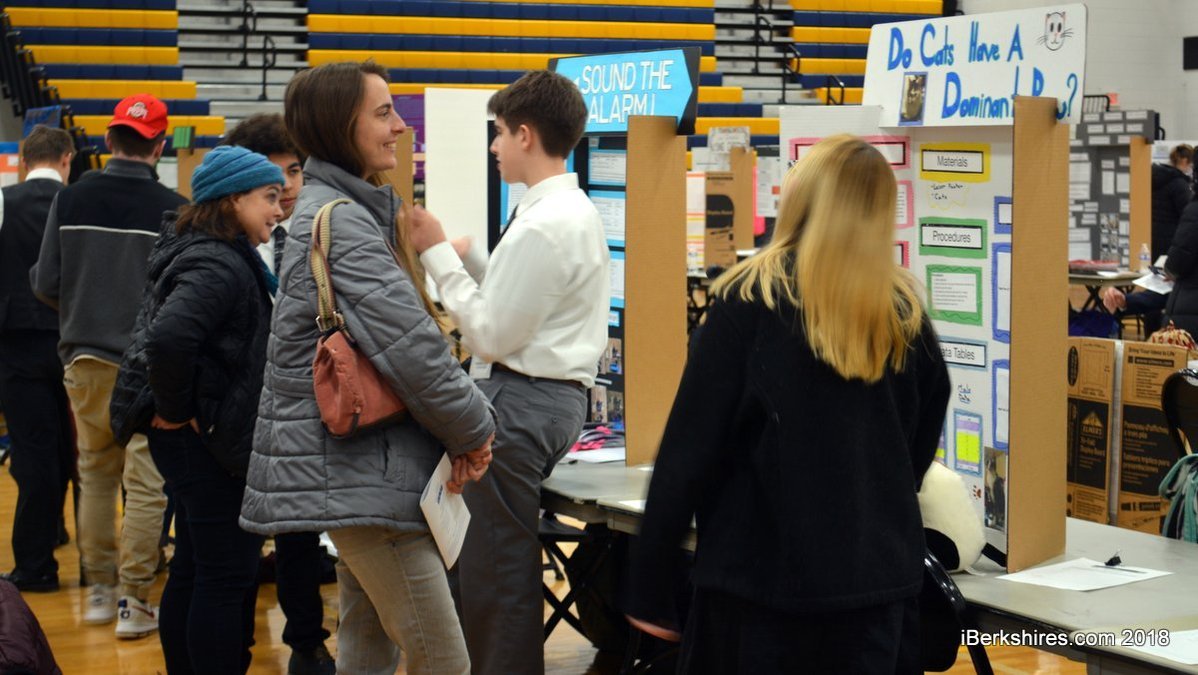
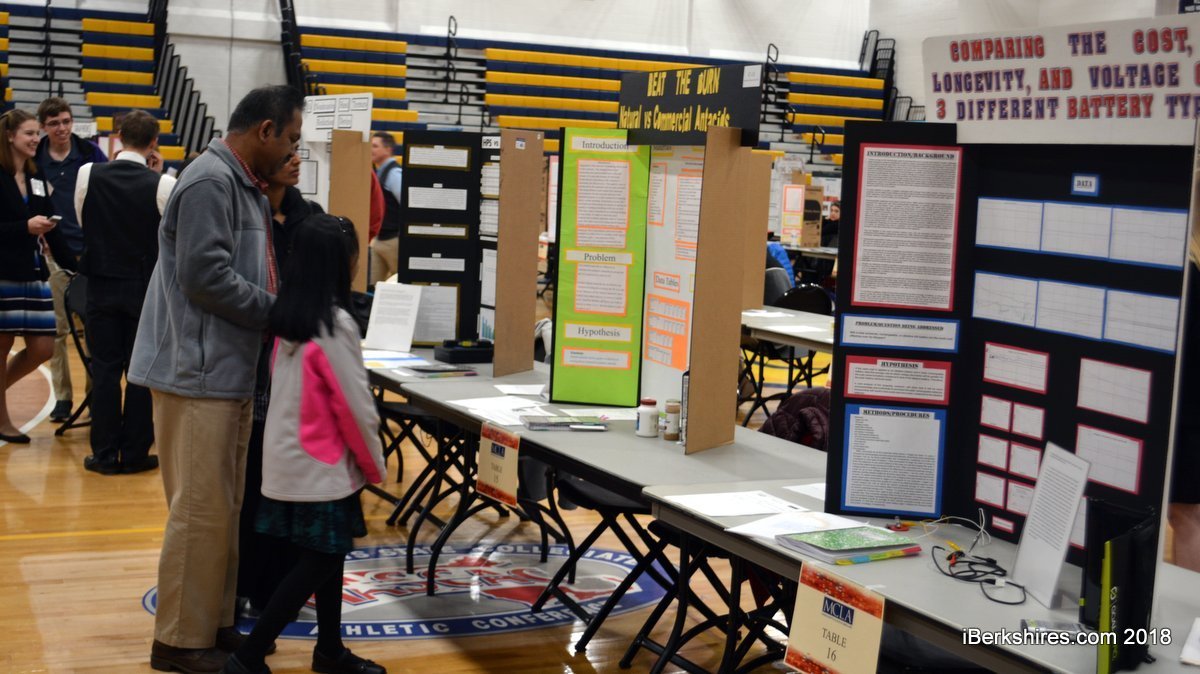
There were a variety of projects at the science fair as students researched questions such as what is the best battery brand and do cats have a dominant paw.
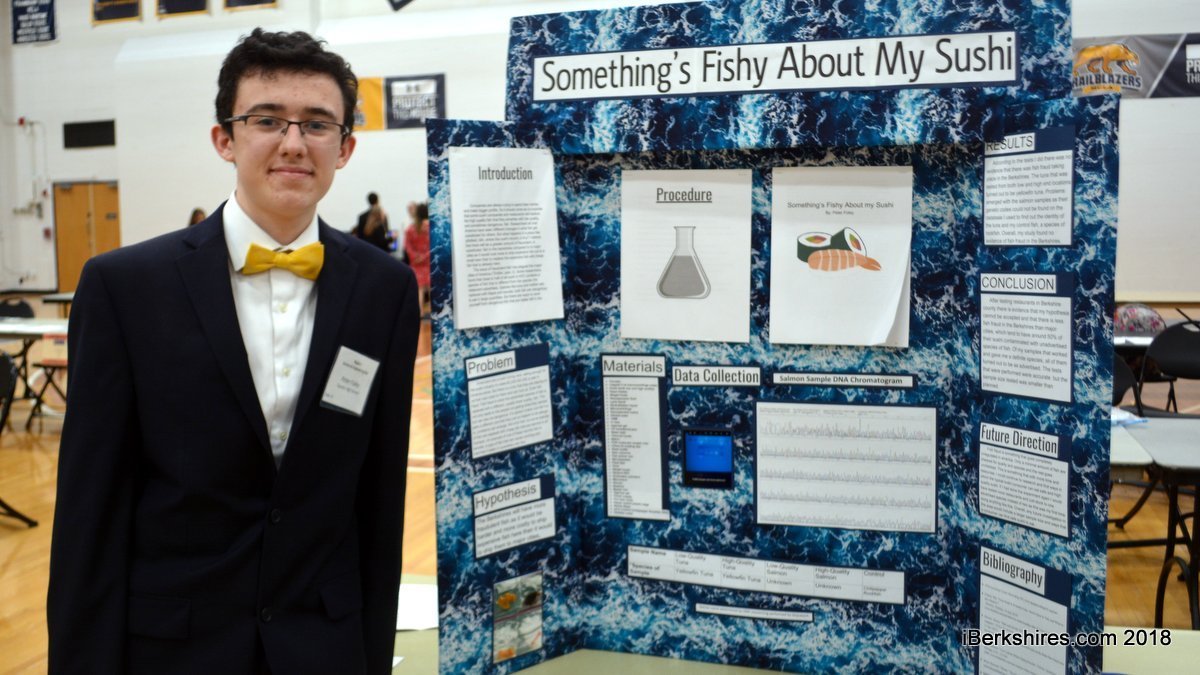
Peter Foley of Taconic High School in Pittsfield wanted to see if "Fish Fraud" was rampant in Pittsfield.
"Fish fraud is when a sushi supplier or restaurant will say that they are selling something like a tuna roll but instead of putting tuna in it use escolar or some other kind of fish you do not want to eat and did not order," he said.
He said it has been found in larger cities that 50 percent of the sushi is fraudulent, and Foley's hypothesis was that Pittsfield would yield a larger percentage of fraud because it is more difficult to ship fish out to Berkshire County.
Foley said he went to restaurants to get samples then extracted DNA and sent it out to get tested.
He had good news for sushi lovers in Pittsfield: the tuna was tuna in all cases and the chili pepper rockfish was a chili pepper rockfish in all his samples.
Foley noted he got an unknown read on his salmon samples but figured it was because it was from a fish farm and was genetically modified.
"You can see that there is no evidence of fish fraud in Pittsfield," he said. Foley's research earned an honorable mention and will be able to move onto the state science fair in May at the Massachusetts Institute of Technology.
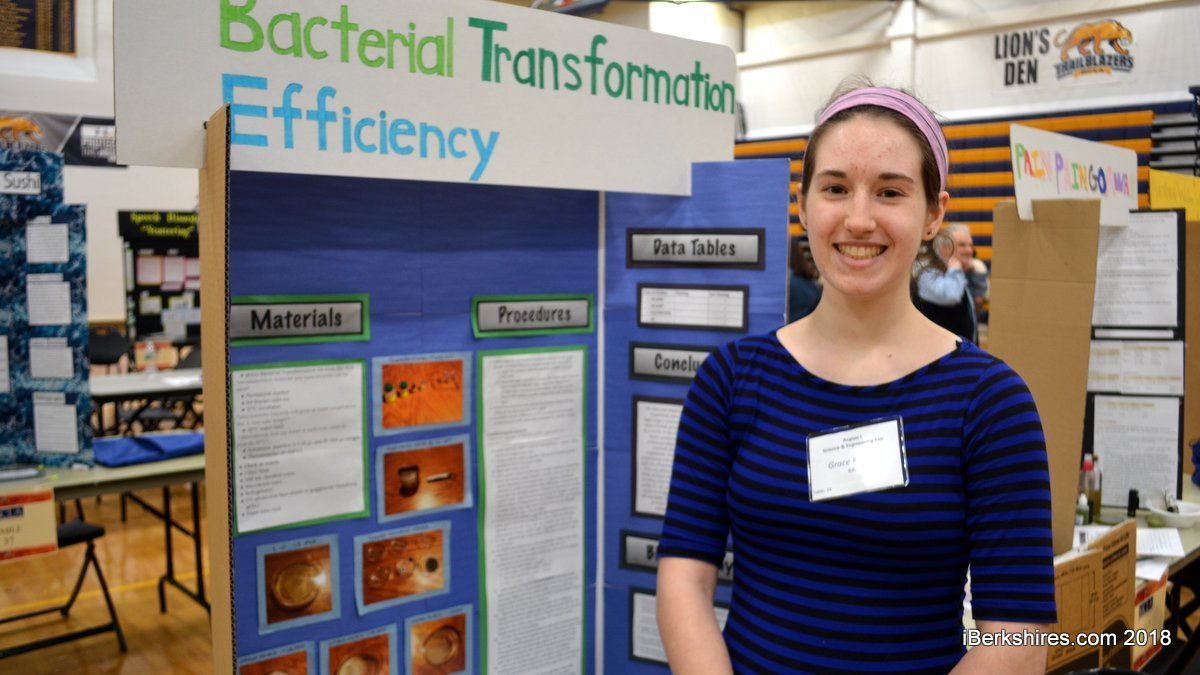
Grace Krzanik of Berkshire Arts and Technology Charter School in Adams researched bacterial transformation efficiency and tested to see which sugar environment is best for E. coli bacteria.
"In this case, I used jellyfish DNA and there is a gene in jellyfish DNA that allows them to glow," she said. "In this experiment, I tested to see if they extracted those genes if would be able to glow or not."
Krzanik said she grew the bacteria and her experimental bacteria and to see if they underwent the transformation, she shined a UV light on them to see if they glowed.
She thought the high sugar would help them perform transformation better, but none of the bacteria glowed.
She concluded that the problem was that mold was present in the samples and altered her data and killed off the E. coli.
"This is another kind of bacteria and I don't know what it is ... since they didn't glow I figured that this is a bacteria that does not perform transformation because it did not extract the glowing plasmids," she said. "I was surprised this bacteria clearly doesn't … so it is like a newly discovered bacteria that does not extract this."
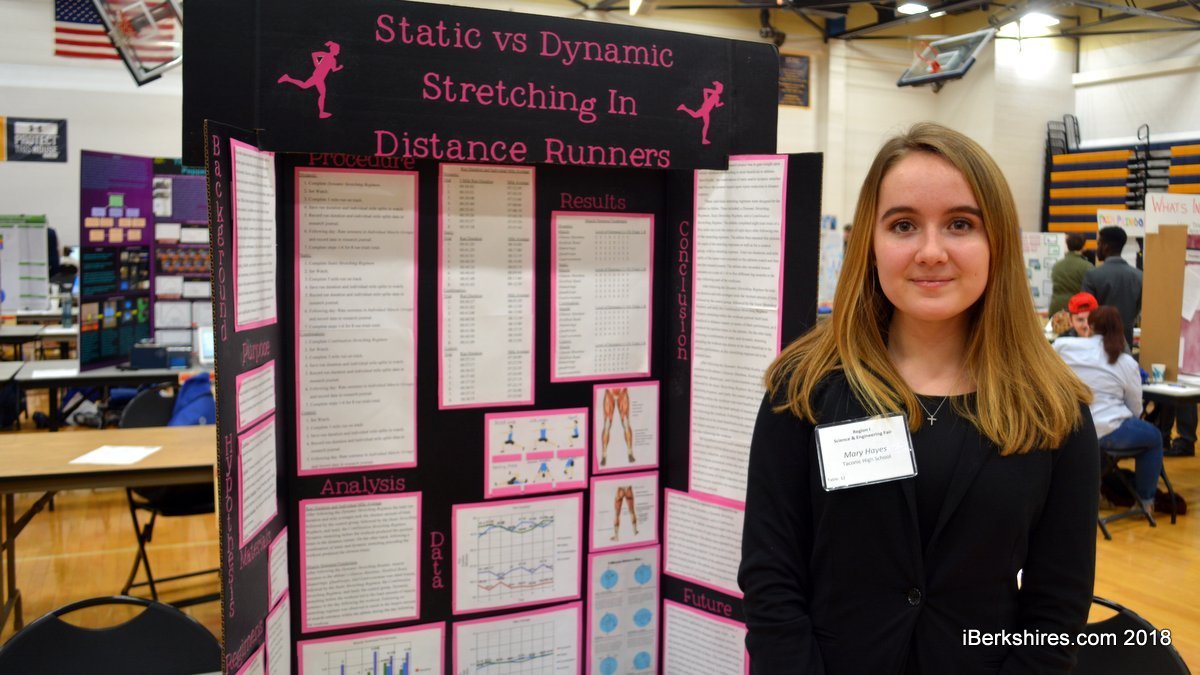
Mary Hayes of Taconic High, who also received an honorable mention, had questions about proper stretching before a workout.
"I run cross country at my high school and over the years I have been wondering what kind of stretching I should be doing," she said.
Hayes said she created a few routines that combined both dynamic and static stretching and tested them out before going on five-mile runs, which she timed. After the runs, she rated how sore she was.
"At the end of my project I found for optimal performance and reduction in muscle soreness that dynamic stretching is the best," she said.
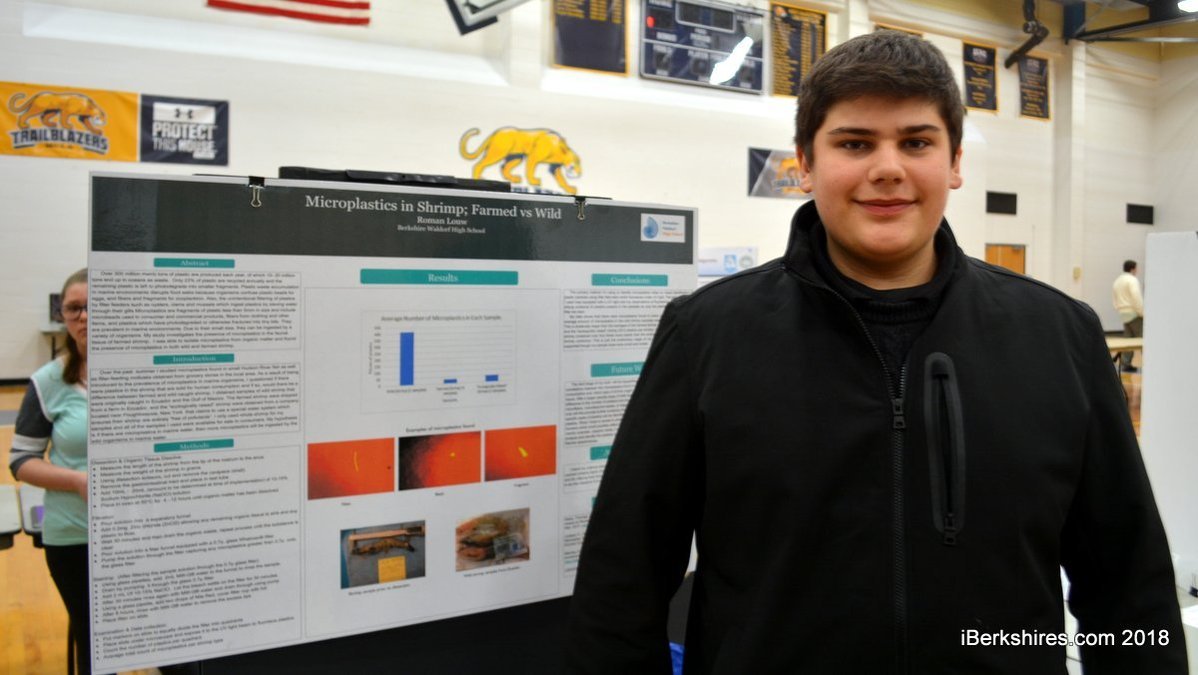
Roman Louw of Berkshire Waldorf High School in Stockbridge researched microplastics found in ocean shrimp versus farmed shrimp.
"I knew these microplastics were in the water so organisms living in the water must be consuming them and I found that was true," he said.
Louw said the wild shrimp had four times as many microplastics in them than the farmed shrimp.
"That means there is more pollution in the ocean water than in the farm water," he said
Region 1 Science Fair Results by iBerkshires.com on Scribd
Tags: MCLA, science fair, STEM,