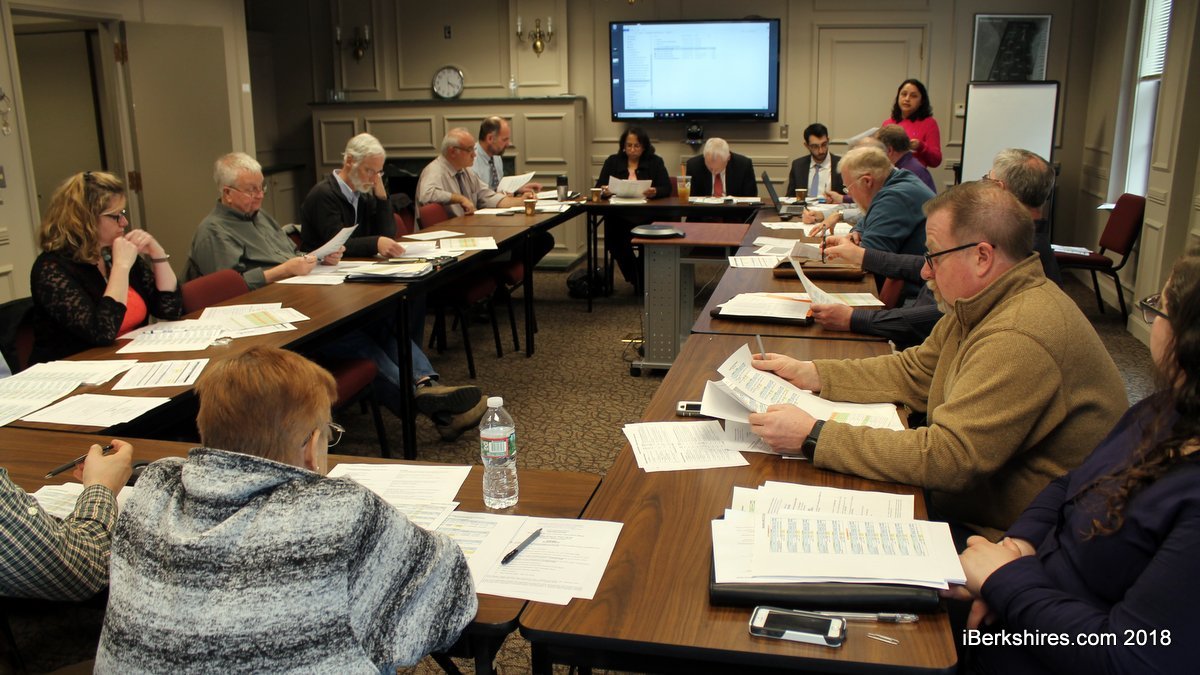
Transportation Management Association For Berkshires In The Works
PITTSFIELD, Mass. — The Berkshire Regional Transition Authority is looking into being part of the creation of a transportation management association for ride sharing.
The BRTA's hours of operation limit the authority's ability to get workers to and from work beyond the typical first shift. This new group would be a collective of employers who would team up to provide rideshare options.
Companies would be able to pay to be part of the nonprofit to provide the transportation for their workers and other groups that may have vans can contract with the TMA to provide the rides.
"It is in the works right now that they are looking to do that," said BRTA Administrator Robert Malnati. "There is a collaboration of people putting it together."
Malnati said the group of stakeholders have a "step by step guide" in to form TMAs. Such ones had been created in the Boston area.
The BRTA doesn't necessarily have to be part of the collaborative, but with vans and buses already on the road, it could serve as the vendor delivering the rides. In some places, the companies hire private transportation companies.
If the BRTA doesn't earn that contract, it can still benefit from the TMA. If another company is hired to use their vehicles, the BRTA can collaborate with the TMA to avoid duplication of routes -- giving BRTA the ability to end some routes and redeploy elsewhere.
"You don't want competitive services," Steve Woelfel, of the state Department of Transportation said.
Berkshire Regional Planning Commission Executive Director Nathaniel Karns said a company like Canyon Ranch could use its own vans to provide transit for other companies when not needed and get reimbursed for it. He also said having companies in places like the Prime Outlets in Lee could align shifts, which would go a long way toward helping provide the right transit for the workers.
But Karns also feels that the big concern in the Berkshires is its rural nature and distance between population and business sectors.
In other business, Woelfel reported that the Berkshire Flyer is feasible and the next steps would be to set up a pilot. The feasibility study determined that a rail car could use the Amtrak train lines to run trips from New York City to Pittsfield on Fridays and then return on Sunday night. The concept would bring tourist and second-home owners during the summer months.
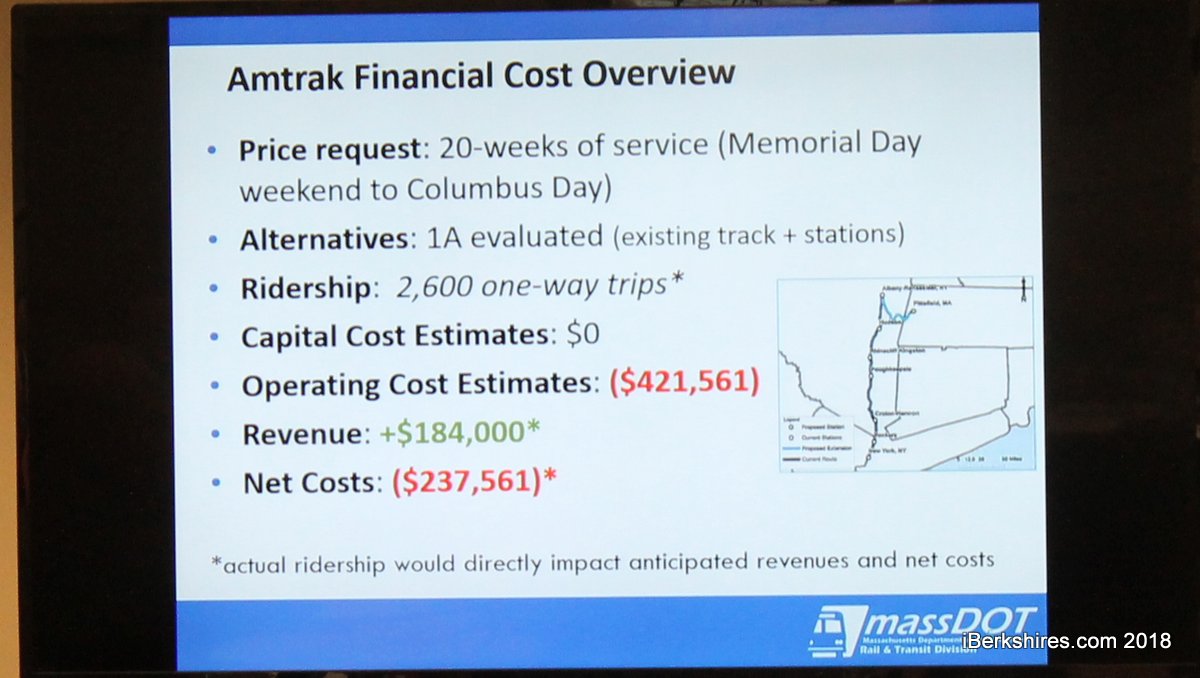
The estimated costs for the Berkshire Flyer program.
Woelfel said the feasibility study showed that there could be 2,600 one-way trips if Amtrak uses the number of seats that tend to be empty now. Those trips would cost $421,561 in operating costs and would be expected to take in $184,000 in revenue.
Thus, the net cost of the program would be $237,561. But, the train rides would also have to be marketed, adding another $50,000 to $100,000 to the cost.
"To the extent we want this service, we have to pay for it as a state. Somebody has to come up with this," Woelfel said.
The state Department of Transportation will now need to find a sponsor for the pilot and then evaluate how the pilot will be measured and evaluated. The last piece that needs to be figured out is how visitors will get from downtown Pittsfield to wherever they are going in the county.
Tags: passenger rail, transportation,