Pittsfield Council Looks to Loosen Proposed Marijuana Regulations
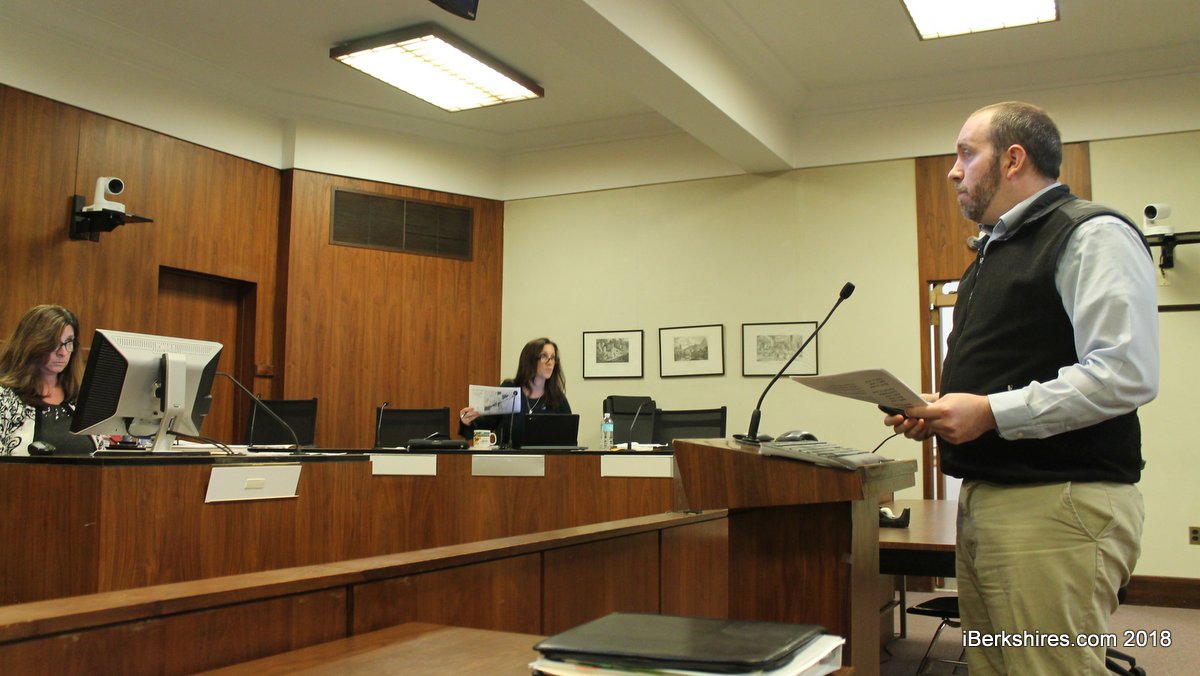
Permitting Coordinator Nate Joyner presented the proposed laws on Monday.
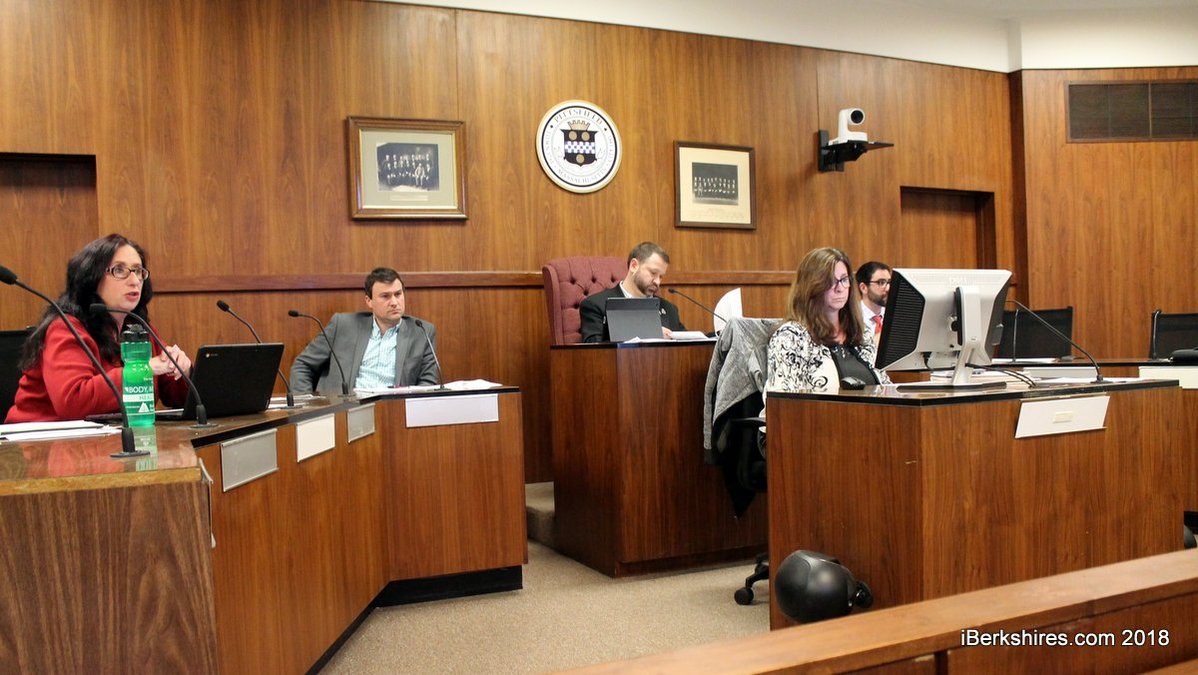
The city's Department of Community Development has proposed zoning guidelines to guide the siting of recreational marijuana enterprises.
But, the council's Ordinance and Rules Subcommittee felt the proposal was too restrictive and opted to lift the cap on the number of retail establishments and eliminate screening requirements for outdoor growing operations.
The committee also teased the idea of eliminating a proposed regulation disallowing a retail establishment with 500 feet of a day-care center but ultimately will keep that setback a requirement.
"We want to be business-friendly. It is a legal thing that the public wants," Councilor at Large Melissa Mazzeo said, often comparing the industry to tobacco and alcohol shops.
Permitting Coordinator Nate Joyner outlined the zoning laws on Monday night. He said the four different types of usages — testing, cultivation and manufacturing, outdoor cultivation, and retail — will either need a special permit or a site plan review to operate in only certain areas of the city — two processes giving the city the chance to weigh in somewhat on the specific site proposals.
There was a proposed cap on the number of retailers to 10 — 20 percent of the number of package stores — and required screening for outdoor marijuana cultivators, and restricted within 500 feet of a school, playgrounds, and day-care centers. Two of those three restrictions were eliminated by the subcommittee.
"The state's licensing requirements have their own stringent security requirements," Joyner said of the local laws, which are focused mostly on-site development.
Joyner said the cap was developed by taking the minimum requirement — seven — and adding the three medical marijuana facilities currently in the pipeline.
"This cap would not count separately recreational and recreational. If you sell both medical and recreational, it will count as one," Joyner said.
Joyner said there is a one dispensary per 4,000 residents in California. With Pittsfield having about 40,000 people, that same ratio would be 10. But, in Colorado, he said the ratio is one retailer for every 1,500 residents, which would call for 28 in Pittsfield. There is uncertainty what the actual local demand will be, he said.
"This is a cap that is self-imposed so we can re-elevate it," Joyner said, saying that the city can change the cap at any point with the only restriction being that it can't be more restrictive than seven.
Ward 6 Councilor John Krol said he always felt the restriction on liquor licenses was "bizarre." He remembers some years ago petitioning the state to increase the number of liquor licenses to allow for restaurants to open.
Joyner said he would expect the city to hit the cap fairly quickly, but much of that will depend on the state's licensing process. He said he's already met with "at least five" potential retailers, three or four cultivation operations, and a manufacturer — from both local investors and out of town.
Krol's motion to eliminate the cap entirely was supported by the majority of the subcommittee, minus Ward 3 Councilor Nicholas Caccamo who felt the city should match the number of permits to the same number of package stores instead.
Mazzeo questioned the limitation keeping an establishment opening near a day-care center. The state restricts the signage on such a facility significantly, requiring a very non-descript building without images or advertisements of the products. She said she understood not being near high schools, but it isn't like preschools will be having access to the shop.
"I think by shuttering everybody up, we are putting this stigma and it shouldn't be," Mazzeo said. "If it is a legal thing and you are an adult, I think you have every right to go into a store and purchase it."
Liquors stores do not have that distance requirement, but the Health Department did adopt the same provision for new tobacco retailers a few years ago.
Health Director Gina Armstrong said such provisions are aimed to reduce access and availability of marijuana. At the younger ages, such as preschoolers, the focus isn't so much on the children but on the parents. She wants to curb the proliferation of acceptance of the use in households with children.
She said the city's marijuana usage among high schoolers is already above average and making it more acceptable in the city will grow those numbers more.
"The more retail options we have, the more visible marijuana is," Armstrong said.
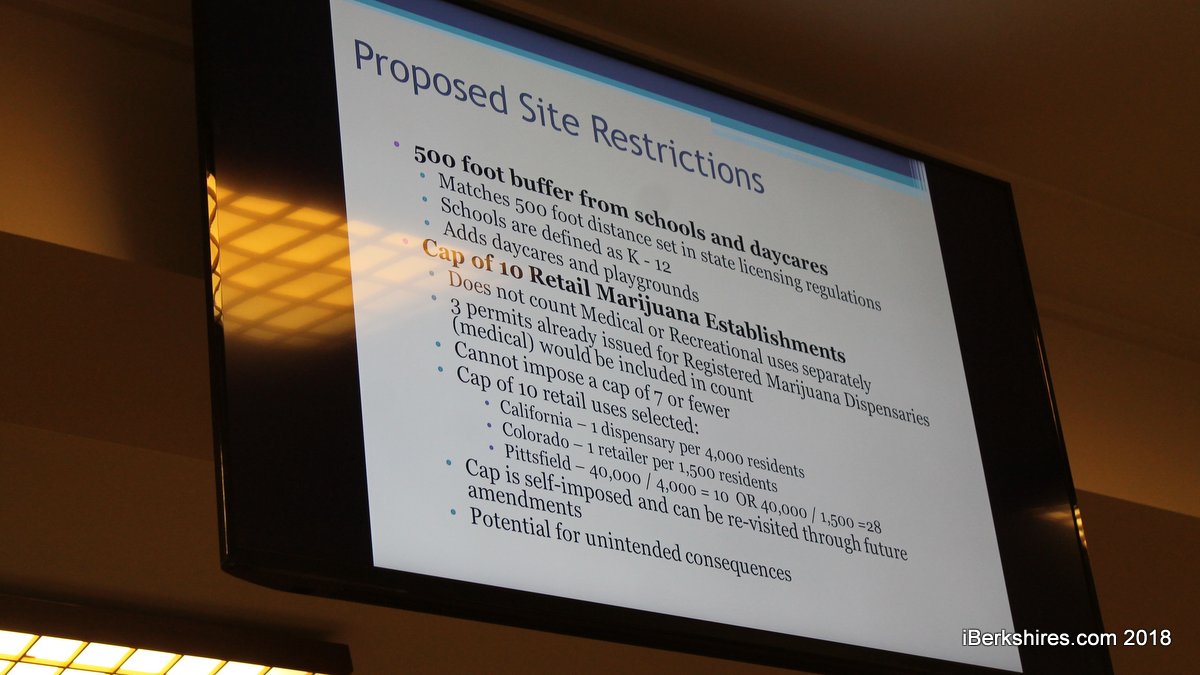
The city's ordinances looked to add a few additional restrictions.
"There are very detailed guidelines for the advertising, signage, promotion. There are a lot of restrictions. But until that is rolled out locally, we don't know how pervasive it will be," Armstrong said.
Ordinance and Rules Committee Chairman Peter White questioned the requirement for screening between an outdoor growing facility and neighboring properties. He said cannabis is a plant, so why would the city restrict visuals of a plant in favor of a fence? He said the city doesn't restrict the visibility of corn or strawberry fields.
"I think it is a little ridiculous to put something that will be uglier up," White said."I'd rather treat this as an agricultural use."
Joyner said that restriction was lifted from the city's regulations on nurseries. He said the screening is just a requirement separating commercial property usages from residential one. The law also creates a 50-foot buffer zone around property lines where no equipment or products can be stored to avoid neighborly nuisances.
Nonetheless, with a special permit process on many of the usages, the city's Zoning Board of Appeals could always add those restrictions later.
"I think we are a little unsure of what these usages are going to look like, so this was somewhat precautionary," Joyner said.
The subcommittee unanimously approved that one. For his third amendment of the evening, Krol then motioned to eliminate the 500-foot set back from day-care centers. But, after conversations among the councilors, he withdrew his support and ultimately voted against his own amendment.
Caccamo said he felt that particular restriction limited the available properties a company can develop.
However, speaking from the gallery, Councilor Earl Persip said the concern of particular day-care businesses should be considered. He said the opening of a marijuana facility near a day-care center could hurt its client base because of parents will second guess sending their children there.
"There are going to be parents out there who won't send their kids to a day-care because there is retail marijuana nearby," Persip said. "We're going to put some businesses at a disadvantage if you don't have a barrier."
He added the city should also consider adding day camps to the list.
Tags: marijuana, ordinance & rules ,