Pittsfield Council Debates Police Oversight, or Advisory, Committee
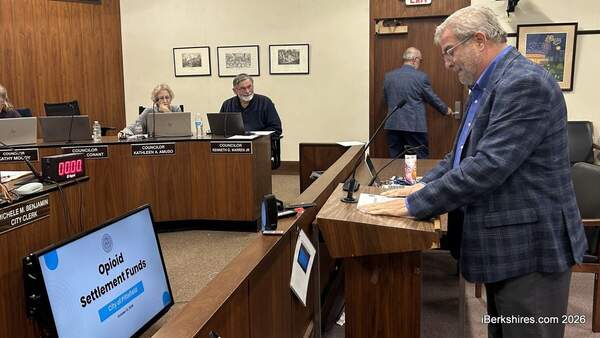
PITTSFIELD, Mass. — The City Council agrees with having a citizen's committee to peer into the Police Department. But, it is more a matter of on whose terms.
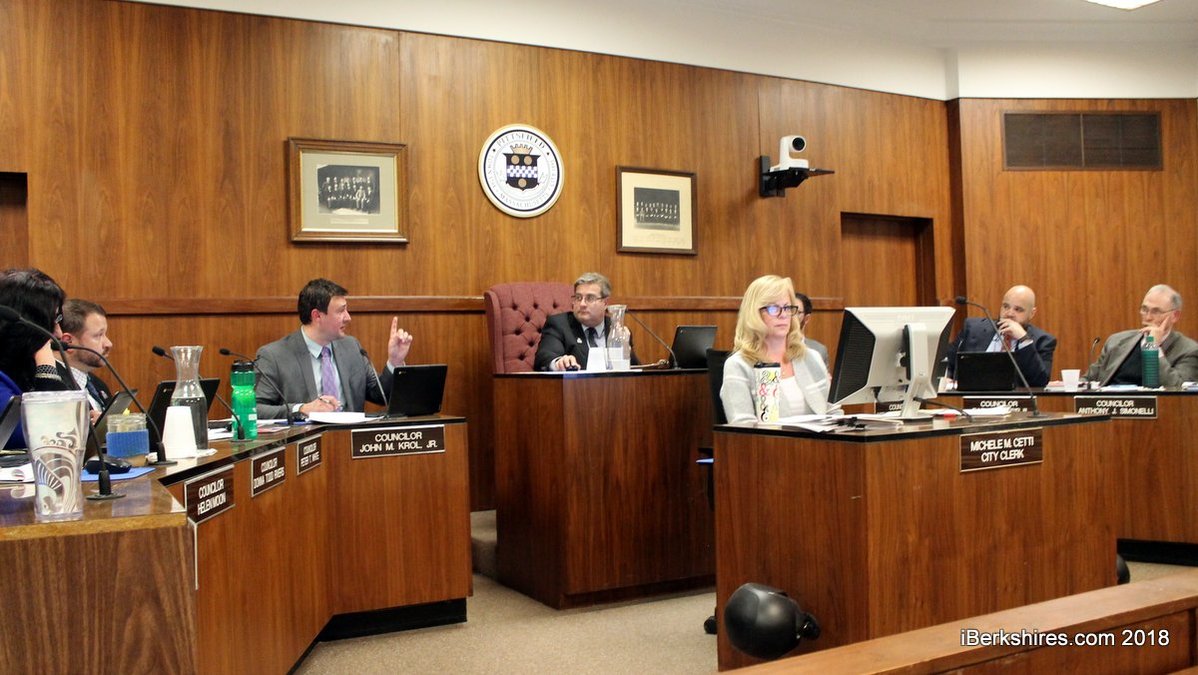
That's how City Council President Peter Marchetti phrased it to help move debate along in the final hours of Tuesday night, as the City Council spent a lengthy amount of time on a petition from resident Craig Gaetani to establish a police oversight committee.
The councilors hadn't really disagreed with the principles of such a committee, but rather, whether it should be a new committee created under the Tyer administration or just the filling of a committee started under the Bianchi administration.
"I don't know why we would not have some sort of citizen's oversight. It seems to make sense. It is part of checks and balances, other communities have done it and it was successful," Council Vice President John Krol said.
Krol said he had a meeting with a group of citizens looking to start a police oversight board, the mayor, the chief of police, and the city solicitor to sort out the workings of such a committee. He said Gaetani's petition was essentially duplicating what is already happening internally.
However, the city already has a similar committee. What had begun as the Police Advisory Committee, formed under former Mayor Daniel Bianchi in 2012, had since morphed into a public safety advisory committee.
But, Mayor Linda Tyer hasn't filled that roster, making it difficult for the committee to meet regularly. It hasn't met in some time because of difficulties with its make up.
"This is an established committee. I feel it should be staffed correctly so it can meet on a regular basis," Ward 4 Councilor Christopher Connell said.
The Police Advisory Committee had some success in the three or so years it had been in operations. It was a force advocating for the hiring of a crime analyst position, it worked with Connell and Councilor at Large Melissa Mazzeo to revamp traffic fines, it provided guidance during the feasibility study for the new police station, and it brought together school officials to handle jaywalking at Pittsfield High School, which ultimately led to the donation of a fence. It handled a petition for downtown foot patrols, which helped create the downtown ambassador program.
But the group was somewhat hamstrung by a disparity between operational aspects of the department and broader issues. Those members had hoped to be a place for people to go to with complaints and concerns. But Chief Michael Wynn pushed back on topics that would publicly air the department's enforcement operations.
Ultimately, the committee was somewhat stuck. It wanted a more active role in the Police Department but was restricted as to what it could and could not discuss.
In October 2015, the committee's role was expanded. That expansion broadened the scope to the Public Safety Advisory Committee, which allowed it to take on issues with the Fire Department, Health Department or the likes as well. But that was just a month before Bianchi lost the election.
After Tyer took office, the committee was treading water. Three members resigned and three other's terms came to an end. The committee had expanded to 13 and those added spots needed to be filled.
By May 2016, the committee determined it needed more direction from the administration. The mayor did sit down with the group and start a conversation as to what its role moving forward would be. But that conversation never moved forward. The group has struggled to get Tyer to make appointments, despite providing the office with names of those interested.
As the meetings got more difficult to hold, and as active members dwindled, the committee basically stopped meeting.
"The people who were on it did a lot of good. And then there was a change in administration, things got a little sticky, and people went to the wayside," Mazzeo said.
In the fall, Igor Greenwald, members of the NAACP, and other citizens started a petition calling for an oversight committee, which Krol says is significantly more targeted in its role than the Public Safety Advisory Group.
They have been working internally with the mayor to develop the parameters of the new committee. But Connell and Mazzeo feel that is a backward way to handle the creation of such a group -- especially given the history of the Public Safety Advisory Committee.
Mazzeo said the existing committee can certainly be changed to have a slightly different role, as it had done already, and that the development of such committee should come from the council. Councilor Kevin Morandi said those types of meetings should be done publicly.
"This needs to be a city committee, not a committee of private individuals behind closed doors. This needs to be out in the open. This needs to be a city committee that looks at this," Morandi said.
Ward 1 Councilor Helen Moon responded by saying those conversations simply stem from the petition. She said she was asked to join the effort during a debate at Conte Community School and that the topic was brought to the mayor for a collaborative effort.
"We were asked by the citizen to look at a police oversight committee and we reached out to the mayor's office to see what could be possible," Moon said.
Krol said that is the natural way many petitions are handled and once the details are fleshed out, it will come to the council. He called it an organic process and one steeped in collaboration.
"The ultimate goal is to come before the council to start something that is greater than an advisory commission, an oversight commission. That is the process," Krol said.
He later added, "there are internal conversations all the time before the mayor presents something to the council."
Ultimately, the councilors didn't do anything with the petition. While they all agree that there should be some type of committee, they can't agree on the steps needed to take to begin discussing the details of the committee's makeup and purview.
Tags: police advisory, public safety committee,