Pittsfield Schools Shift Bus Payment Back to City, Reduces Budget
PITTSFIELD, Mass. — The final payment for the school bus fleet is moving to the city's side of the budget.
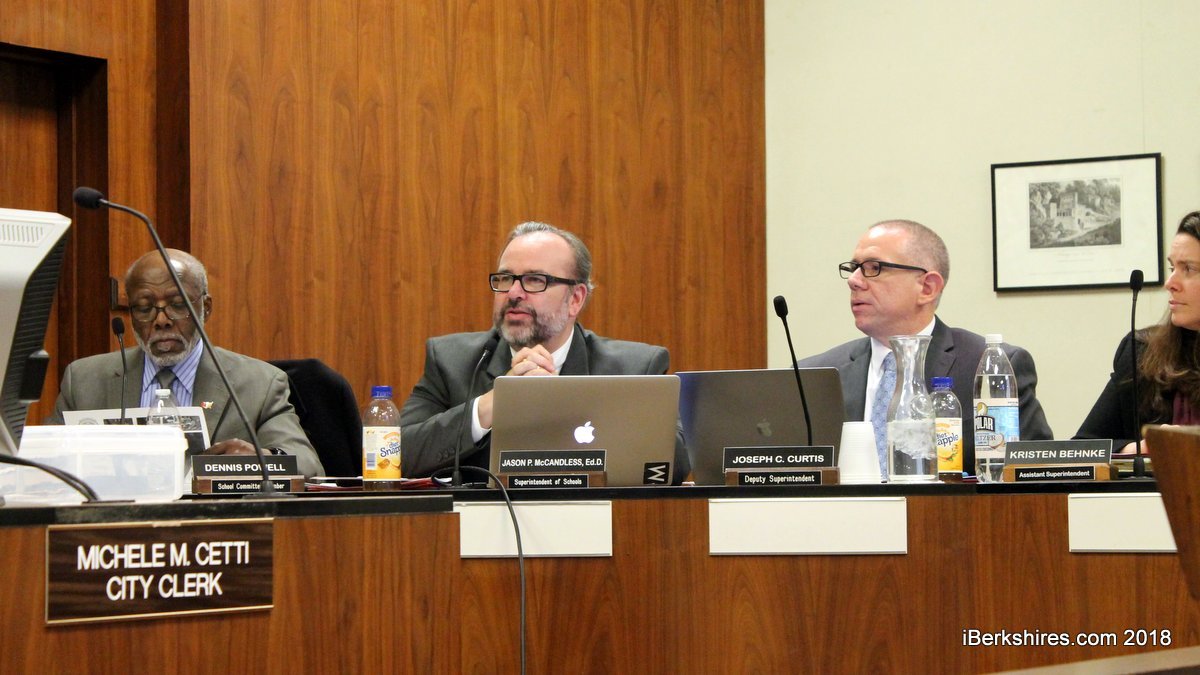
At the public hearing on the School Department's proposed budget Wednesday, Superintendent Jason McCandless said the $558,469 payment is being pulled from the budget request.
That drops the schools' requested allocation to $60,492,869 — a $426,531 increase from last year. The increase is .7 percent higher than this year's budget.
"This was a unique arrangement of paying for buses from our own operational budget that came about through a prior city council, prior administration, and prior school committee," McCandless said.
The agreement had been reached in 2015 when the district purchased the new fleet of buses. Typically such purchases are included in the city's capital budget and subsequent debt service line in the budget. Capital purchases for other departments are not included in the individual departmental budget.
"We don't require the Fire Department to budget for fire trucks. We don't require the Police Department to budget for their purchases," Mayor Linda Tyer said.
The mayor said she would rather have the individual department budget be reflective of the operational work that department is doing. She added that she is looking to put future bus replacements into the capital budget.
"I think it is important to be proactive in building that into our five-year capital plan," Tyer said.
In 2015, prior to her taking office, the city still owed some $1.5 million on the previous bus fleet and the City Council was torn on purchasing more. An agreement was reached in which the School Department took on the payments through its budget.
That is the only change to the budget McCandless has presented two times prior for the upcoming fiscal year.
The request asked for a $985,000 budget increase, which was mostly offset by an increase in state funding. The additional funds are allocated to keep even increases for staffing and programming, bring back full-time kindergarten paraprofessionals who had been cut last year, and consolidate and staff a comprehensive therapeutic program for elementary school students.
"We see this budget as a win for students, as a win for families, as a win for our larger community, and a win for our educators that come to work every day," McCandless said.
But, he cautioned, that despite the funding, not every single position will remain. He said the district is planning on shifting six to 10 jobs so staffing may not be exactly as it had last year. Further, he said there are some 15 positions budgeted that haven't been filled yet because the right candidate hasn't come along.
"We will absolutely, in order to make everything work, be shifting positions," McCandless said. "There will be some ripples. We will be looking to make sure our resources are going to the best service of our children."
But the impacts are a far cry from last year when close to 70 positions were eliminated — including the kindergarten paraprofessionals which McCandless said he later regretted doing.
"Last year was a brutal year. The year before that was hard," he said. "We reduced staff in tremendous numbers and it was difficult at all levels."
The "pain" of getting to the budget last year, which was a decrease, made it easier in crafting this budget, McCandless said.
"I think the pain of the previous years, we are benefiting from the fact that we took very seriously the reductions we had to make and the investments we had to make," he said.
The governor's budget includes an increase of $1.1 million in Chapter 70 funding for schools, which is directed to the municipality. McCandless is looking to spend $385,000 of that for the well-discussed therapeutic program and $600,000 to offset increased costs for the same level of staffing and programming as last year.
"To us, this is not only a practical necessity and educational necessity, but this also falls into that moral and ethical need," McCandless said.
McCandless described his budgeting process. He said he filters the cost of everything the district does through a series of criteria: what the school legally has to do, has to morally and ethically do, what the community needs it to do, what the community wants it to do, and what they wish the schools could do. From there, the staff prioritizes.
"We really bristle at any notion that our budget is wish lists," McCandless said, adding that it would take hours for him to outline everything the schools would like to do.
Wednesday was the public hearing on the budget but no one from the community spoke at it. The School Committee will next vote on it. It then needs approval from the City Council.
PPS FY19 Line Item Budget by iBerkshires.com on Scribd
Tags: fiscal 2019, pittsfield schools, pittsfield_budget,