'Motor Voter' Legislation Passes Senate on Unanimous Vote
Print Story | Email Story
BOSTON — The state Senate on Thursday unanimously passed a version of the so-called "motor voter law," H.4671, An Act automatically registering eligible voters and enhancing safeguards against fraud, by a vote of 38-0.  
 
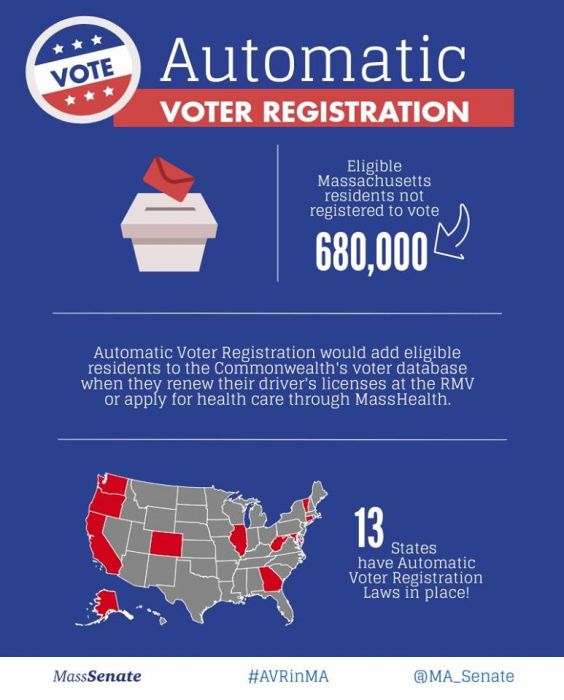
The legislation creates a framework in which eligible voters will be automatically registered to vote when receiving services from the Registry of Motor vehicles, MassHealth, and other participating state agencies. The framework will be overseen and implemented by the secretary of state.
 
"Voting is a fundamental right in our society and yet, today, 680,000 eligible residents in Massachusetts are not registered to vote," said state Sen. Adam Hinds, D-Pittsfield, in a statement announcing the passage. "My hope is today's action will eliminate barriers and help these eligible residents participate in our democratic process by adding them to the voter database as they conduct official transactions with state agencies."
 
The legislation also bolsters voter-data security. It updates the requirements for transmission of voter registration affidavits and requires the secretary of state to promulgate regulations to ensure registration is done through electronic transmission, with data security protocols and integration with the online portals.
 
"Automatic voter registration will allow the commonwealth to work toward making sure that the hundreds of thousands of eligible citizens who are currently not registered to vote can participate in our democracy," said state Sen. Anne Gobi, D-Spencer, Senate chair of the Election Laws Committee. "Enacting this legislation will help engage more individuals politically while giving the commonwealth a valuable tool that will help clean up active voter lists and ensure that they are clear and free of error."
 
The legislation also increases penalties associated with voter fraud. It orders that whoever knowingly provides false information in connection with automatic voter registration shall be punished by a fine of not more than $10,000 or imprisonment for up to five years or both.
 
The legislation now goes back to the House of Representatives for consideration, where Automatic Voter Registration was passed in late June by a vote of 131-20.

Tags: legislation,   voter registration,   
If you would like to contribute information on this article, contact us at info@iberkshires.com.

Dalton Board Signs Off on Land Sale Over Residents' Objections

By Sabrina DammsiBerkshires Staff

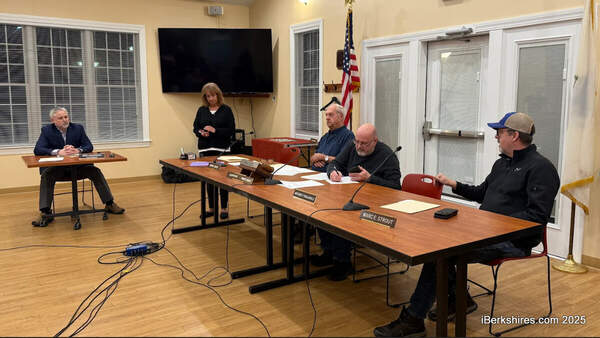
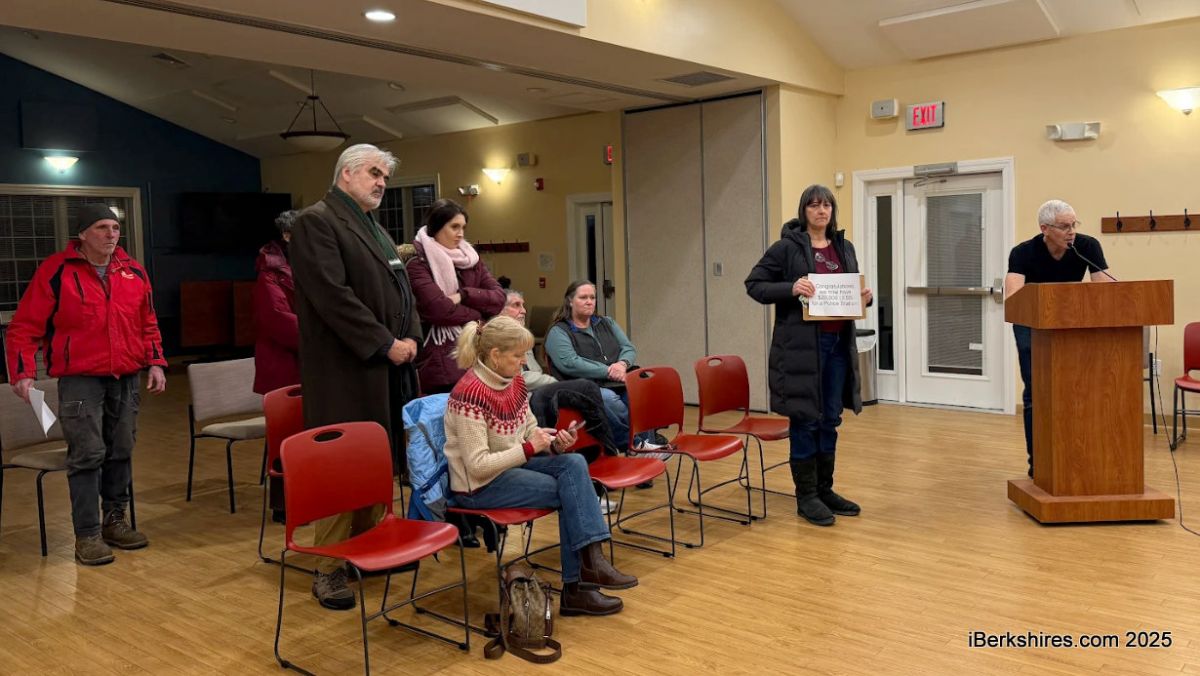
Residents demanded the right to speak but the agenda did not include public comment. Amy Musante holds a sign saying the town now as '$20,000 less for a police station.'
DALTON, Mass. — The Select Board signed the sale on the last of what had been known as the Bardin property Monday even as a handful of residents demanded the right to speak against the action. 
 
The quitclaim deed transfers the nine acres to Thomas and Esther Balardini, who purchased the two other parcels in Dalton. They were the third-highest bidders at $31,500. Despite this, the board awarded them the land in an effort to keep the property intact.
 
"It's going to be an ongoing battle but one I think that has to be fought [because of] the disregard for the taxpayers," said Dicken Crane, the high bidder at $51,510.
 
"If it was personal I would let it go, but this affects everyone and backing down is not in my nature." 
 
Crane had appealed to the board to accept his bid during two previous meetings. He and others opposed to accepting the lower bid say it cost the town $20,000. After the meeting, Crane said he will be filing a lawsuit and has a citizen's petition for the next town meeting with over 100 signatures. 
 
Three members of the board — Chair Robert Bishop Jr., John Boyle, and Marc Strout — attended the 10-minute meeting. Members Anthony Pagliarulo and Daniel Esko previously expressed their disapproval of the sale to the Balardinis. 
 
Pagliarulo voted against the sale but did sign the purchase-and-sale agreement earlier this month. His reasoning was the explanation by the town attorney during an executive session that, unlike procurement, where the board is required to accept the lowest bid for services, it does have some discretion when it comes to accepting bids in this instance.
 
View Full Story

More Pittsfield Stories