End of Session Review 2018: William 'Smitty' Pignatelli
This is the second in a series of interviews with the Berkshire delegation on legislative actions during this past session of the General Court.
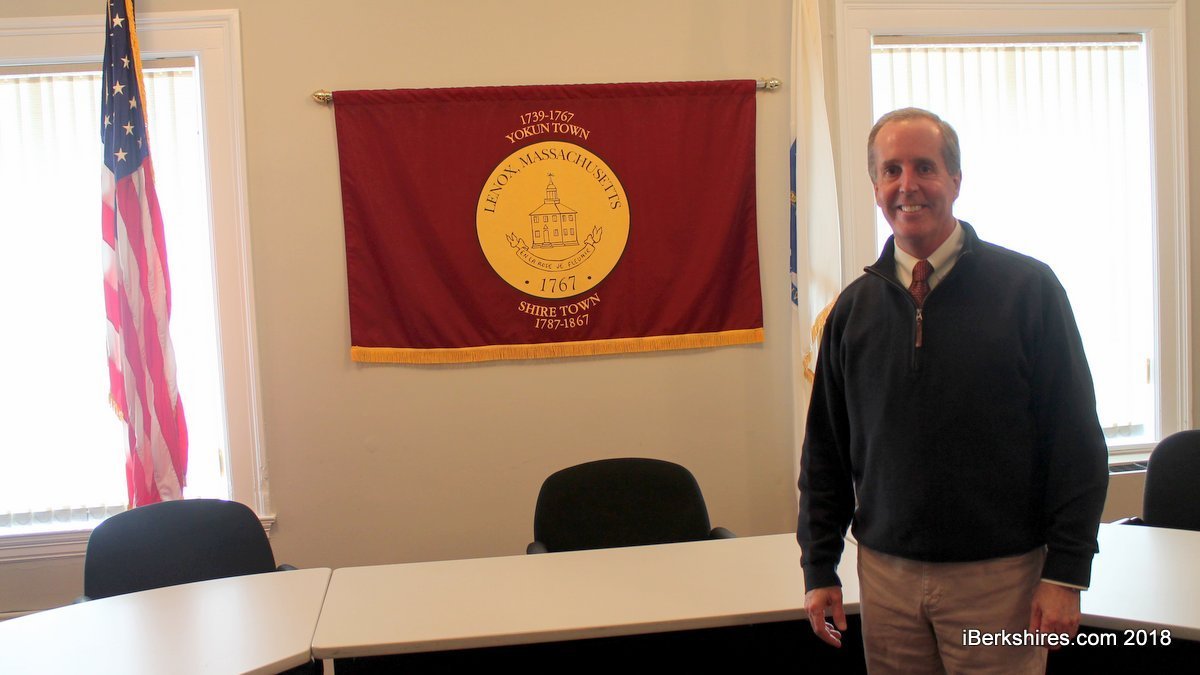
LENOX, Mass. — State Rep. William "Smitty" Pignatelli thinks the House of Representatives had a very productive session.
But he is disappointed that two major topics were never fully addressed — health care and education.
The Legislature just completed the formal portion of the 190th session. While there will still be informal sessions, it is unlikely any major undertaking will take place until the new Legislature is in place in January. In the last two years, Pignatelli said the state did well in budgeting, tackling the opioid crisis, and criminal justice reform.
"I think overall we had a great year, a great session. But we can't ignore health care. We can't ignore education. We can't ignore our infrastructure, especially in the small towns," the 4th Berkshire District representative said.
Midway through the term, Pignatelli was appointed to take over the chairmanship of the Joint Committee on Environment, Natural Resources and Agriculture following the death of Gailanne Cariddi. He said the committee had to do a lot of catch up work at that time but was able to pass tax credit programs for farmers and the $2.4 billion environmental bond bill.
Tax creditwise, Pignatelli said the dairy farm credit was increased from $4 million to $6 million. He said dairy farms have been struggling with the cost of production compared to the sale price. The tax credits are eyed to help keep the industry, which has seen a number of farms close up shop in recent years, alive. That is particularly important to the rural Berkshires where places like Highland Farm have large operations.
Meanwhile, the Legislature passed an agricultural tax credit bill aimed to keep family farms in the family.
"It is going to help tremendously in allowing families to keep the family farm when their loved ones pass on. The estate tax would have bankrupted a lot of these folks. If your mom or dad passes away and they've given you the family farm, you are almost forced to sell it because you can't afford the taxes on it. Now if you want to continue that farm and commit to it for 10 years, you pay a lower tax rate," Pignatelli said.
The environmental bond bill meanwhile has a number of earmarks for Berkshire County. Those include $5 million for culverts on Route 57; $1.5 million for irrigation systems near Tanglewood; $1 million for remediation work at the New England Log Home site in Great Barrington; $800,000 for boat ramp upkeep at Laurel Lake; $400,000 to extend the riverwalk at W.E.B. Du Bois River Garden Park; $300,000 for trail work at Kennedy Park; $30,000 for a feasibility study on the removal of zebra mussels at Laurel Lake; $2.3 million for the Greylock Glen; and $800,000 to development mountain biking trails.
Pignatelli also highlighted the economic development bond bill that earmarks $8 million for a water line project in downtown Lee. That project is particularly going to be helpful in a massive redevelopment of the former Eagle Mill. Pignatelli said all of the investment eyed to be made there is all for nothing if a faucet doesn't turn on. He remembers the large Dresser Hull fire when firefighters struggled to get enough water pressure and had to pull from the river instead.
He sees that water line project as being a key piece of enticing redevelopment in Lee's downtown. With both bond bills, however, the money has to be released by the governor's office. Pignatelli will now be advocating for those funds to be released.
Pignatelli has been particularly interested in combating opioid abuse in Berkshire County for a number of years. Lawmakers passed another bill aimed to increase treatment options.
"This is going to be an ongoing issue. The number of deaths has gone down in Massachusetts but I would argue that it is very misleading because of Narcan. We are saving people, which is good, but we are artificially lowering the number of deaths. I don't want people to get complacent saying 'things are getting better,'" Pignatelli said.
"They are getting better but it is misleading to say our deaths have gone down when we are really saving more lives. Talk to any police officer or ambulance driver. They are using Narcan probably more than ever before."
He thinks the bill fell a bit short on prevention programs. He is looking to get more education into schools and to the youth about the dangers of drugs.
"We have to work as a community more collaboratively and educate kids," Pignatelli said.
The Lenox Democrat was able to get language in the bill for alternative methods of treatment. He had been pushing for acupuncture to be paid for by insurance companies as a treatment option and while he didn't quite get that, he was able to get language in the bill encouraging alternative methods.
"I've been advocating for alternative therapies. Acupuncture has been one of my priorities for the last couple of sessions and although it doesn't specifically say acupuncture, it strongly encourages insurance companies to pay for alternative treatments," Pignatelli said.
That's another step Pignatelli would like to see. He said he wants a heightened focus on providing alternative options for treatment. He said things like exercise, physical therapy, and acupuncture have proven to be effective in helping people recovery and would like to see more of it.
"I really believe prescription pills should be the last prescription, not the first," Pignatelli said.
While Narcan has served as a way to prevent deaths, taking that concept one step forward led to significant controversy in the State House. Safe injection sites have been noted as another way to help prevent people from overdosing by giving them a place with medical staff on hand to do heroin. Those in support say it is the same concept of keeping people who are addicted healthy until they can get treatment.
Pignatelli isn't sold. He needs to know what will be done at those facilities to help wean people off from the opioids.
"The jury is still out with me on that one in particular. Again we are talking about treatments but we are not talking about prevention," he said.
Pignatelli said the bill does call for a study to look at all of the ramifications for the state to then consider designing such a program. Even then, he already knows communities will push back on having such a facility located there.
"You run into the same problem of where does that go? Not in my back yard. We'll hear that in the Berkshires whenever that pops up," Pignatelli said.
Pignatelli instead wants to see stronger prevention efforts in place first and he knows there is still a need for more beds and treatment facilities in the Berkshires.
"We're finally recognizing the crisis that is on our hands. People are better suited in treatment than incarceration. I don't think we go far enough on prevention. We spent a lot of time and effort on treatment, which is after the fact and I think is critically important, but I think we need to put a bigger focus on prevention," Pignatelli said.
That opioid crisis is what Pignatelli believes led to the state taking on criminal justice reform this session.
"This year we had an opportunity and we seized the moment. We eliminated a lot of mandatory minimums which I think is very productive. I think what accelerated that conversation was the opioid crisis. I think people were unnecessarily sent to jail for minimum sentences when they should have been in treatment," Pignatelli said.
That bill reforms bail to keep people from being imprisoned prior to a trial because of their ability to pay, increases diversion programs to keep get those who need treatment into such programs instead of jails, and eliminated a number of mandatory minimum sentences. Pignatelli had filed an amendment to increase bias-free training programs for police.
"Our police officers are on the front lines, they've been in the spotlight nationally all year long, some it justifiable, some of it negatively. But I think bias-free training is critically important. We're seeing the diversity changes right here in the Berkshires and I think people need to understand different racial, religious, emotional histories of someone a police officer comes upon and give them the proper tools to deal with them accordingly," Pignatelli said.
The Legislature also took on recreational marijuana after voters passed it on the ballot. Pignatelli said he's "never been a big marijuana guy but it is law now." He is pleased that the regulations the state developed gives a number of local controls of such a business.
"It is a slow process but we need to stay on top of it. This is what the people wanted. We have communities taking ownership of it and deciding if, where, and when they have an establishment in their town," Pignatelli said.
The new industry is expected to bring in new revenue and Pignatelli hopes to use that to fund addiction services and opioid prevention options.
"I hate it when the government turns to vices to pay their bills. We turned to casino gambling a few years ago and we have yet to see a casino open. And then we turned to marijuana. I think we need to make sure that money is being spent appropriately," he said.
But yet, health care remained on the table. Pignatelli said the House and the Senate disagreed with how to pay for it. He said the House pushed for assessments being paid up front while the Senate wanted it on the back end after the market could adjust.
"I think that was very dangerous. I think it was going down a slippery slope. We saw the North Adams Regional Hospital close. We have other community hospitals in the state on very fragile financial footing. To wait for the market to adjust that three, four, five years from now like the Senate wanted to do, I thought was shortsighted," Pignatelli said. "How many more hospitals would close while the market was going to adjust itself?"
The collateral damage of that bill not being passed is an amendment Pignatelli had made to increase dental care by creating a mid-level practitioner job. He said last year some 3,000 children never saw a dentist and he wants to increase access to oral health care.
He sees health care as an urgency because of rising costs. The state finished the fiscal year with a surplus, but Pignatelli said that could easily end up going toward health care instead of being spent elsewhere.
"The one issue that is still an annual argument is the rising cost of health care. One of our big disappointments this year was not having a health-care bill get across the finish line. The rising cost of health care could quickly and easily eat through our surplus," Pignatelli said.
Education was also a bill that wasn't completed. Again Pignatelli said the House and the Senate had different views on the funding.
"There are 200 legislators with 200 ideas on how to fund education," Pignatelli said.
He said there are a lot of moving pieces when it comes to funding schools whether that be the cost of vocational education, the cost of rural transportation, funding charter schools, and the cost of special education. Pignatelli is calling for a complete overhaul of the funding formulas.
"We gave nearly $5 billion in Chapter 70 to cities, towns, and school districts last year. That's about a billion and a half more than we spent 10 years ago. Anybody who says we are not spending money on education is wrong. But how it is allocated at the state level and how it is spent at the local level, we need to have a much deeper comprehensive conversation," Pignatelli said.
"We were starting to have this conversation in the last few months of the session. That's something that should be going on right now. When we tee it up in January, we are not waiting until midnight on the 31st of July."
The funding formula of Chapter 90, which is given to towns for roads, is what Pignatelli said he'll be preparing to launch next session. But he doesn't expect that to be easy.
"We've got to come up with a better formula. I'm trying to take a deeper dive into that. It is a big lift because with any reform, there are winners and there are losers. If your town gets more money, you think that's awesome. If your town loses money in the new formula, that's not good. We need to find a middle ground," Pignatelli said.
Other small bills Pignatelli noted is getting $50,000 set aside to study a shared services agreement in multiple south county towns for ambulance service; making voter registration automatic; passing paid family medical leave and raising the minimum wage, revoking outdated laws blocking unmarried women from access to birth control; increasing civics education in schools; and taxation and regulation on AirBnB — though that last one is still in the process with Gov. Charlie Baker filing a rewritten proposal.
Tags: Berkshire delegation, legislation, Pignatelli,