Pittsfield Considering Citizens Oversight of Police Department
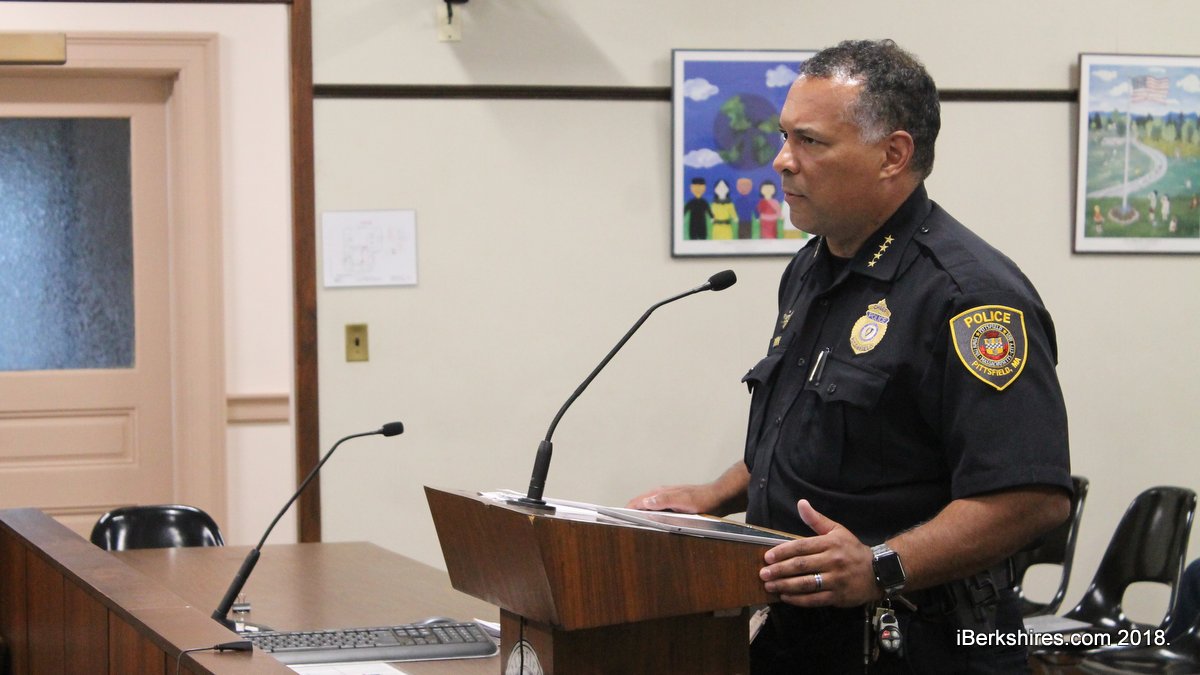
Police Chief Michael Wynn doesn't disagree with the concept of a citizens advisory group to increase transparency but how the ordinance is written matters.
She called the police for help.
Her boyfriend Daniel Gillis was distraught that day. He was stressed out about moving to Boston for a job and earlier he had gotten into with a co-worker and thought he may have lost that opportunity. That afternoon he was drunk when Sykes got home. She got him in the car and was planning to take him to his mother's house to sleep it off.
But he pulled on the steering wheel and Sykes brought the car to a halt. He got out and went to her house and kicked in the door to get inside.
"I called the Pittsfield Police Department for help and I'll probably always regret my decision to make that call," Sykes said.
While she waited for officers, she noticed Gillis had a bottle of her medication and fearing he'd use them to take his own life, she barged in to take them away. He was suicidal and had a kitchen knife in his hand. Sykes pulled it away and ran out of the back door. She told the cops what happened.
"I thought they understood that time was on their side if they'd just wait him out," she said.
More officers arrived and instead of waiting, they were yelling at Gillis, she said. Gillis, with another knife in hand, came out of the house when, she said, the last officer to arrive on scene shot him seven times.
"Danny was never tased or pepper sprayed. I'm convinced that had police controlled the situation and given Danny just a little time, room, and calm, it would have only been a matter of time before all the medicine he'd taken kicked in," she said.
She was interrogated and denied the ability to see his body. She remembers running from the hospital home after she was finally told that Gillis had died. When she did get home, she said she had to argue with officers on the scene to get a change of clothes.
Later she went to the Police Station and asked to speak to a detective about filing charges against the officer but was denied an interview as the case was under an internal investigation.
A month after that, the Police Department determined that Officer Christopher Colello had done nothing wrong during the response.
That didn't end Sykes' issues with the department. She saw officers poking around the home at 11 p.m. one night and when she had a rally in protest of police shootings, she said officers in cruisers were driving by "flipping us off, yelling things out the window at us."
Elizabeth Calkins has somewhat of a similar story when officers arrived at her home in 2012. She was getting ready for work and they arrived looking to take her to the hospital. She was confused, didn't have any appointments scheduled, and just wanted to go to work. After a few minutes of back and forth about it, she said she asked point blankly if she was being arrested and apparently the officers said no. So, she asked if she could leave.
"And the officers looked at each other, and I don't recall their exact phrasing at this point, but the gist of the reaction to each other was a 'looks like we have to do this the hard way' sort of sentiment," Calkins said.
Soon enough she was face down on the ground, her arm being twisted, and a knee dug deep into her back. She said she could barely breathe. Then she was cuffed and placed in the back of the cruiser.
She alleges that one line in a message she sent to Elder Services about one of its employees led the agency to file for a Section 12 to get a psychiatric evaluation. She had written: "I feel like your agency treats me like you wish I didn't exist so you didn't have to deal with me while caring for my mother."
"You can have a Section 12 called on you based solely on a doctor you have never met taking a single line completely out of context. That can involve the police manhandling you and nearly suffocating you and dragging you off in handcuffs despite you not being a threat and not being charged with a crime. They don't have to tell you why you're being taken away and that will all be seen as standard police practice," Calkin said.
There is really no place to bring those issues — whether it be police procedures or the actions of a single officer — in Pittsfield. The police will do their own investigation of a complaint and come out with its own determination.
For Calkin and Sykes, police investigating each other doesn't seem right.
The pair gave lengthy testimonies on Monday to the City Council's Rules and Ordinances subcommittee in support of creating a Police Oversight Committee.
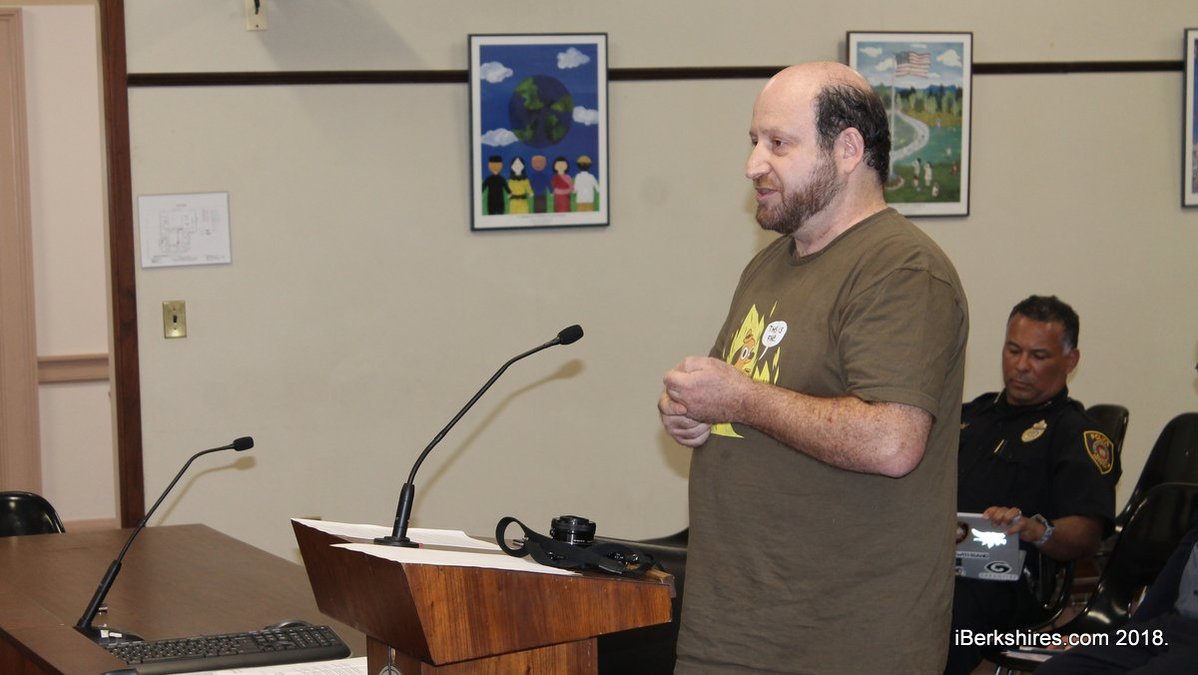
Igor Greenwald has heard many stories like that and put forth a concept of creating the new commission to do an independent investigation of such complaints. He'd like to see the citizen's group be well trained in doing such investigations and be the place to handle not only complaints but to weigh in and review police policy and procedure — including such things as the use-of-force policies.
He wants the group to keep data on public safety issues and provide statistics on crimes reported and solved by category, arrests, charges, use-of-force instances, locations of no-knock warrants, the number of complaints and have a yearly report available to the public to understand what's happening in law enforcement. He'd like to look into providing training to de-escalate a situation.
Greenwald had his own negative encounter in 2012 when police took his son in for a psychiatric evaluation after he said a teacher at Berkshire Arts and Technology Public Charter School reported the boy as dangerous because of a social media post.
He told police he'd go to the media or file a lawsuit over it and he said what he got was the "nice-middle-aged-man treatment" from police leadership that promised him that the officer would get a talking to. He said he received a letter later that said the officer would be counseled about his manner but Greenwald said, "in reality, nothing was or has since been addressed. The department's leadership had merely swept under the rug another symptom of poor training, another instance of abusive conduct."
Greenwald doesn't believe he, Sykes, and Calkins are the only ones. He said for every police abuse story heard, there are "several victims who won't step forward."
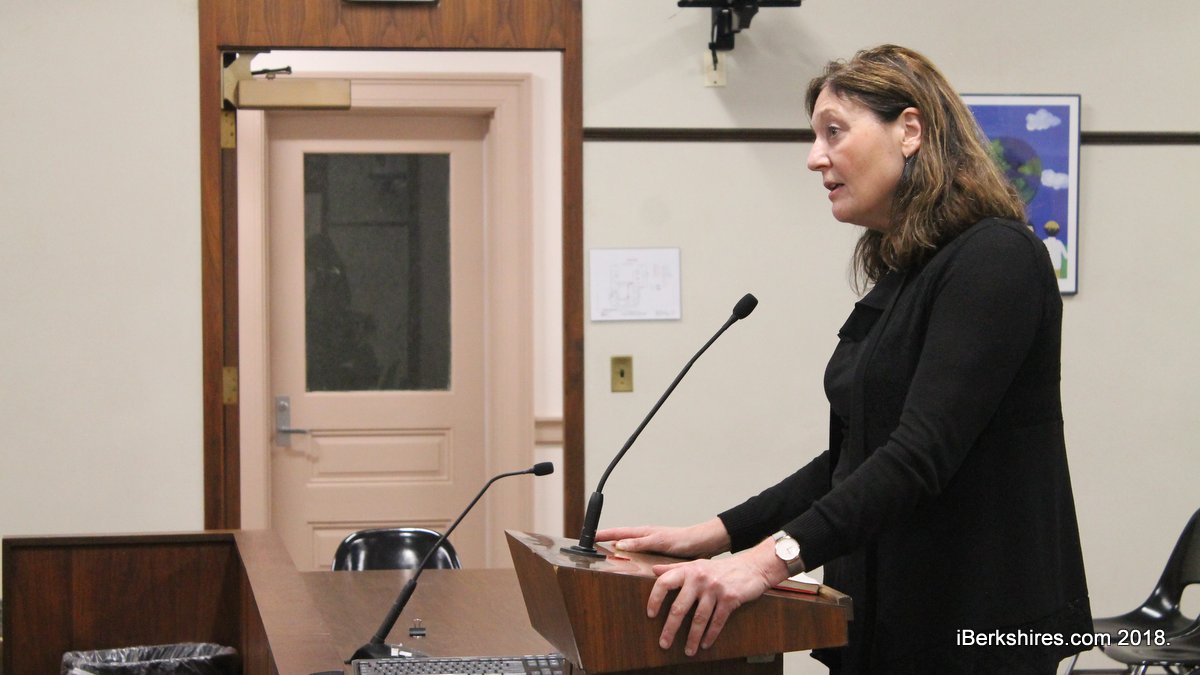
Judith Knight, who is running for district attorney, voiced favor of the city crafting such an oversight committee.
"The killing of Daniel Gillis was not only regrettable, it was likely avoidable and is furthermore seen by many Pittsfield residents as unjust. It seems unjust because the response of the officer who shot him looks grossly disproportional to the danger Daniel posed. It seems unjust because there are better tactics and models out there and because the leadership of the Police Department and the city doesn't seem to care," Greenwald said.
Attorney Judith Knight, who is running for district attorney, chimed in to say she currently has a case in which she is convinced officers used excessive force. She said there needs to be an oversight group to help build trust between law enforcement and the public.
"There is a desperate need in Pittsfield in particular," Knight said.
Police Chief Michael Wynn doesn't vastly disagree with the intention of Greenwald and others. In fact, he had petitioned for an advisory board a decade ago.
But Wynn said the administration in 2008 "watered it down." He tried again a few years later and a subsequent administration got one off the ground, but it too wasn't up to par with the intent to increase transparency and best practices. That group ultimately fizzled out.
"I've been dealing with an ineffective response to my request for 10 years," Wynn said.
Last year, Greenwald sat down with Mayor Linda Tyer, some city councilors, and City Solicitor Richard Dohoney to talk about a new committee that would have more authority. Attorneys, however, determined that Greenwald's vision faced legal issues — particularly around the committee's ability to subpoena witnesses and officers. The attorneys said that it violated the Civil Service process for discipline — including the rights of the accused officer. And that it could conflict with a criminal investigation.
"We drafted the ordinance that we put forward. We believe that offers the most amount of transparency and oversight without violating civil service law," Wynn said.
Wynn said they had looked at other ordinances in places like Springfield and Cambridge and while there is subpoena power written, the committee can't actually use it.
"You can pass an ordinance but if you haven't done some research up front you can have stuff that can't be done operationally," Wynn said.
Greenwald, however, said the ordinance doesn't provide enough. Particularly, the committee will only see internal investigation reports after they are done by the department. He said that will leave the committee members ineffective.
"In the absence of fact-finding powers, the board would be entirely reliant on the self-interest and predictable friendly conclusions of police probes into police conduct. Its handpicked members, stripped of the modest authority and initiative permitted elsewhere, will turn into a rubber stamp and ultimately like their predecessors into members of a board that never meets," Greenwald said.
"We had so much more than this in mind when we asked the mayor and the police chief to develop a new model for police accountability last year."
Ward 6 Councilor John Krol called it disappointing that department found no wrongdoing in the Colello case and he, too, supports a citizens committee "with teeth."
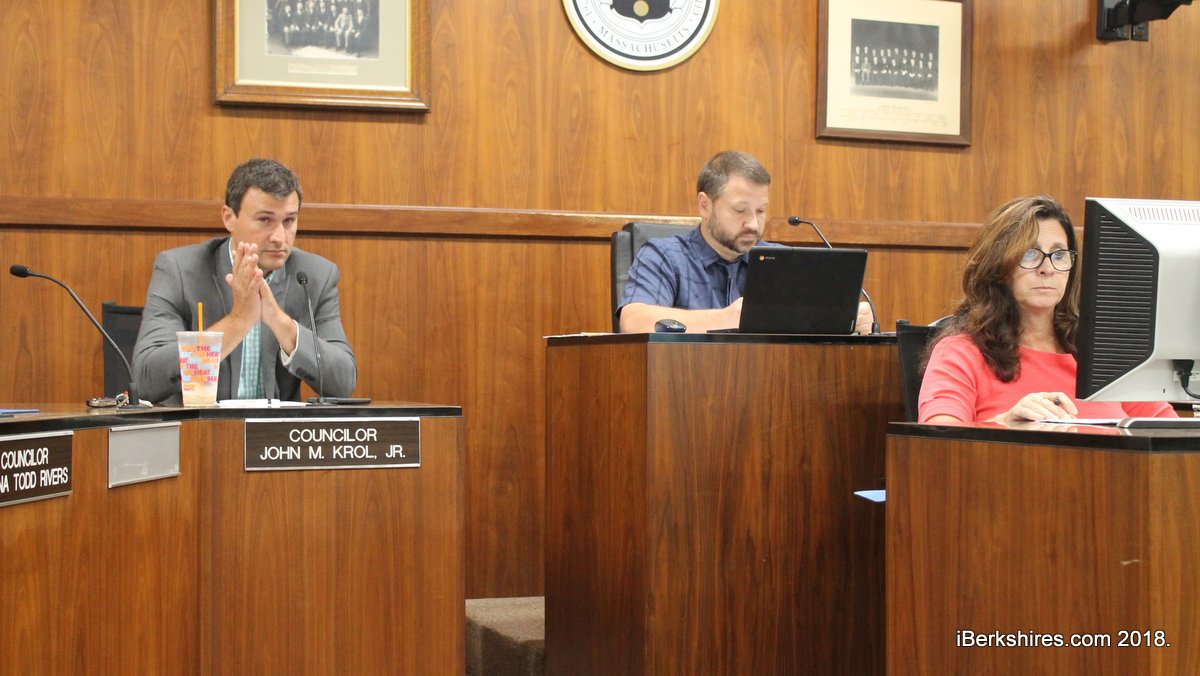
Ward 6 Councilor John Krol said the ordinance needs more "teeth."
Councilor at Large Melissa Mazzeo said right now it is so easy for a video clip to go viral on the internet portraying an officer doing wrong when they hadn't. An oversight committee could also help officers, too, by clearing their names independently rather than leaving the suspicion of a cover-up, she said.
"If I were a police officer, I'd want something like this," Mazzeo said, adding that the debate before the council is not an "us versus them."
Greenwald has now put forth his own version of the ordinance and the council has the mayor's plan. The Ordinance and Rules Committee is now looking to find a way to craft an ordinance that will work for all parties and be legally sound.
Tags: ordinance & rules , police advisory,