Legislation Extends Lafayette Trail From Hinsdale to Hancock
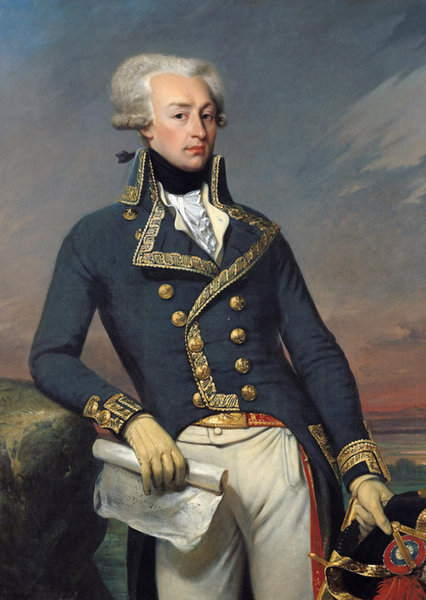
Marie-Joseph Paul Yves Roch Gilbert du Motier, Marquis du Lafayette as a young general in 1791.
The measure, S. 2265, An Act relative to the Lafayette Trail, was filed in December 2017 after state Sen. Adams Hinds met with Consul General Valéry Freland, of the Consulate General of France in Boston.
As chairman of the Committee on Tourism, Arts and Cultural Development, Consul Freland sought to brief Hinds on the cultural significance of the trail, which tracks the route the Marquis de Lafayette, the famed French general who played a pivotal role in the American Revolution, took as he traveled across all 24 of the United States.
Lafayette's tour of the nation, done at the invitation of President James Monroe, took place between July 1824 and August 1825. The president envisioned the tour as a kick-off of the festivities for America's upcoming 50th anniversary.
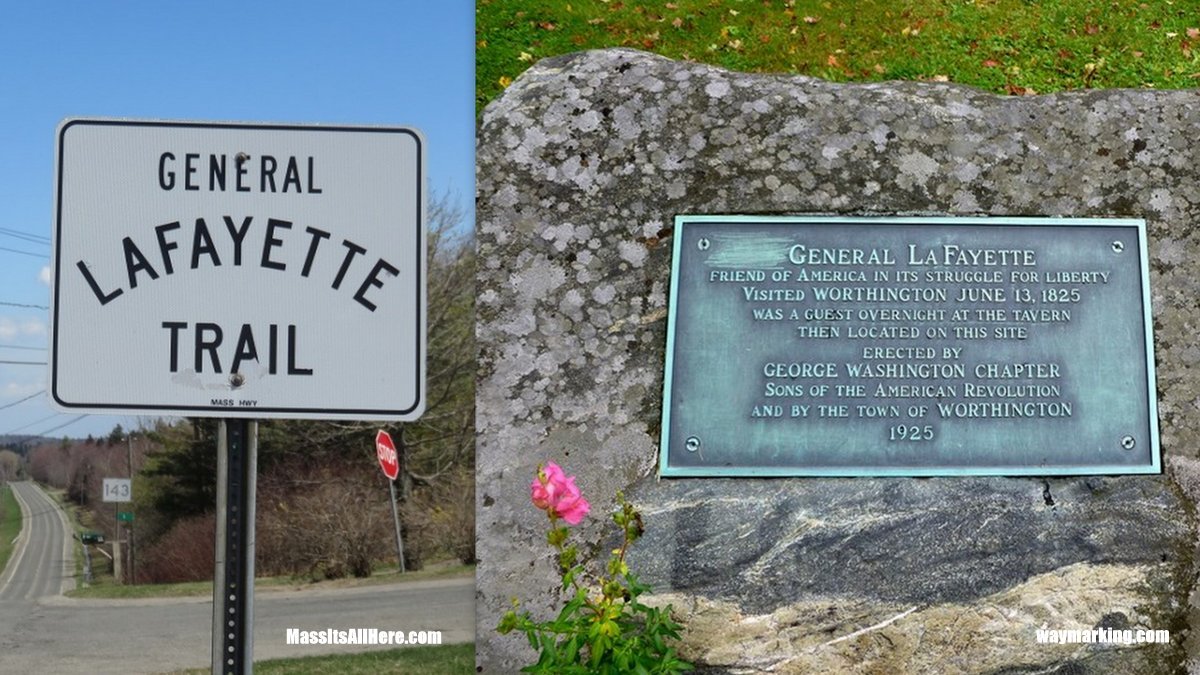
The legislation, co-sponsored by state Reps. Tricia Farley-Bouvier, Paul W. Mark, and John Barrett III, extends the trail from Route 143 in Williamsburg, Chesterfield, Worthington, Peru and Hinsdale (Chapter 29 of the Acts of 1997) to Route 8 in Hinsdale, Dalton and Pittsfield; to Route 9 in Pittsfield and along Route 20 in Pittsfield and Hancock to the New York State border. Further, it directs the Highway Division of the state Department of Transportation to erect and maintain suitable signage to denote the route.
"The commonwealth hosts a number of historic trails which are enjoyed daily by residents and visitors alike," said Hinds. "As our French partners prepare for the 200th anniversary of General Lafayette's tour in 2024, it makes sense that Massachusetts would take steps to officially recognize and outline the route he traveled all those years ago across Western Massachusetts."
Lafayette, then about 67, stopped several times in Boston and visited former President John Adams. His peripatetic journey took him in wide arcs and zigzags across the then established states. During his first stops in1824 in Massachusetts, he went as far west as Worcester before heading south into Connecticut.
The next year, after making a wide swing through the southern states and what was then the Midwest frontier (5,000 miles in four months!), he arrived in Buffalo, N.Y., to wonder at the under-construction Erie Canal and headed east to Albany in a dash to make it back once again to Boston for the 50th anniversary of the Battle of Bunker Hill on June 17.
"We arrived at Albany before sunrise, on the 12th of June, and some hours afterwards we had already crossed the Hudson and advanced rapidly towards Massachusetts, whose western border is traced parallel to that river at about twenty-five miles from the left bank; we had still to travel one hundred and fifty miles before reaching Boston, but the excellence of the roads insured us a rapid journey, and hence General Lafayette was certain of arriving in time to fulfil his engagements. Nevertheless, he determined to stop only for such time as was absolutely necessary for repose. We therefore entered Boston on the 15th at a little before noon.""Lafayette in America in 1824 and 1825," Auguste Levasseur
According to the Massachusetts Office of Travel and Tourism (MOTT), French heritage and culture is evident in Massachusetts today. The French Cultural Centre in Boston's Back Bay provides an authentic French cultural and social experience, hosting lectures, concerts, festivals and educational courses throughout the year. In 2015, 98,000 French tourists visited Massachusetts, spending $300 million and contributing $12 million in state and local tax revenue.
Historians note that while Lafayette made his historic journey he was a celebrated visitor in all 24 states, greeted at each location by huge crowds, treated to celebratory dinners and cited in local newspapers. Today historic markers inform the public of locations across the region where the general visited, ate or slept during his tour nearly 200 years ago.
The proposal will enhance tourism and economic development opportunities throughout Western Mass, said Farley-Bouvier. "Further, the expansion of this trail is crucial leading up to the Bicentennial of Lafayette's Farewell Tour occurring in 2024."
Mark said, "Expanding this historic trail to the New York border promises to enhance a great attraction in the region while commemorating an important Revolutionary War hero."
The Lafayette Trail Project, a partnership between the American Friends of Lafayette, the Consulate General of France in Boston, Global DMC Partners and the French Foreign Trade Advisors, is working to create a historical trail based on General Lafayette's footsteps during his 1824-1825 Farewell Tour. The project's goal is to provide localities whose history taps into General Lafayette with new incentives to increase tourism and benefit the development of local economies. Project activities include historical research, interpretation, web mapping and web design. The project's mission also encompasses outreach to decision-making public figures and includes writing articles and delivering lectures across the United States to raise awareness about the achievements of General Lafayette as the Bicentennial of the Farewell Tour draws closer in 2024. More information about the project is available at TheLafayetteTrail.com.
"Today, the Massachusetts Legislature is taking an important step toward celebrating its Franco-American heritage. Lafayette's visit left a deep imprint in Massachusetts that still echo today. Thank you to Senator Hinds and the Berkshire delegation for their incredible work and commitment to preserving Franco-American friendship in Massachusetts," said Julien Icher, founder/executive director of The Lafayette Trail.
Tags: historic sites, legislation, revolution, trails,