Council Sends Tyer's 'At Home' Program Back For More Work
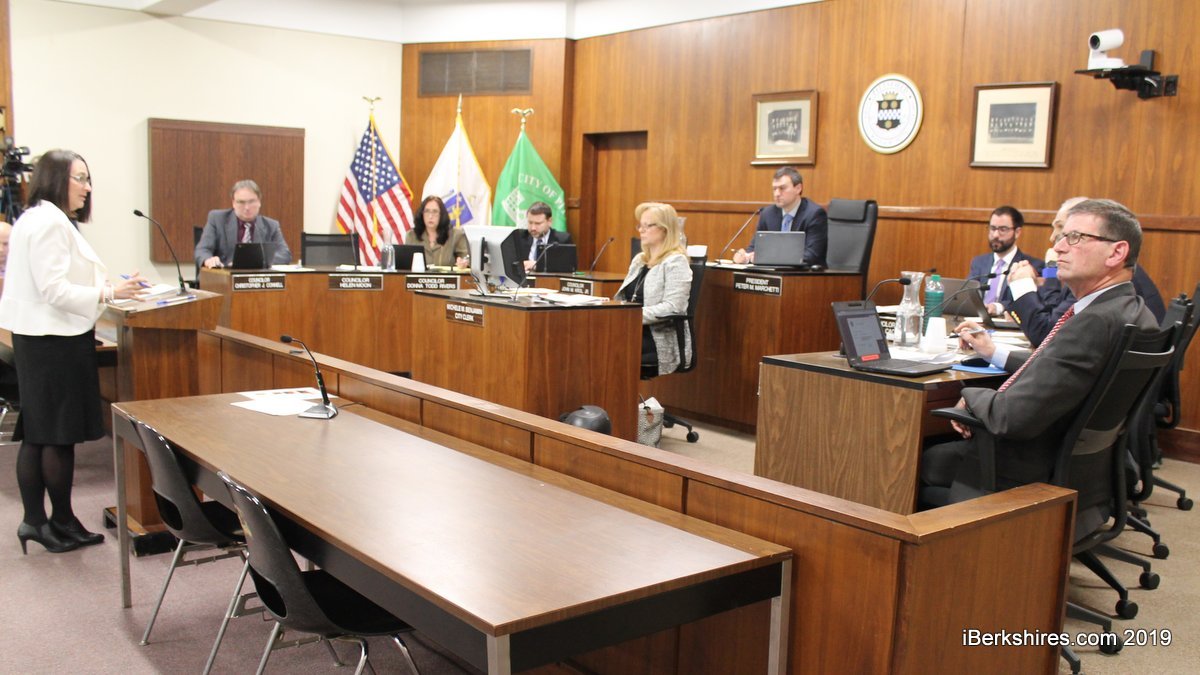
PITTSFIELD, Mass. — The City Council sent Mayor Linda Tyer's proposed home improvement program back for further consideration.
The mayor had petitioned for $250,000 from the Pittsfield Economic Development Fund to start "At Home In Pittsfield," a program to help residents make exterior home improvements or purchase fixer-uppers and make those improvements.
While supportive of the overall idea, multiple councilors didn't like the details of the program and the administration didn't have the votes for it to pass.
"I don't know if this program is quite ready to be out there," said Ward 5 Councilor Donna Todd Rivers, adding that she supports the idea but that "the devil is in the details" and she still has reservations.
The councilors had concerns over the source of the funding, the equitability of eligibility for those outside of the Morningside and Westside neighborhoods, the repayment timelines, unclear forgiveness measures, and that there are other programs that this could be duplicating.
The first two were cited by multiple councilors and Tyer said she would be willing to come to a compromise on those terms.
The program is designed to be open to residents and prospective home buyers throughout the city who make less than 135 percent of the area's median income, which this year means $87,480. It allows those residents to apply for zero-interest loans that can be up to 10 percent of the appraised value after renovations or a maximum of $20,000 for exterior repairs.
However, for those living in the West Side or Morningside neighborhoods, the city will loan up to 20 percent or a maximum of $30,000. Councilors questioned why those two neighborhoods were eligible for more.
Director of Community Development Deanna Ruffer said there are significant numbers of longtime West Side residents struggling to make repairs and the program wanted to target that area. For Morningside, Ruffer said 70 percent of the residents there are rentals and the program is eyed to incentivize people to look to become homeowners in that area. The two areas are the two lowest income sections of the city.
"The purpose is to really encourage investment in those two neighborhoods," Tyer said.
Ward 7 Councilor Anthony Simonelli, however, felt the program should be equitable across the board. He said there are people who could use the program throughout the city and it shouldn't be limited.
"It is really only benefiting two specific neighborhoods," Simonelli said.
Ward 2 Councilor Kevin Morandi, however, said while he doesn't like to pit neighborhood against neighborhood, Morningside is one that truly needs additional help. He said the city rolled out a similar program for storefronts on Tyler Street that benefitted six businesses and it made a difference.
"This is so much needed. I feel this is going to uplift the neighborhoods," Morandi said.
The mayor agreed to bring those percentages in line at 10 percent with a maximum of $20,000 for both areas of the city, choosing the lesser of the two percentages and maximums to allow more people to access some level of assistance.
Rivers would later question a second provision that requires those outside of those two neighborhoods to go through a refinancing process or be purchasing a new home to be eligible, working with a bank to secure the financing.
The program is in partnership with Pittsfield Cooperative Bank, Greylock Federal Credit Union, Lee Bank, and Berkshire Bank. When someone is looking to utilize the program outside of those two areas of the city would work with one of those lending institutions in putting together a funding package.
"It fills a gap for the lenders, it helps bring new homeowners to the city," Ruffer said.
But those two specific neighborhoods are also eligible to get the loans directly from the city without refinancing, an option not available in the rest of the city.
Ruffer wouldn't commit to any changes on that provision but said it would be considered before the administration resubmits a new plan.
Councilors also disagreed with the use of the Economic Development Fund, which was money given to the city by General Electric as part of an agreement with the city as the company left town. Simonelli said the intent of that pool of money was for economic development and he doesn't see this proposal as doing that.
"Is replacing a roof what you think about when you think about economic development?" Simonelli asked his fellow councilors to consider.
Simonelli read the guidelines to the fund of creating one job per $35,000 spent, or a large number of jobs at once, or an overriding public benefit. He said no jobs are being created so the first two guidelines are out and since only two neighborhoods were benefiting, there isn't an overriding public benefit.
Tyer made the case that it is economic development even if it isn't directly creating jobs. She said the program is aimed to "stabilize" the neighborhoods. The mayor said often businesses will say the city's housing stock isn't up to par to support a workforce and that the city needs a more diverse type of housing options.
She added that the program will help increase the quality of life, helping to attract both a workforce and business, and that there will be increased tax dollars coming back to the city because of increased value. Previously, the mayor and Ruffer had made points that it would stimulate the housing market and create work for existing contractors, some of which might bring on additional workers.
Ward 4 Councilor Christopher Connell said there are other ways to fund it. He urged the mayor to use free cash, noting that the city recently went through a tax auction a few months earlier which should add a significant amount to the balance and that the request is a one-time expense.
"This is not economic development. It is a feel-good program that I could support if it is using another funding source, provided it is an equal playing field," Connell said.
The use of free cash has been heavily debated over the last few years. The mayor had reduced to use of free cash to offset the budget and bolster reserves, based on the auditor's recommendations. But, councilors have routinely argued over the exact amount that should go to reserves, how much to offset the budget, and what to spend it on.
"I wasn't sure you'd be agreeable to using free cash because we are trying to build reserves," Tyer responded.
Tyer said if the council wants to use free cash instead, she'd be willing to compromise on the front as well.
The long-term stability of the program came under question as well. The program doesn't call for the loans to be paid back immediately, but rather when the home is ultimately sold. Some councilors didn't see the money coming back to the city in time to be a revolving program, so once the money runs out nobody else could get the benefit.
Further, Tyer and Ruffer both said they were exploring a loan forgiveness aspect to it to help young professionals build equity but those parameters hadn't been determined. The administration was still working on those details but the intent is to forgive only if the resident lives there for the long-term.
Rivers further questioned the risk involved with the city's money since the city would be last in line to get repaid should there be an issue with the mortgage.
Tyer wouldn't completely rule out that she, nor a future mayor, would return to the council for more funding for the program. But, she sees it now as a one-time expense to pilot such a program.
She said the state has shown interest in following how the program goes and could later establish another one for the other gateway cities, which have aging housing stocks. Or, she said a foundation or local banks could help fund the future expenses if it proves to be successful.
Connell and Rivers also cited a number of other housing programs that are already in existence. The councilors didn't want to see the city's money simply replace a resource that is already available elsewhere, either through federal or state programs. Connell said he personally went through the FHA rehab loan program and was able to do all of the exterior repairs the mayor is proposing with her plan.
The administration, however, said city staff will direct those who qualify for those programs to the appropriate place and reserve the city's funds for those who don't. The mayor's proposal has a higher income cap than many of the programs in existence so Tyer believes the city's money will help serve an additional group of residents.
Councilor at Large Peter White said the proposed plan is yet an additional resource available to address an important problem facing the city.
"This is something that won't take care of every problem but would be a good start," White said. "We need to build up our neighborhoods in order to attract people to the area."
The council was somewhat shorthanded Tuesday with both Ward 1 Councilor Helen Moon and Councilor at Large Melissa Mazzeo absent. During this debate, Council President Peter Marchetti recused himself because of his employment at Pittsfield Cooperative Bank. That left eight councilors and such an appropriation needs a supermajority of the entire body, which is seven votes.
It was clear early in Tuesday's meeting that it didn't have the votes. Yet, even councilors who didn't support the program as it was written had voiced support for the intent. The Council opted to voice its feedback and concerns Tuesday and ask the mayor to return with a revamped program.
Ongoing Coverage:
Tags: community development, GE fund, housing,
.jpg)