Williams College Geosciences Professor Wins NSF Grant
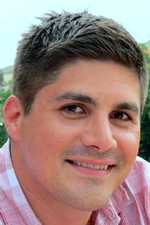 |
WILLIAMSTOWN, Mass. — José Constantine, associate professor of geosciences at Williams College, has been awarded a prestigious grant from the National Science Foundation.
The two-year grant, in collaboration with Claire Masteller, assistant professor of Earth and planetary sciences at Washington University in St. Louis, totals $299,000, with $135,000 to support Constantine's research on why rivers move, jump, and reshape the landscape and the impact that has on communities.
Constantine's project, titled "Invisible Floods on the Mississippi River Floodplain: Unravelling the Causes of Urban Flooding in a Community-Centered Approach to Geomorphology," aims to demonstrate how community-centered research applied to managed and inhabited landscapes can lead to novel and impactful insights into landscape evolution. Working also with Jay Racela, supervisor of the Williams College Environmental Analysis Lab, along with efforts from Equity Legal Services and the St. Louis Equal Housing and Opportunity Council, the NSF-funded project will specifically focus on constraining mechanisms for flooding in Centreville, Ill., where residents have suffered years of flooding.
"We are attempting to apply a new model in the practice of geomorphology—the study of the physical features of the surface of the earth and their relation to its geological structures—that has been described as the civic engagement paradigm, in which scientists and community members collaborate in inquiry and data collection," Constantine said. "We'll focus on the the area of the Mississippi River Floodplain known as the American Bottom, where widespread flooding is harming residents of some of the most economically vulnerable communities in the country."
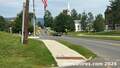
Stretching for more than 130 kilometers along the Illinois bank of the Mississippi River, the American Bottom is home to more than 130,000 people who depend on infrastructure that controls and curtails flooding. Although the Mississippi River is the most significant threat to communities in the American Bottom, a system of floodplain channels has triggered some of the most widespread and damaging incidents of flooding. Working with community leaders in Centreville, Constantine’s project will examine the natural functioning and evolution of these floodplain channels to provide science-based mitigation strategies to alleviate short- and long-term flood risk.
Aiming to empower communities suffering from environmental injustice, the project will also include summer internships for undergraduates at Harris-Stowe State University in St. Louis. Students will undertake independent research projects related to the environmental issues impacting Centreville and participate in structured training in civic engagement and professional development activities at Washington University.
"Providing students with the experiences and skills in this area will uniquely enable them to enter the earth and environmental science workforce," Constantine said. "Students will also develop a deeper understanding of the local environmental challenges facing the Greater St. Louis region."
Constantine joined the faculty at Williams in 2016. With interests in geomorphology and hydrology, his research aims to understand the controls on geomorphic processes. He teaches such courses as Global Warming and Environmental Change and Mastering GIS, and he is currently a thesis and research mentor to several Williams seniors. A first-generation college student, he received his B.S. from the College of William and Mary, his M.S. from the University of California, Davis, and his Ph.D. from the University of California, Santa Barbara.
Tags: Williams College,