Ben Downing Talks 'Transit For All' During Lee Campaign Stop
.jpg)
Lee residents wanted to know the gubernatorial candidate's take on plans for a PCB dump as part of the Rest of the River cleanup.
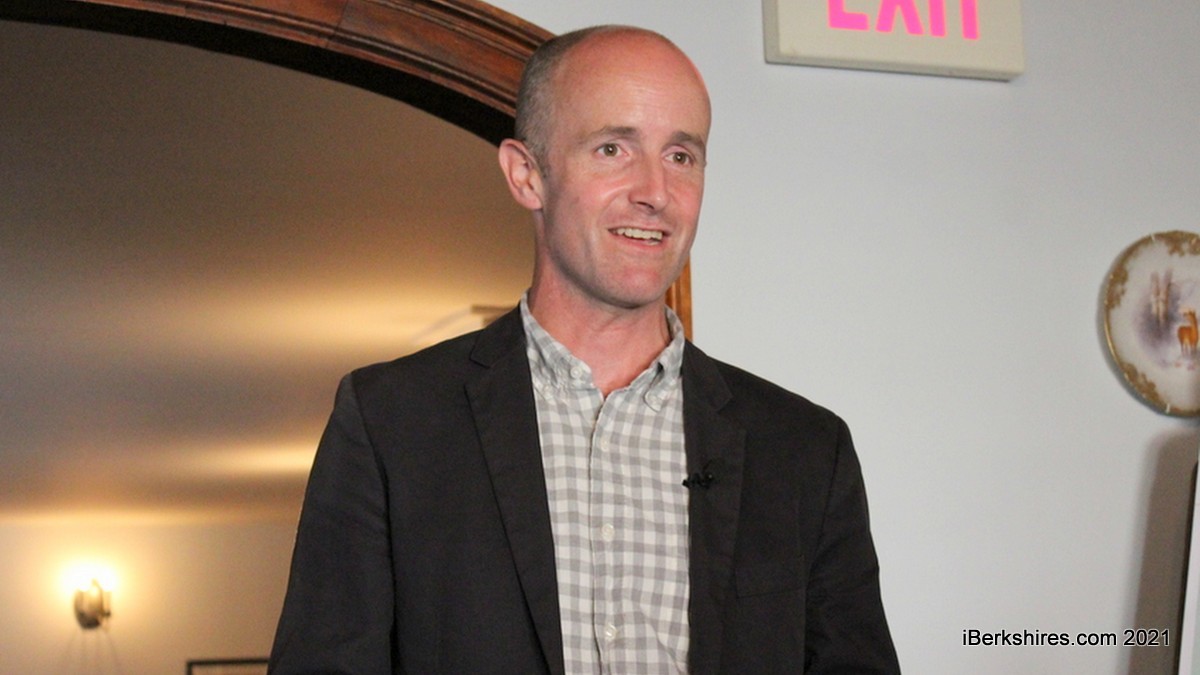
The gubernatorial candidate visited Lee on Wednesday to debut his "Transit For All" policy proposal that includes an east-to-west rail by 2030 and fare-free public transit. The former five-term state senator started the rollout of his policy proposal Tuesday morning in East Boston and was to end it Thursday afternoon in New Bedford, taking public transportation along the way.
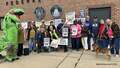
He was joined in Lee for by the Train Campaign founder Karen Christensen and residents from across the county at the Morgan House for a discussion that was also streamed over Zoom.
The Pittsfield native currently calls East Boston home. His progressive campaign is focused on representation for both the eastern and Western parts of the state while making greener decisions that prepare for the future.
"I decided to run for governor because I was tired of watching a governor with all the popularity and a Legislature with all the power refuse to use either to fight for us," he said.
"Meanwhile the communities that I grew up in, that I represented, that I live in, saw jobs leave and saw rents rise, saw trains run off the track where we had them, were not coming nearly enough in places that did, air clog, we saw childcare waitlists grow longer and longer and public higher education grow further out of reach, and that was before the pandemic."
Downing said too often state leaders care more about protecting their power than about protecting people.
"I'm running to be your governor because I believe the future of Massachusetts is limitless," he said. "For too long the political power in this state has acted like we have a surplus of tomorrows. Like you, I didn't need COVID to show me that that wasn't the case."
When Downing was sworn into office representing much of Western Mass in 2007, the first report on his desk was a Transportation Finance Commission report that outlined the shortcomings of the state's transportation policy in the previous two decades.
He said this document "reads eerily similar" to today's situation. This conclusion was the foundation of his transportation plan that he says focuses on equity, modernization, and regional empowerment for all of the state.
"While we have made some improvements in some of the state transportation agencies, while we have made some investments in our core infrastructure," he added. "We have not made the investments in transportation and prioritized transportation in a way that will allow us to build a system that will make our economy stronger, that will help us solve climate change, and it will build a more just and fair Massachusetts for all 351 cities and towns."
The seven promises in his policy are fare-free public transit; regional transit autonomy; electrifying and modernizing the regional rail network; east-to-west rail by 2030; an equitable and resilient Massachusetts Bay Transportation Authority; safe and livable streets; and to commit federal funds towards transportation equity and revenue sustainability.
Downing reported that not having to pay for public transit would increase ridership, diversify it, and decrease the number of cars on the road.
A fare-free policy would likely be funded by taxes or one-time payments but most residents would not see a rise in their rates.
Downing is supporting the Fair Share Act, a ballot initiative that would put a state surcharge of 4 percent on any dollar over $1 million earnings. A portion of those resources would be allocated to support public transportation.
"If that were to not pass, one of the plans that I will roll out in this campaign is a comprehensive tax reform plan that will ask more, just like Fair Share does, ask more of those who have benefited from economic growth over the last 30 years, the last 40 years, even benefited from economic growth during the pandemic, to pay a little bit more so that we can make sure to fund investments like fair free transit," he said.
To support equity between state's transit authorities, he wants to more than double the state-level funding for non-MBTA regional transit authorities. By doing this, the entities will have greater control in shaping their own transportation plans.
Downing recognizes that each authority is unique and needs different problem-solving solutions, such as the needs of Greater Boston varying from those of Western Mass.
"The truth is we're just not investing enough in transportation, in all 351 cities and towns," he said.
"One of the reasons why that is, we don't have one of the key tools that almost every other part of the country has, which is regional revenue to meet regional needs in many other parts of the country, you have a regional either commission or county government that will propose every year, a plan for transportation in that region, and then a revenue stream to fund it."
The west-east rail connecting Albany, N.Y., to Boston is a priority in downing's campaign to increase geographic equity and build a stronger economy for the state.
By connecting the state with transportation offerings, he believes this will encourage greater job opportunities in the whole state and take some pressure off Boston.
"For too long we've said that the only economic driver in the state of Massachusetts is the greater Boston economy," Downing explained,
"Well that's not good for the Berkshires, it's not good for the Pioneer Valley, it's not good for Worcester, for the South Coast, for the Merrimack Valley, but it's also not good for Greater Boston, and asks too much of their transportation infrastructure and drives up housing costs in pushes out working folks right out on the edges that gives them the worst commute coming into their surrounding areas."
He sees an opportunity to address climate-related initiatives with federal American Rescue Plan Act (ARPA) funding. He proposes that 80 percent of the funds go to climate solutions not limited to the expansion of public transit, affordable energy, and efficient housing.
Lee residents who oppose the "PCB dump," a controversial proposal by the U.S. Environmental Protection Agency to put a disposal site for the pollutants once they are removed from the Housatonic River, asked Downing what he is going to do about it.
"I think, like just about everyone. I wouldn't want the dump, in my opinion, I don't think any of us want the dump, I do think that's a universal statement," he replied. "I want to learn more about what the options are especially now that we're in litigations before the EPA that there's been the hearing, and figuring out sort of what the options are from there."
Downing said he had not talked to local officials who negotiated the agreement and had so far followed the situation from a distance.
"I'm committed to coming and sitting down with folks directly here and have a long meeting on specifically that," he said.
Another resident brought up Lee's annual town meeting, where it was voted to advocate that any PCB materials taken from the river have to be transported by rail rather than trucks.
Downing voiced support for the town's request.
Over the course of his campaign, he said he will be highlighting a series of investments and ways to pay for them whether it is through the Fair Share amendment, tax reform, or ballot initiatives.
His key funding ventures are transportation, housing, and education as avenues for addressing economic inequality, climate change, and racial injustice.
"That's not to say that there aren't key initiatives and investments that I'll propose beyond those but if you were to ask what are the three key areas for funding and for investment, it is broadly education and that's everything from universal child care right up on through higher education, and we'll be outlining a plan on that, it's transportation and the Transit For All plan that we've outlined here, and it's housing," he concluded.
"Housing is, along with transportation and education, the issue that comes up at every single discussion that I have, whether it's here in the Berkshires out on the Cape, everywhere in between."
Tags: campaign event, election 2022,