Williams College Not Seeing Severe Illness Associated with Spike in Positive COVID-19 Tests
WILLIAMSTOWN, Mass. — One week into its Winter Study session, Williams College is not seeing an increase in the number of severe illnesses associated with a spike in positive test results for the novel coronavirus.
And the school's positive test rate, while still at one of its highest points during the COVID-19 pandemic, remains well below the positivity rate for Berkshire County, the Board of Health learned on Monday morning.
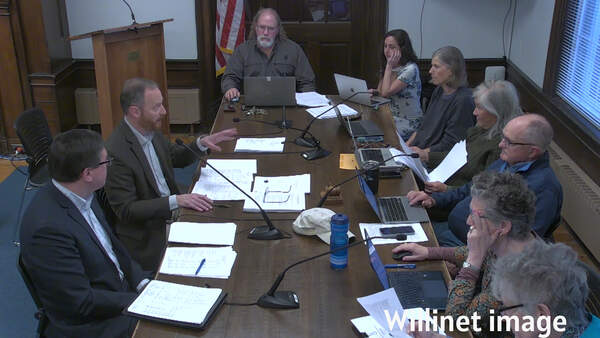
College counsel Jamie Art addressed the board at its monthly virtual meeting to give updates on current conditions at the school and what measures the college has implemented since students returned from winter break on Jan. 2.
"We're back a week now after winter break, and we had kind of an intensive testing program for returning students," Jamie Art said. "They tested at home before they traveled, and everyone was tested on arrival. Everyone is in a modified quarantine until they get a second negative result. All students will then be tested twice a week.
"The results for the first week weren't that bad."
To date, the college's testing program has yielded a positivity rate of less than 3 percent, Art said. That is well below the more than 20 percent positivity rate in Berkshire County the board discussed earlier in Monday morning's meeting.
In a mandatory testing program for students and staff, that has equated to 118 positive test results during the first week of the new year, Art said.
As of Monday morning, the college had 57 students in isolation, most on campus and some taking advantage of the option to return home if they live near enough to Williamstown, he reported.
"We have some dorms that are set aside [for isolation purposes]," Art said. "A handful of college rental apartments were empty as tenants transitioned. If we max out those, we have some capability to use the Williams Inn. I don't think we're using that now for isolation."
Art said college officials will be keeping a close eye on the test results that return this Wednesday. Those will provide the first indication of whether there is COVID-19 transmission on campus to people who tested negative in January's initial round of tests.
"That will be a key benchmark to see how things play out at that point," Art said. "So far, things are holding steady."
The most noticeable public change on campus this winter has been a move to restrict attendance at sporting events to students. Art said that was a decision across the New England Small College Athletic Conference to allow students to attend contests without fear of exposure to people outside their institution's testing and vaccination protocol.
For the most part, Williams is maintaining the same testing, vaccination and social distancing strategy that worked well in the fall, Art said. That strategy, as reflected in the low number of people in the college community with severe COVID-19 symptoms, appears to be working.
"Overall, though we do have an increased number of positives on campus compared to last year, we are not seeing any serious illness," Art said. "People are either asymptomatic or they have relatively mild symptoms. So that's the good news underlying all of this. There are huge logistical challenges to doing this, but we haven't seen any really serious illnesses among the campus community.
"Compared to the county rate, we're blessed to have a highly vaccinated, highly mask-compliant population with regular testing."
Likewise, even as positivity rates soar in Berkshire County, there is encouraging news behind those numbers, according to figures shared Monday by Dr. Erwin Stuebner, a member of the local Board of Health and the Berkshire Health Systems Board of Trustees.
"I think the positivity rate in the county is over 20 percent at this point, which is extremely high," Stuebner said. "Last year in January, when it was about that high, there were anywhere from 40 to 60 [COVID-19] patients at Berkshire Health Systems. This year, it peaked in the mid 20s and is down below 20 right now.
"They are seeing breakthrough cases, but, again, they're much milder. Usually, it's older adults with pre-existing disease like diabetes or kidney failure. And a good deal of the [hospitalized] cases are unvaccinated."
As it has for months, the Board of Health used its Monday meeting to renew appeals to local residents to get vaccinated and boosted against COVID-19. Monday's message included a personal note from the town's health inspector.
"We're looking at transmissions going across the board right now — vaccinated, unvaccinated, whatever," Jeff Kennedy said. "Your level of debilitation is determined by whether you're vaccinated or unvaccinated.
"So I'm still strongly recommending vaccination. If you get a debilitating disease, you may not want [a vaccine], but you could leave some grieving people behind you. That's a hard way to say it, but being personally acquainted with a relative who I care about very much who didn't vaccinate and passed away — you have that. So, yes, get vaccinated."
Tags: COVID-19,
More Coronavirus Updates