image description

Berkshire Museum Drops Pandemic Restrictions
Print Story | Email Story
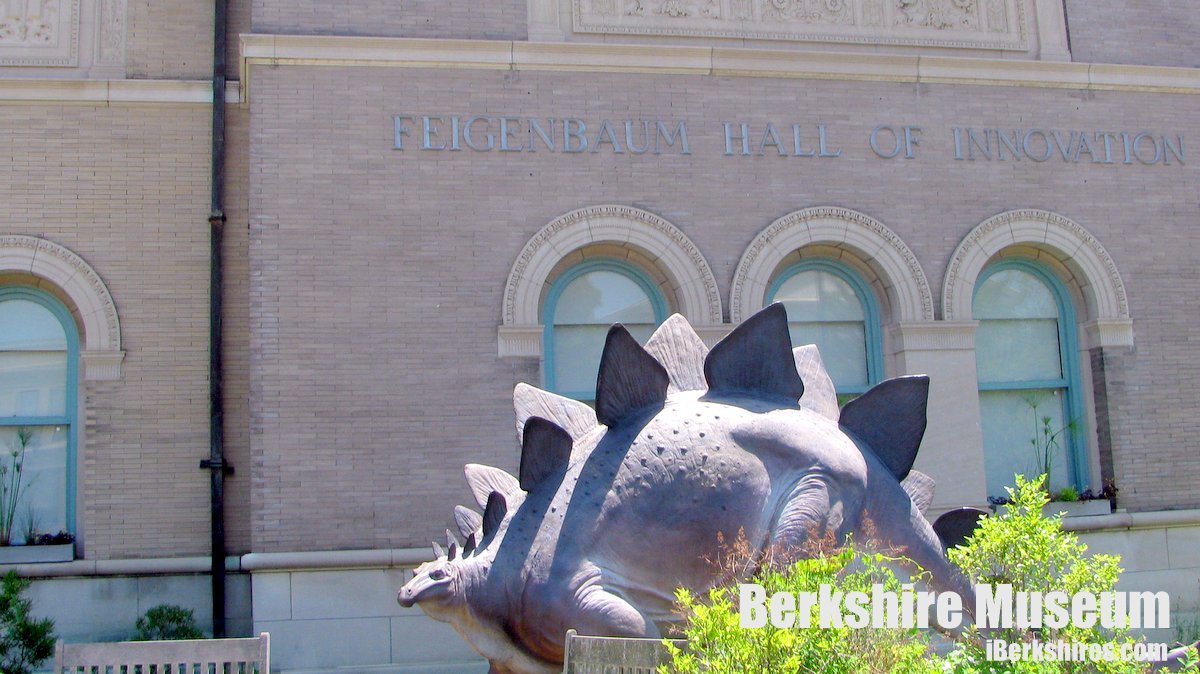
PITTSFIELD, Mass. — The Berkshire Museum has suspended its mask and vaccine requirements for visitors. Starting Monday, guests will not be required to wear masks nor show proof of vaccination.
 
This move follows guidance from the U.S. Centers for Disease Control and state and city health officials, who are no advising that indoor masking is no longer required because positive cases of COVID-19 have dramatically declined since the holidays. 
 
The museum is among the first to drop all pandemic restrictions; a number of Berkshire institutions are still requiring masks and/or proof of vaccination, at least as of Monday. Public schools have already dropped their masking requirements or have set dates for those mandates to expire. 
 
Pittsfield has dropped from red to yellow in this incident rate level and is reporting about 50 active cases in the city. About 76 percent of residents are now vaccinated. 
 
Museum staff will continue to wear face coverings and encourage any unvaccinated visitors or those who have a weakened immune system or are at increased risk for severe disease due to age or an underlying medical condition or have someone in their household with a weakened immune system, to do the same, as recommended by public health officials. 
 
"As we have done throughout the pandemic, we are following scientific evidence, striving to be good neighbors and community members, and adhering to the standards put forth by city and county leaders, and our public schools. We will continue to do so and recognize that this may be a temporary loosening of restrictions. We're all in this together, and we will continue to provide wonderful programming and exhibits to the entire community according to guidance from public health officials," according to a statement by co-Executive Directors Hilary Ferrone, Miriam Kronberg, and Craig Langlois. "We are grateful for the community's support and understanding of our previous admission restrictions as we sought to make every visitor's museum experience as safe as possible."
 
The museum's current exhibit is "Voyage to the Deep," based on French author Jules Verne's 1870 classic "20,000 Leagues Under the Sea." At the center of this fantasy world is Captain Nemo's submarine, a giant Nautilus in which kids can climb aboard and discover the inner workings of a deep-sea submersible and explore the captain's Cabinet of Curiosities full of marine specimens.
 
Adults only can party at the "(un)Beach Bash!" on Friday from 6 to 9 p.m. with Voyage to the Deep and the White Eyed Lizard Band. Tickets includes marine-inspired nibbles, tropical spirits, and a steel drum band. Admission is $50; members $40. 

Tags: COVID-19,   masks,   


More Coronavirus Updates
Keep up to date on the latest COVID-19 news:


If you would like to contribute information on this article, contact us at info@iberkshires.com.

The Round Stone Barn is 200 as Hancock Shaker Village Celebrates

By Breanna SteeleiBerkshires.com

PITTSFIELD, Mass. – Hancock Shaker Village shared a bicentennial birthday, inviting the community to take part in the festivities.

On Sunday, Hancock Shaker Village celebrated the 200th birthday of their signature Round Stone Barn, the only circular barn ever built by the Shakers.

"The Round Stone Barn turned 200 this year," Hancock Shaker Village CEO Carrie Holland said. "It was erected in 1826, so we thought we would celebrate with the whole community. We'd do some cupcakes, and then we're lucky to work with Yo-Yo Ma's team to curate some special performances in the Round Stone Barn."

The community was invited to come to the village for free and take part in a wide range of activities including tours, live music from Ida Mae Specker Trio and Tanglewood, demonstrations, and more. 

The Round Stone Barn is widely recognized as an architectural icon and agricultural wonder. 

The Shakers operated a working dairy farm at Hancock until the 1950s, and the barn was originally a stable for its 52 milk cows, according to the museum's website. 

It has ground-level access on all three levels so, wagons could enter on the upper level to deposit hay into the central haymow on the main floor below, then the empty wagons would be driven around the circular barn floor and exit the same door it came in, eliminating the potentially dangerous activity of backing wagons out of a barn, the website said. 

The cows stabled on the main floor faced inward toward the haymow for ease of feeding and manure was shoveled through trapdoors to the cellar, where it was stored until needed as fertilizer in the gardens.

"Every time anyone comes into the timber frame, it's the very first thing that they see, and they always say, 'It's just like a photograph,' and it is," Director of Collections Kathleen Lynch said. "It's beautiful. People want to get married in front of it. We did our Christmas the festival of trees in here, and the mechanisms of it are so phenomenal."

Hundreds enjoyed music in the round barn and celebrated with free cupcakes and food trucks while listening on the history the village portrays.

"I think this is one of our most iconic buildings, and a lot of people have their own memories tied to it," Holland said. "We do baby animals here, and so there's personal history. ... But it's also a fantastic opportunity to share a bit about the Shakers, their design techniques and practices, their  sort of obsession with making operations efficient, because this is used as a dairy barn, and so they created these three layers to make their operations more efficient."

"So you can talk about their innovation. Of course, they're the longstanding legacy of agriculture here. So it provides us an opportunity to kind of share the Shaker history in this beautiful space, tied to folks who have their own personal memories here as well, and it's such an impressive, beautiful spot. I have such appreciation for what it took to build this 200 years ago, and whenever we can do fun things and throw good parties here, it's a great day.""

Holland helps build momentum for the unveiling of Hancock Shaker Village's new visitor center that is planned to take place next month.

The new facility will include updated galleries, community event spaces, collection storage, and research areas for the museum's collection of over 22,000 Shaker artifacts and ephemera. The renovated building aims to enhance the visitor experience through improved orientation, expanded program offerings, closer access to collection items, and views of the surrounding landscape. 

"Part of what we're also celebrating is past, present, future, and the future," Holland said. "We're very excited for expanded programming. We're opening our new visitor center, our Center for Shaker Studies, so that creates a whole new opportunity for our visitor experience, our galleries, our stewardship, and then that relates also to the programming that we can do in the historic village."

View Full Story

More Pittsfield Stories