Williamstown Fire District Will Postpone Fire Station Funding Vote
WILLIAMSTOWN, Mass. — The Williamstown Fire District announced Wednesday that it will hold off on a special district meeting to approve funding for a new fire station until at least early 2023.
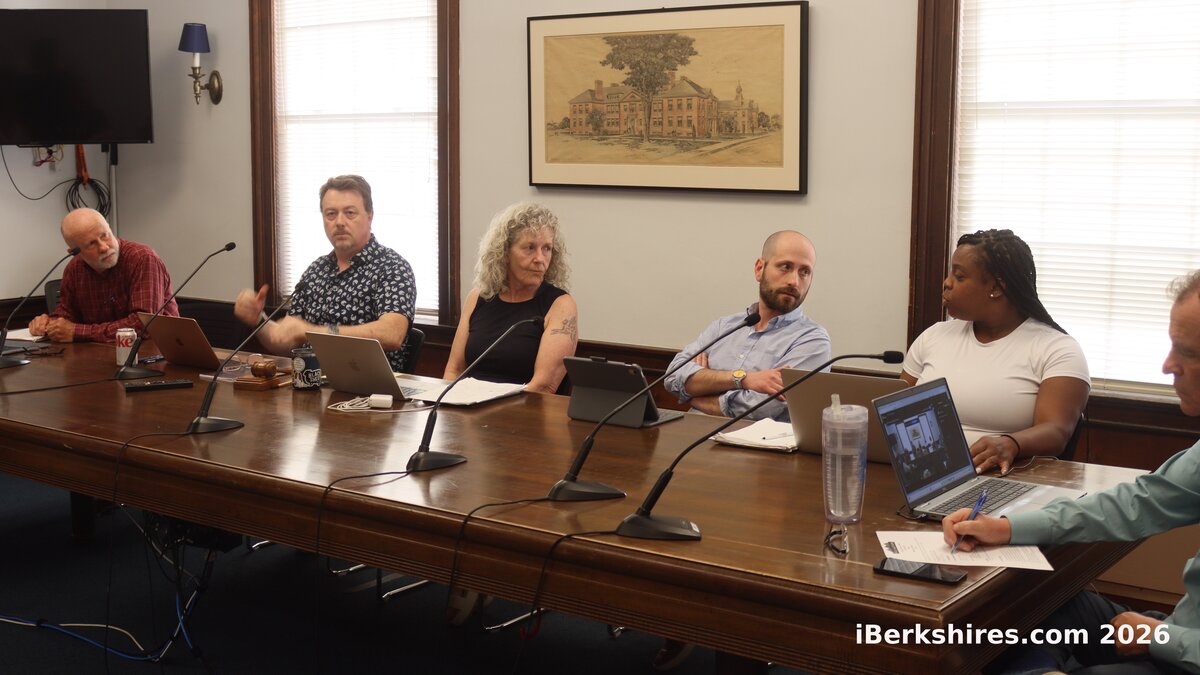
The district Wednesday held an informational forum about the new building project at Mount Greylock Regional High School.
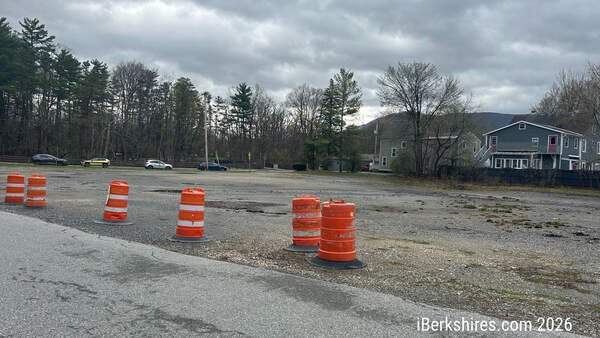
The meeting was billed as a chance to provide information and answer residents' questions in advance of a Dec. 7 special meeting to approve funding for a 27,000-square-foot station on Main Street (Route 2).
But at the outset, Jim Kolesar of the district's Building Committee announced that committee met earlier Wednesday and voted unanimously to put off the early December vote until district officials have clarity on issues that will impact the funding of the project.
"When we set [Dec. 7], it seemed reasonable to believe that we were facing a precipitous increase in inflation costs, both goods and services, for projects such as this and bond rates that were only going in one direction," Kolesar said. "Also, we understood that even though the net cost, the net price to this community, of doing the project would still be falling within a range, we thought we might be able to get closer to a range before that vote.
"Some things have changed. … We learned of another local project – a private one, not a local one – that decided to wait for a year in the belief – slash hope – that there won't be a steep cliff going forward in terms of those costs. Meanwhile, we started the work of calculating the net cost to the community … and that will be affected by gifts, grants and incentives.
"When we put that bit of 'unknowableness' right now, what those are going to come out to and looking at the many ways one could bond a project like this, there are so many different variables. And the biggest variable might be those gifts, grants and incentives."
For example, the district had applied for a $2 million construction grant from the same state program that last year gave the district a $400,000 grant toward design work. But on Wednesday, local officials learned that they did not receive the construction grant in the current cycle.
And there is possibility of a grant from Williams College, which has a long-standing payment in lieu of taxes program with the district. At its October meeting, the college's board of trustees discussed possibly contributing to the fire building project but reached no decision, according to a college spokesperson.
"The Board recognizes the importance of a new fire station to our town and region," Williams' Chief Communications Officer Jim Reische said in an email. "So they agreed to continue discussing the level of the college's contribution while the district refines its project scope and budget."
The next Williams College Board of Trustees meeting is scheduled for January.
Construction costs alone for the new station are projected to be in the neighborhood of $18 million. Kolesar noted that when "soft costs" are added, that number will end up being "on the north side of $20 million."
"We now don't have a satisfying enough answer as to what the net cost would be to the fire district and to the citizens who are residents of the fire district would be to pay in their taxes," he said. "Because the situation on the ground seems to have changed, the Building Committee at its meeting this afternoon voted unanimously to postpone that vote."
With that as preamble, the forum in the middle high school auditorium proceeded as scheduled. About half of the hour-long session was devoted to a presentation from the district's architect, Robert Mitchell of Voorheesville, N.Y.'s, Mitchell Associates Architects.
Mitchell's talk covered many of the same issues discussed in a talk he gave last spring, explaining the deficiencies in the current Water Street fire station and how they would be addressed in the new building.
Both the April presentation and Wednesday's forum were recorded by the town's community access television station, WilliNet, and will be available on WillINet's website.
Mitchell emphasized OSHA issues and National Fire Protection Association code deficiencies in the current station and ways in which it puts the town's call-volunteer firefighters at risk.
"One of the key things that differentiates a new fire station is the conscious need to decontaminate firefighters, their protective clothing and their equipment," Mitchell said.
"It's incumbent on the community to do the things that are called for by these associations and the codes in order to not be considered uncaring of the firefighters, disrespectful or, in some cases, responsible for the outcomes if they're not remaining healthy."
In answer to a question from the audience about the projected size of the new station, Mitchell explained that the programming for the facility was worked out over the course of eight or 10 meetings with district personnel and that there was nothing "frivolous" in the design.
"If it seems large, it's only in comparison to what was done in 1950," Mitchell said, referring to the dated Water Street station. "It's not large compared to what is done in communities similar to yours today."
Tags: fire district, fire station,