Roller Coaster at Mass MoCA: EJ Hill Exhibit
NORTH ADAMS, Mass. — Massachusetts Museum of Contemporary Art's new exhibit "Brake Run Helix" has quickly became a museum favorite.
"People seem pretty excited about it. It's been really fun. I love that so many people want to ride it. I think the fact that people are excited about roller coasters and this sort of idea of roller coasters resonates with a lot of people, not just with EJ and I. That's been really exciting," Mass MoCA curator Alexandra Foradas said.
"And then we have the fact that we have a community of visitors, whether local or regional or global, who are ready and willing to participate in artwork. That's super exciting. I love that that's something that people have been welcoming with open arms."
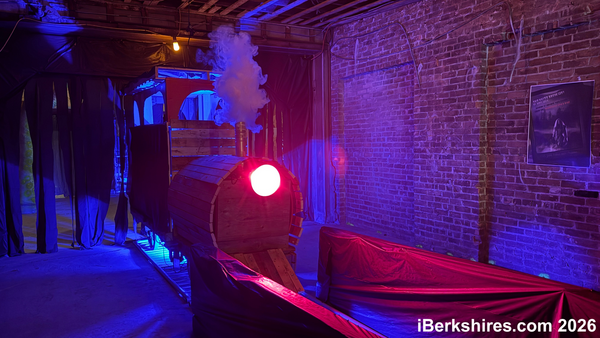
Contemporary artist EJ Hill opened his largest exhibit to date by building a rideable sculpture in the museum's 100-yard-long Building 5 gallery.
Roller coasters have been a source of joy for both riders and onlookers. The exhibition stood out to Foradas in particular because of the degree to which it was able to manufacture so much joy in the space.
"This space feels very warm and welcoming. And one of the things that EJ and I have been talking about a lot is the fact that when you watch people go down the roller coaster for the first time, both they and the people who have gathered to watch them ride the roller coaster have this really big grin on their faces that you don't see in art museums very often," Foradas said
"I think that it was so exciting and delightful for me as a curator and collaborator with EJ to see that hope for this offering to the public was fulfilled as we've been welcomed in public and to ride the roller coaster."
According to the release, Hill considers roller coasters as a public monument to the possibility of attaining joy which he notes is "a critical component of social equity."
The visitor experiences is unlike viewing other exhibits. Oftentimes people approach art museums in a very serious and intellectual tone that requires a quiet atmosphere, so having this shift where participants are shouting, laughing, and clapping is an exciting shift, Foradas said.
"It was scary but very safe. And it was cool knowing that it was all gravity taking me up a hill and back down," one rider said.
"I never expected to ride a roller coaster in an art museum and to be able to scream because I was scared in the middle of an art museum."
For Hill, the riders and the onlookers are just as important to the exhibit as the sculptures and paintings. Through the joy and excitement they feel, they become part of the sculpture.
"Performance is a big part of EJ Hill's artistic practice alongside painting and sculpture and installation. In this case, he is sort of pulling on the visual language of performance," Foradas said
"So we get a lot of green velvet in the space alluding to the green velvet of a stage curtain and the roller coaster, Brava! is set on center stage of a wooden platform stage that will also host performances throughout the exhibition. For EJ, the roller coaster and people arriving are really all performers."
Foradas and Hill welcome people's interpretations of the space and how it functions. The history of roller coasters also furthers these interpretations.
The first roller coasters were 18th-century ice slides commissioned by Catherine the Great of Russia and other members of nobility making, them inaccessible to the general public. Roller coasters really arrived when wooden rollers were substituted for ice and cars were attached to a track in France in the early 1800s.
"Over the next couple centuries, ice slides and then roller coasters became permanent public attractions first throughout Europe and then in America," Foradas said.
The exhibition shifts the attention toward the 20th century amusement parks which were sites of protest and activism during the Civil Rights Movement.
During the Jim Crow era Black people were systematically denied access to public accommodations until the Civil Rights Act of 1964.
When the federal law was passed, amusement parks became privatized and moved away from public transit making them difficult for people without means to access. This privatization continued to prevent many Black people from accessing amusement parks, since they'd been denied resources and generational wealth for so long.
It took only a day for the first six weeks of ride tickets to sell out at Mass MoCA. The museum does one ride an hour because it is powered by gravity rather than being mechanized — the way a typical amusement park is — so a lot of work goes into resetting it.
New appointments are opened every week.
"I'm optimistic that it will get easier as time goes on for people to make appointments and so I think the good news is it's up for well over a year. And so hopefully everyone who's really excited about riding or gets a chance to do so," Foradas said
In addition to the rideable sculpture, visitors can peruse roller coaster-themed paintings and freestanding sculpture.
More information on the exhibit can be found here.
Tags: mass moca,