image description
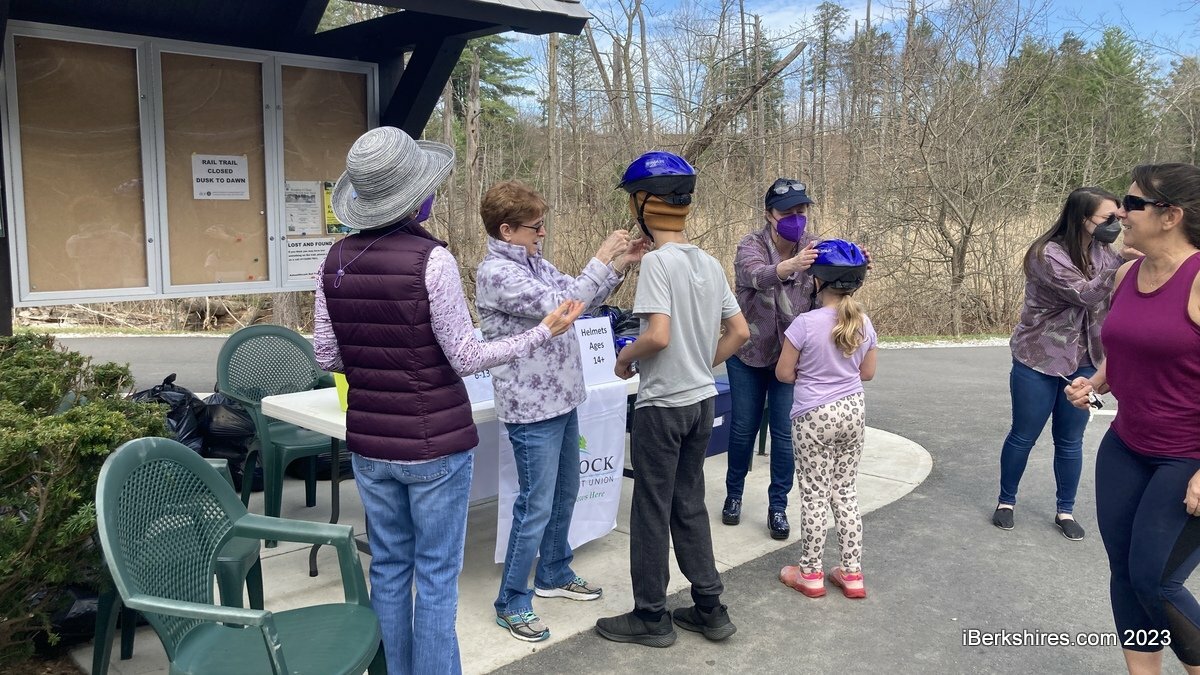
There was a line on Saturday for 250 bicycle helmets distributed at the Ashuwillticook Rail Trail in Lanesborough.
image description
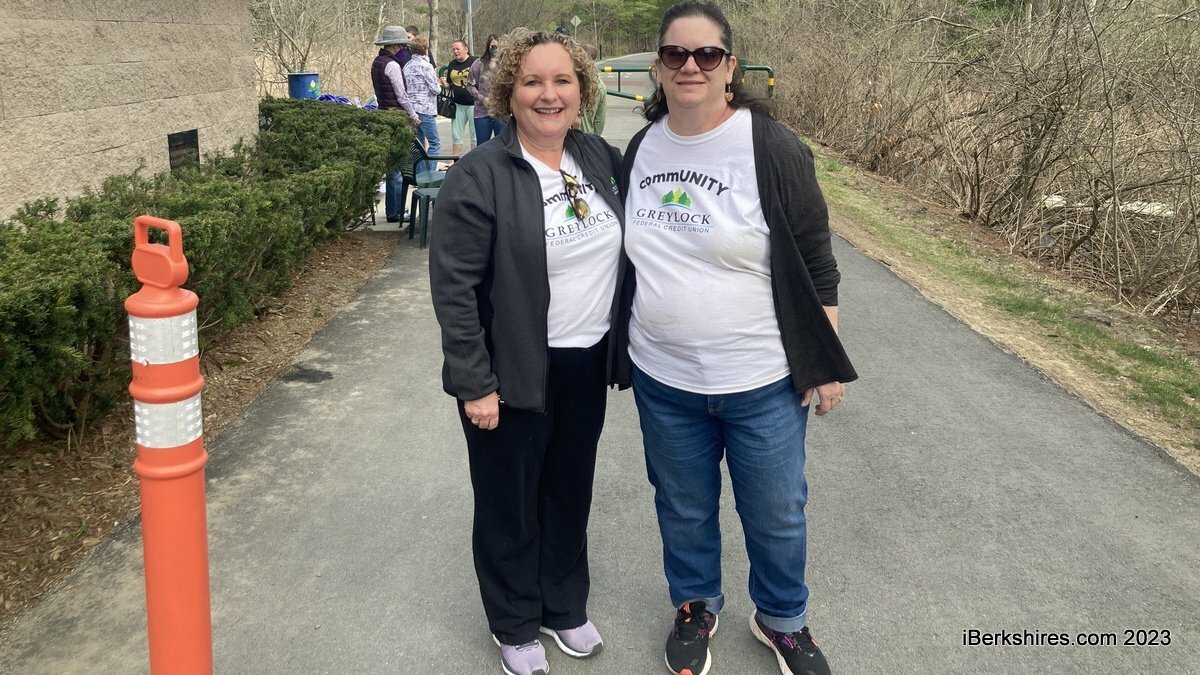
Greylock Federal Credit Union partnered to supply the helmets and Vice President Jennifer Connor-Shumsky and Amy Reese, community support specialist, were on hand to help.
image description

BFAIR & Greylock Federal Distribute 250 Bicycle Helmets
By Brittany PolitoiBerkshires Staff
Print Story | Email Story

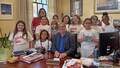
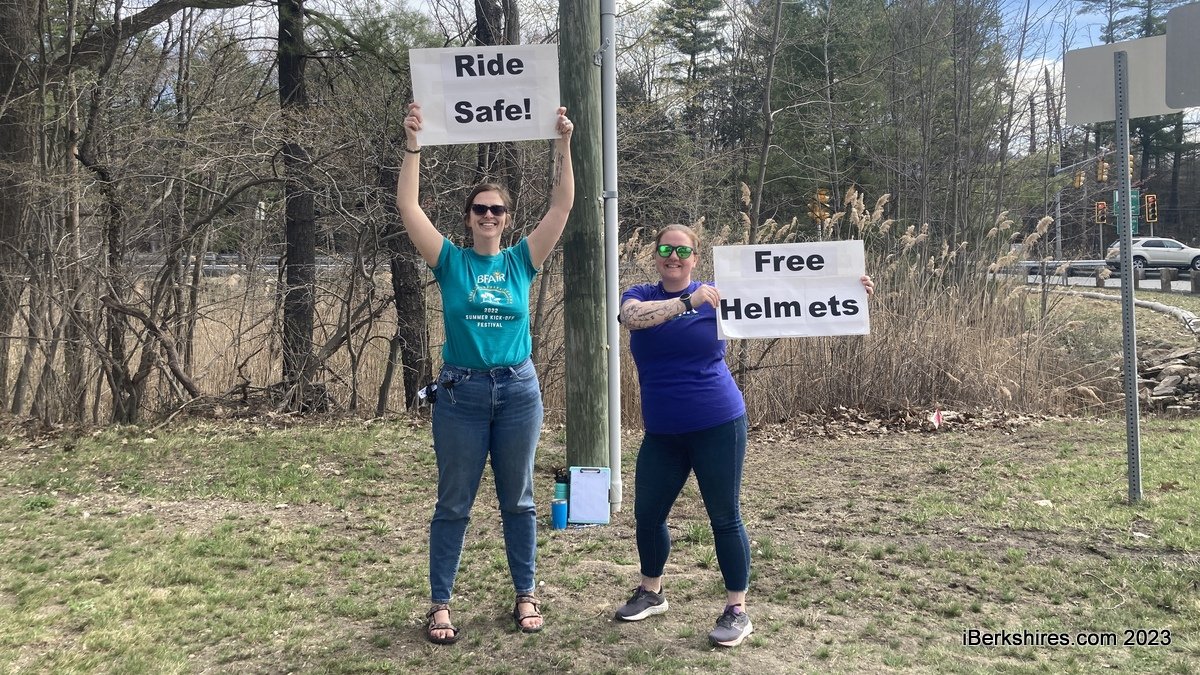
BFAIR's Tara Jacobson and Christine Meiklejohn hold signs at the trailhead off the Connector Road. Last year, the organization was able to distribute 200 helmets. 

LANESBOROUGH, Mass. — Saturday's word of the day was "safety" at the Ashuwilliticook Rail Trail as two organizations partnered to distribute hundreds of free helmets in honor of National Brain Injury Awareness Month. 

Stationed at the trailhead on connector road, representatives of Berkshire Family and Individual Resources and Greylock Federal Credit Union handed out 150 helmets for ages 6-13 and 100 helmets for those 14 and older. 

"This is our second annual bike helmet distribution in honor of Brain Injury Awareness Month, which is in March but we wanted to do it in April because the bike trail was open and more people are out here," BFAIR's Director of Development Tara Jacobsen said. 

"We are able to distribute these helmets through funding through Greylock Federal Credit Union and this year, we have about 250 helmets that we're going to be distributing today and I think they're going to go pretty quickly." 

The event ran from 10 a.m. to 1 p.m. and community members were lined up for helmets even before the event kicked off. 

Jennifer Connor-Shumsky, Greylock's vice president of community support and events, said the credit union values its partnership with BFAIR and that, hopefully, the distribution will prevent as many injuries as possible.  

"We're just delighted to be here," she said. "[BFAIR] is a community gem and they are one of our many partners and we're proud of what they do. They provide such valuable services to our community so we're delighted, we have been working with them for a long time." 

BFAIR works with people who have developmental disabilities, autism, and acquired brain injuries. There are six residences dedicated to acquired brain injuries, which happen after birth and can be the result of a trauma impact, degenerative disease, and toxins. 

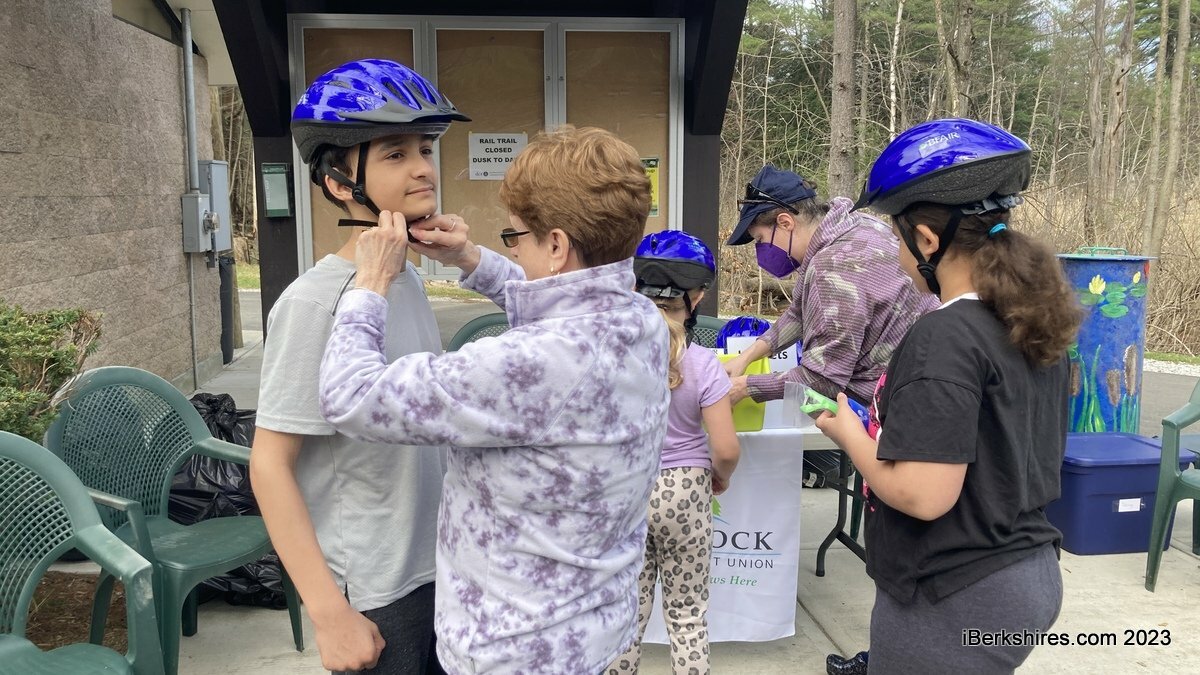
The helmets aim to prevent any possible injuries from impact and came with a complimentary fitting to ensure the best protection possible. 

Jacobsen explained that an ill-fitting helmet is "like a car without brakes." 

"So we want to make sure that not only we're supplying resources to the community but we're actually giving them resources that they can use," she said. 

Last year, BFAIR partnered with the non-profit organization All Out Adventures Inc. in Northampton to hand out around 200 helmets. 

"It was just such a rousing success because I think helmets are one of those things that people don't always think about or don't always have the resources or the means to get," Jacobsen said. 

"And so being able to provide it to the community to help promote healthy and safe brains is really something we're looking forward to."


Tags: BFAIR,   bicycling,   bike helmets,   Greylock Federal,   
If you would like to contribute information on this article, contact us at info@iberkshires.com.

West Nile Virus Confirmed in Mosquitoes From Pittsfield

Staff Reports

PITTSFIELD, Mass. — The Massachusetts Department of Public Health (MDPH) announced today that West Nile virus (WNV) has been detected in mosquitoes collected from Pittsfield.

The City of Pittsfield has confirmed two isolations at the Pittsfield-Richmond town line on Route 41 and the other at Garland Avenue.

WNV is most commonly transmitted to humans by the bite of an infected mosquito. The mosquitoes that carry this virus are common throughout the state and are found in urban as well as more rural areas. While WNV can infect people of all ages, people over the age of 50 are at higher risk for severe infection. 

At the time, there are no confirmed human cases of WNV, but residents are encouraged to take the following actions:

Avoid Mosquito Bites

  • Apply Insect Repellent when you go outdoors. Use a repellent with DEET (N, N-diethyl-m-toluamide), permethrin, picaridin (KBR 3023), IR3535 or oil of lemon eucalyptus [p-methane 3, 8-diol (PMD)] according to the instructions on the product label. DEET products should not be used on infants under two months of age and should be used in concentrations of 30 percent or less on older children. Oil of lemon eucalyptus should not be used on children under three years of age. Permethrin products are intended for use on items such as clothing, shoes, bed nets and camping gear and should not be applied to skin. 
  • Clothing Can Help reduce mosquito bites. Although it may be difficult to do when it’s hot, wearing long-sleeves, long pants and socks when outdoors will help keep mosquitoes away from your skin.
  • Be Aware of Peak Mosquito Hours - The hours from dusk to dawn are peak biting times for many mosquitoes. When risk is increased, consider rescheduling outdoor activities that occur during evening or early morning. If you are outdoors at any time and notice mosquitoes around you, take steps to avoid being bitten by moving indoors, covering up and/or wearing repellant.

Mosquito-Proof Your Home

  • Drain Standing Water – Many mosquitoes lay their eggs in standing water. Limit the number of places around your home for mosquitoes to breed by either draining or getting rid of items that hold water. Check rain gutters and drains. Empty any unused flowerpots and wading pools and change water in birdbaths frequently. 
  • Install or Repair Screens - Some mosquitoes like to come indoors. Keep them outside by having tightly-fitting screens on all your windows and doors.

While the City of Pittsfield and Berkshire County Mosquito Control project continue to work closely with the MDPH and other agencies, locally we are taking the following actions: larvicide application, conducting targeted education programs, distribution of fact sheets on WNV and on reducing exposure to mosquitos and treating catch basins.

Additional information about WNV and reports on current and historical WNV virus activity in Massachusetts can be found on the MDPH website at: www.mass.gov/dph/mosquito.

View Full Story

More Pittsfield Stories