image description
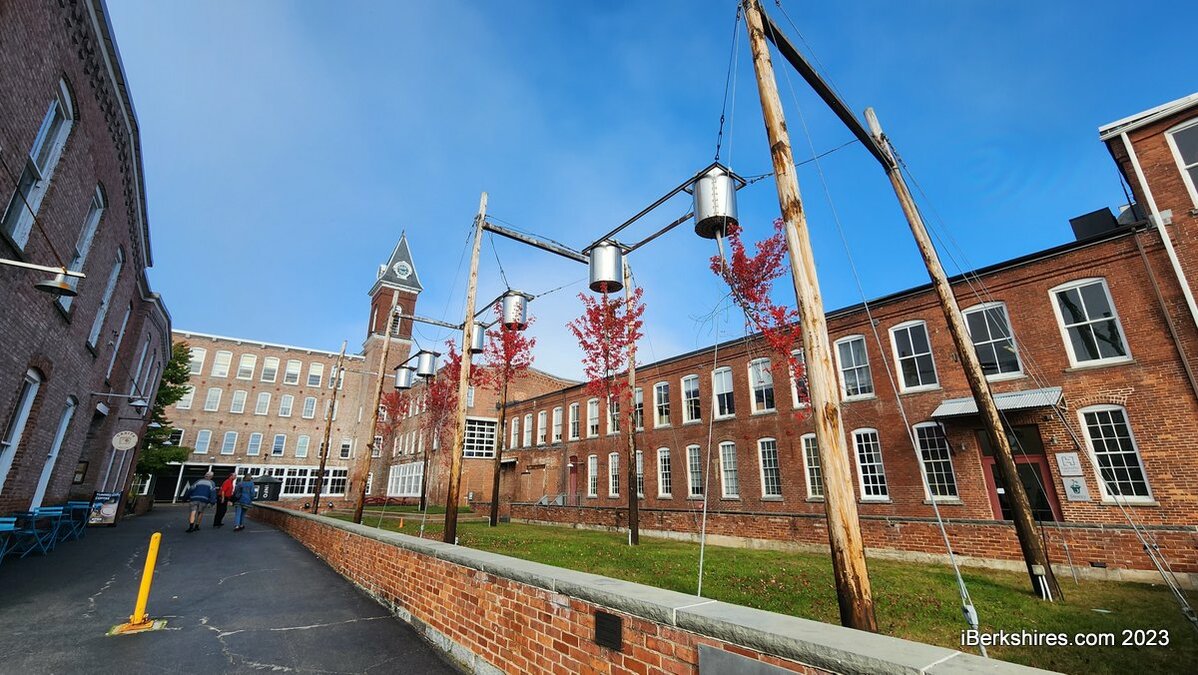
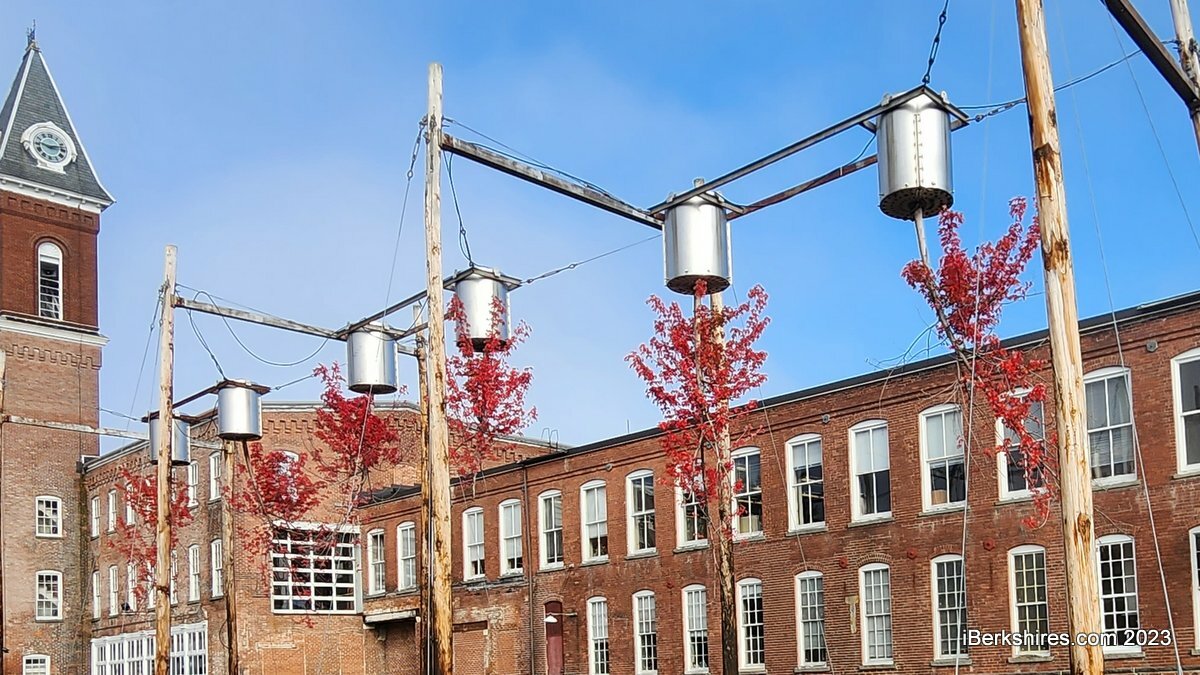
'Tree Logic,' which has lined the entrance to Mass MoCA for 25 years, will be coming down for good next week.
image description
Prior trees from the installation have been transplanted in Williamstown and North Adams. The last trees will be planted at the museum.

Mass MoCA's Iconic Upside-Down Trees Being Retired
Print Story | Email Story

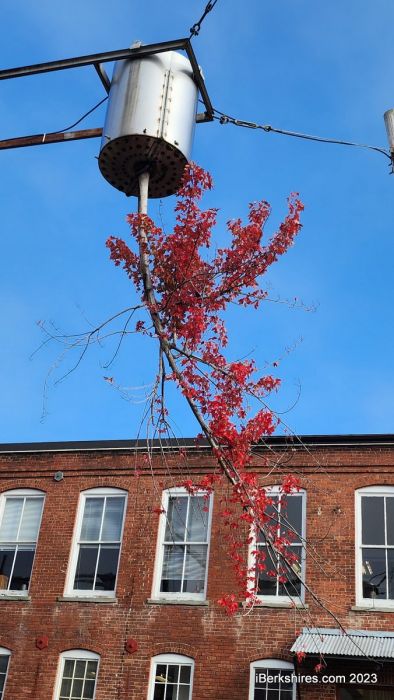
Scientists weren't sure the trees could survive being inverted; once they outgrew their tubs, they were planted earthside and thrived. 
NORTH ADAMS, Mass. — The trees will no longer grow upside-down in the Steeple City. 
 
Natalie Jeremijenko's meditation on resiliency, "Tree Logic," will be retired after 25 years of turning heads at the entrance to Massachusetts Museum of Contemporary Art. 
 
The museum announced on its Facebook page this week that the trees will be removed. They will be on view until Monday. 
 
The trees themselves haven't been there that long. Every so often, a new group of saplings is installed and their elders retired to grow naturally on Stone Hill at the Clark Art Institute, which funded the installation, and Colegrove Park, where museum visitors have been known to check on their condition. This last set will remain on the campus, at the end of the Speedway. 
 
"This work, like Mass MoCA itself, defies logic and gravity while signaling that creativity comes in all forms. Jeremijenko conceived of Tree Logic as a work about change and persistence, as trees themselves are dynamic natural systems constantly in flux. In this work, the trees grow while upside down, yet they still instinctively reach for the sunlight," the museum wrote. "MASS MoCA is a non-collecting museum. The artworks on view range from new commissions organized with artists to loans from artists, galleries, estates, and collectors. So at some point, like the trees themselves, things must change."
 
Although a popular image here, the trees did evince a range of emotions, with some viewers disturbed at the distortion of nature. 
 
Jeremijenko, also an engineer, had spoken with botanists when designing the installation. According to the museum's audio tour, the scientists were divided on how gravity would affect the trees once they were inverted. The trees grew and their branches curved toward the sun; once taken down and put right side up, they gracefully returned to their natural state.  
 
"The branches correct themselves and bear little sign of their early beginnings, speaking to the resiliency of nature, cities and towns, and museums," posted Mass MoCA. 

Tags: mass moca,   trees,   
If you would like to contribute information on this article, contact us at info@iberkshires.com.

North Adams Finance Committee Warned of Coming Sludge Costs

By Tammy Daniels iBerkshires Staff
NORTH ADAMS, Mass. — Waste treatment plan supervisor Brad Furlon warned the Finance Committee last week to expect a future 500 percent increase in sludge disposal.
 
"Even though the district is still has the approval of suitability to apply compost to land, we no longer do it, primarily because of the contaminant, PFAs," he said. "Compost plant supplies is a $200,000 increase this year. There's no way around this cost whatsoever. ...
 
"Unfortunately, these costs are going to go up. They expect this sludge disposal cost in the next five to 10 years to increase 500 percent."
 
PFAs, or per- and polyfluoroalkyl substances, are considered "forever chemicals" because of how long it takes for them to breakdown. They are used in numerous products and have become endemic in air, soil and water.
 
The Hoosac Water Quality District, a shared regional waste treatment system between North Adams and Williamstown, had planned to accept sludge from other communities and sell off the resulting compost through waste hauler Casella. But that proposal ran into opposition; Williamstown has a citizens petition on its annual town meeting warrant this year that would prohibit the use of contaminated compost. 
 
The district is still producing compost, which has to be removed. 
 
"We had a backlog of about 2,500 yards of compost that was on site," Furlon said. "We worked on a plan to dispose of our compost. Even though the district is still has the approval of suitability to apply compost to land, we no longer do it, primarily because of the contaminant, PFAs. ... the most feasible way and economical that we looked at was to be able to take our compost to a landfill in Ontario, N.Y."
 
View Full Story

More North Adams Stories