Pittsfield Restructuring Survey Garners Engagement, Planners Faced with Alignment Options
PITTSFIELD, Mass. — The Pittsfield school district's restructuring survey garnered more than 2,800 responses from students, parents, staff, and community members.
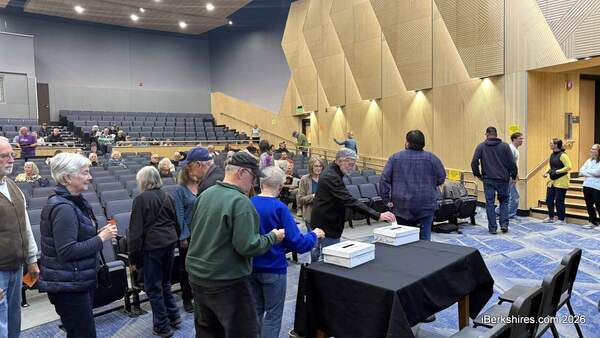
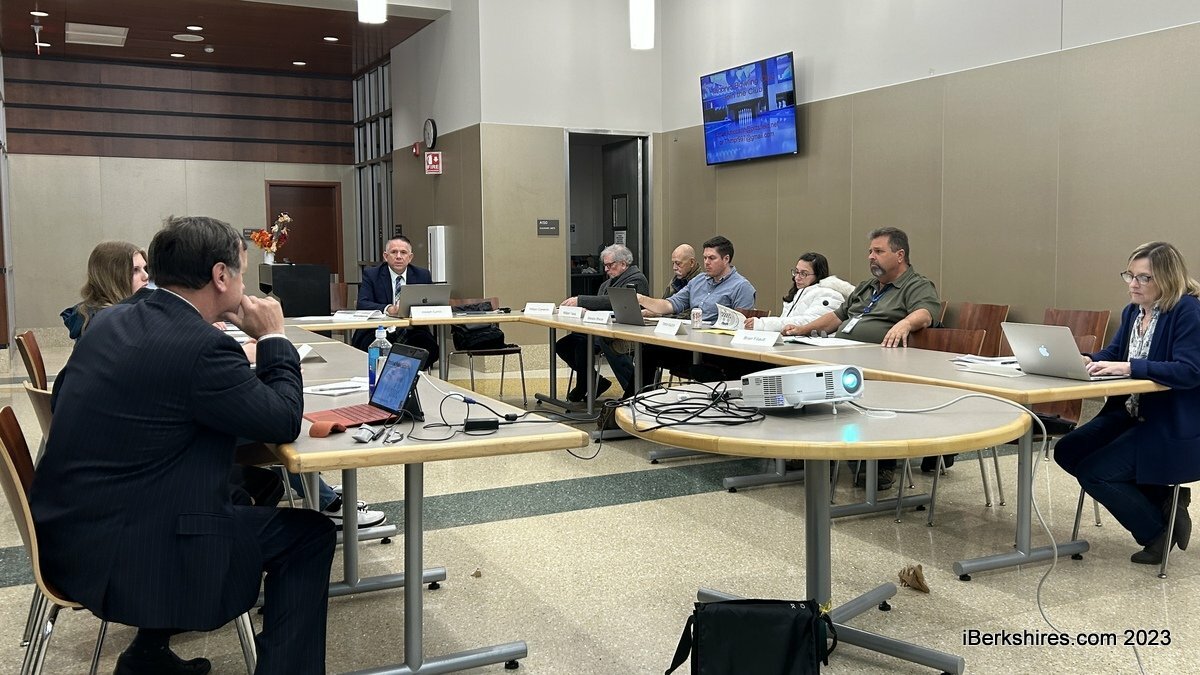
Representatives with DRA Architects, the firm conducting the study, told the School Building Needs Commission on Tuesday that they are pleased with the level of participation. This is coupled with a number of community forums to hear directly from the Pittsfield Public School community and beyond.
Nearly 1,470 students responded to the survey with the highest response rates coming from Reid Middle School and Egremont Elementary School with well over 200 responses each. In contrast, Herberg Middle School had less than 60 responses.
Overall, students gave their schools a 7.16 safety rating out of 10 and a 6.77 happiness rating.
More than 560 students said the schools are too hot too often and nearly half, or about 650 students, rated the technology as "acceptable."
Just under 770 parents and guardians responded and the city's two high schools — Taconic and Pittsfield High — had the most engagement from parents with around 150 each.
This group gave the facilities' ability to support their child's education a 3.71 out of five rating and the layout's ability to support student success a 3.58 rating.
Some 514 teachers and staff total responded and largely from Pittsfield High School, which had 94 responses. Overall satisfaction with the schools was rated 6.41 out of 10 and 6.69 for appropriateness to the work that is being done.
Staff members gave the district heating, cooling, windows, doors, water supply, electricity, and lighting a low score of 4.37 out of 10. The parking, walkways, stairs, and ramps were rated 5.77 out of 10, and vehicle and pedestrian travel paths were rated 6.18.
The safety and age appropriateness of playgrounds were given a 6.54 out of 10.
Just over 90 residents and business owners responded and gave the schools a 5.87 out of 10 for preparing students for success.
The commission also had a discussion about grade alignments and the possibility of universal pre-kindergarten.
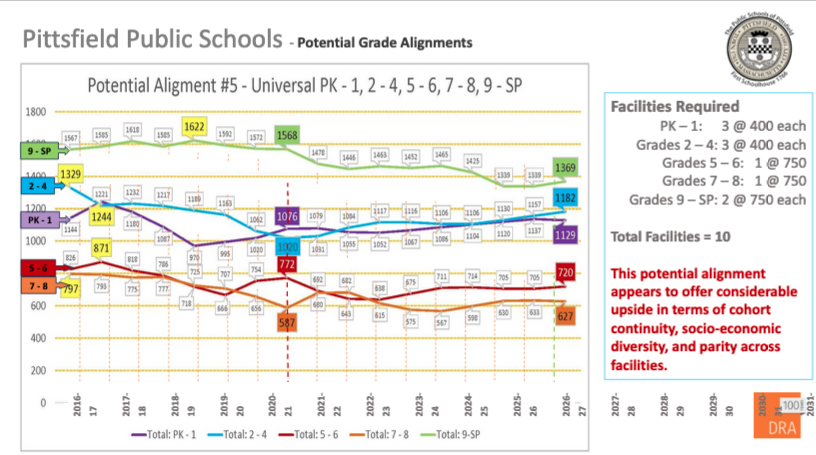
Six potential alignments have been proposed that include the current three-school progression with and without universal pre-k, a four-school progression, and a five-school progression. Every option proposes a reduction in total facilities from the 12 elementary, middle, and high schools.
The architects said the alignment that divides schools by pre-kindergarten through first grade, Grades 2 through 4, Grades 5 and 6, Grades 7 and 8, and Grades 9 through 12 has the most potential. This would require a total of 10 facilities and is said to offer considerable upsides in terms of cohort continuity, socio-economic diversity, and parity across the schools.
"The one that seems to really have the most traction and make the most sense from a facilities cohort side and a regular arrangement seems to be [Alignment] 5," DRA's Greg Smolley explained. "And that's kind of the point that we need to discuss further with this group and with the school administration to get a starting point for where we go with this."
DRA's Carl Franceschi added that a common size for multiple schools would bring parity or equality, and it would have to be mapped in the existing buildings to see how it works.
"From a master planning point of view, we want to take the starting point of trying to address the issue of parity that no matter where you live or what school you get assigned to or choose to go to, the curriculum and the facilities offer comparable educational opportunities," he said.
During one of the community meetings, a resident expressed concern about the impact that universal pre-K would have on the existing pre-K providers and asked if there could be some sort of collaboration with them.
Member Tonya Frasier reported that a lot of community members have been on a waitlist since their child was three and that if there was more capacity for universal pre-K there would be more enrollment.
"I'm worried about those children that are falling behind because they're not in a structure of working with other peers their age, getting onto a schedule, everything like that," she said.
Transportation is also a consideration with the proposal of new alignments and the addition of universal pre-K.
By the end of the month, there will be a public presentation on the final report with community engagement and in December through January, materials will be compiled for filing a statement of interest.
Tags: Pittsfield Public Schools, school building committee,