State Housing Secretary Hears of County's Housing Struggles

Housing Secretary Edward Augustus was in Berkshire County on Friday to hear from local stakeholders about housing challenges.
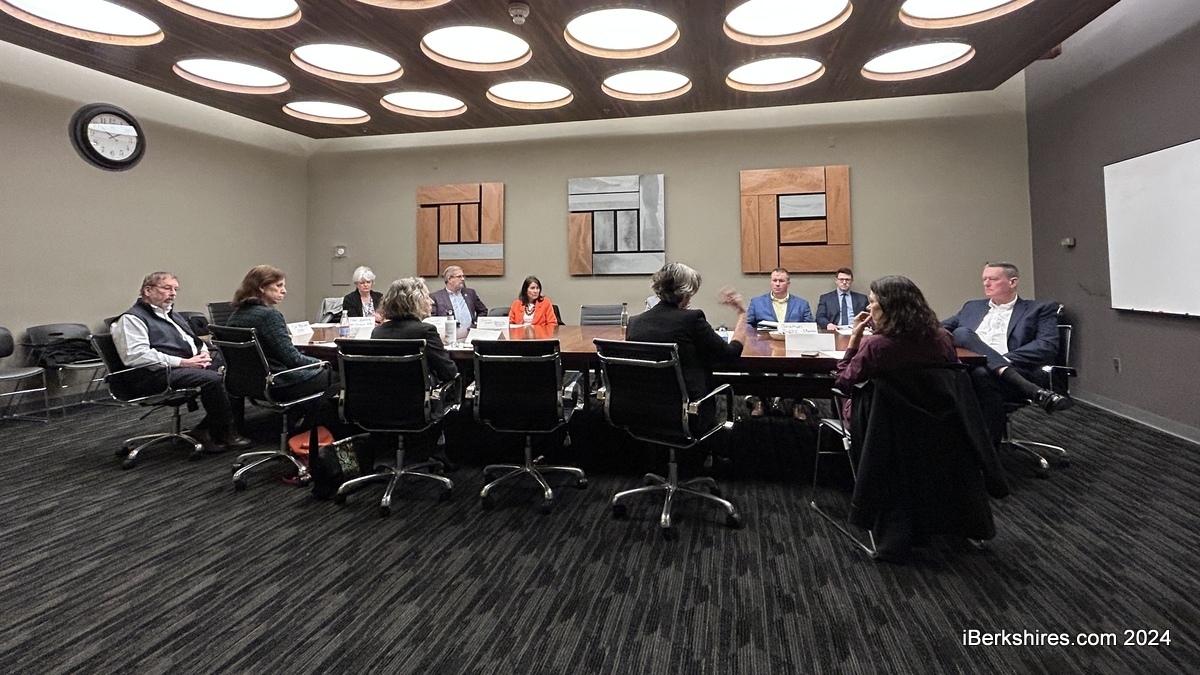
Following a public roundtable in Lenox in the morning, he met privately in the afternoon with city officials and representatives from local agencies including the Berkshire County Regional Housing Authority, Berkshire Housing, and 1Berkshire.
"Today, we met with Secretary Augustus to talk about ways in which we can improve housing options to address the challenges in Pittsfield and across the county," Mayor Peter Marchetti said following the session.
"I look forward to continue this conversation with the Secretary as we explore future housing projects."
Augustus was named to the newly created executive office last spring based on his success in expanding housing opportunities as Worcester city manager. Gov. Maura Healey has made housing all levels a priority for her administration and filed a $4 billion bond bill to address the housing crisis earlier this year.
Augustus that the administration wants to make sure that it is listening to regions that may have unique challenges. These include "seasonal communities" that have large influxes of people in the summertime, rural communities, and gateway communities such as Pittsfield.
"I think the thing that makes me feel optimistic is you have got a lot of really good, engaged people out here in the Berkshires trying to figure it out. They're not overwhelmed by it, they're not daunted by it, they're kind of putting their heads together, they're building coalitions, they're finding allies to get it done and I think the group we just had around the table is an example of that," he said.
"If it's just housing advocates trying to do it, it's hard to push that rock up the hill but if you've got CEOs and college presidents and municipal leaders and other folks helping you lift that rock up the hill, it gets a little easier and so I think to the credit of the folks here in the Berkshires, they're working together to try to get it done."
A common theme that Augustus heard through the day was the challenge of construction when it comes to housing.
"It's hard to build housing, it's expensive to build housing, especially in this moment in time where we saw our inflation really increase the cost of construction materials. Inflation has come down but the costs haven't come down. Those costs look like they're going to probably stay where they are now. The interest rate environment makes it more expensive to access capital to do the projects," he said.
"And so it means that the state and local communities have to pour more money in to buy the same number of units that we did five or six years ago and that's a challenge when you're trying to build, you're not trying to just maintain what you've gotten but you're trying to get traction on that 200,000 number that we think we need as a state to take some of the pressure off the housing ecosystem."
He added that the challenge in Berkshire County is that it costs nearly the same to build a 10- or 30-unit apartment building as it does in the Greater Boston area but you can't get the same rents or sale prices. This requires greater subsidies to make it work.
Augustus highlighted the $4 billion Affordable Homes Act filed in January that includes 28 policy proposals, explaining "it's the combination of the policy and the funding that kind of help us move the needle on housing production."
One of the proposals requires municipalities to allow accessory dwelling units "as of right" on any lot in a single-family zoning district, subject to reasonable regulations related to septic disposal and dimensional requirements. He explained that this could create thousands of units at no cost to the state if those barriers could be out of the way.
Others at the roundtable largely requested more subsidies to support the creation of housing.
"The market can't do it by itself. If it could, it would," Augustus said.
"And so that's part of what the Affordable Homes Act that the governor filed is about: $1 billion over the next five years that helps provide more subsidies, recharges some of the ones we've historically used, and creates new ones that we think fills gaps and some of the needs."
One example is the Housing Innovation Fund, he said, which would allocate about $200 million for innovative and alternative forms of rental housing including single-person occupancy units, transitional and permanent housing for people experiencing homelessness, housing for seniors and veterans, and transitional units for persons recovering from substance use disorder.
This would allocate monies for the conversion of commercial properties such as former offices and malls to housing.
Leigh Davis, vice chair of the Great Barrington Select Board and director of development at Construct Inc., said that she was heartened by the act.
"I think you really have a sense of the need of the housing crisis," she said to Augustus. "And the fact that this is a top priority for the administration."
Davis said there is a lot of innovation going on behind the scenes including private and public partnerships and municipalities need both funding and technical assistance to address the issue.
"Today's conversation was good because we had folks who do housing, we had a community college president, we had folks from the health care fields, we had the mayor," the secretary said.
"People from various perspectives, kind of weighing in on what they think we need to do to support them and building more housing."
Tags: housing,