Adams Picks Select Board Candidates; Cheshire Nixes Appointed Assessor

By Tammy DanielsiBerkshires Staff
Print Story | Email Story
ADAMS, Mass. — Voters chose incumbent John Duval and newcomer Ann Bartlett for the two open seats on the Selectmen.
 
Bartlett, a co-owner of the former Red Carpet Diner, garnered the most votes at 791, more than 300 above the other three challengers, and Duval was returned for another three-year term with 685.
 
Incumbent Howard Rosenberg's decision sparked a five-way race for the two seats. Coming in third was Jerome Socolof with 465, Mitchell Wisniowski with 446 and former board member Donald Sommer with 367.
 
All results are unofficial.
 
Wisniowski did win a seat on the Parks Commission and Michael Mach outpolled challenger Timothy Kitchell Jr. 887-407 to stay on the Planning Board. 
 
Frederick Lora appears to have bested Jennifer Solak as Adams representative to the Hoosac Valley Regional School District by 10 votes. The unofficial tally is 814-804, with Lora gaining 674 votes to Solak's 620 in Adams; the voted flipped in Cheshire with Solak winning 184-140 but not enough to overcome the gap. Robert Tetlow Jr., running unopposed, was returned as the Cheshire representative. 
 
Write-ins for Board of Health and Redevelopment Authority, which had no candidates, were still being tallied. 
 
Town Clerk Haley Meczywor, running unopposed for another three-year term, earned the highest number of votes at 1,335, just seven more than Eugene Michalenko, who was running with James Loughman for re-election to the library trustees. Also returned to office were Moderator Myra Wilk, Assessor Paula Wheeler, Mary Ciuk and James J. Fassell for Parks Commission; and Bruce Dale Shepley for Cemetery Commission and McCan School Committee. 
 
Turnout was about 22 percent with 1,465 of the town's 6,574 registered voters going to the polls. 
 
In Cheshire, a ballot vote on making the town assessor an appointed rather than elected position was roundly defeated 152-219. The question would also have been on the town warrant.
 
Shawn McGrath and Raymond Killeen were re-elected to three-year terms on the Select Board with 257 and 234 votes, respectively; coming in third was Mark Biagini with 204. 
 
Assessor Kellie Lahey, Board of Health member Brian Trudeau, Cemetery Commissioner Timothy Garner, Water Commissioner Ricky Gurney and Planning Board member Peter Traub were re-elected unopposed. 
 
Whitney Flynn received 55 votes for town clerk on an empty ballot to replace Christine Emerson, who retired.

Tags: election 2024,   town elections,   


If you would like to contribute information on this article, contact us at info@iberkshires.com.

State, Local Leaders Celebrate Funding Boost For Ashuwillticook Rail Trail Extension

By Sabrina DammsiBerkshires Staff

ADAMS, Mass. — State officials and local leaders kicked up their kickstands and took a ride along the final stretch of the Ashuwillticook Rail Trail on Thursday to celebrate new investments in rural communities.

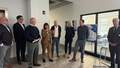
Federal Funds and Infrastructure Office (FFIO) Director Quentin Palfrey joined local leaders, including State Rep. John Barrett III and Berkshire Regional Planning Commission (BRPC) Executive Director Laura Brennan, in Adams to highlight the newest round of FFIO funding. The grant will provide BRPC with $64,700 in state funds to help advance the Ashuwillticook Rail Trail expansion.

"When Governor Healey came into office, one of her big day-one commitments was to make sure that Massachusetts was fighting for every dollar possible coming out of Washington," Palfrey said, speaking about FFIO, a program created in 2023 to help the state aggressively pursue and coordinate federal funding opportunities.

This builds on a $17.3 million federal award secured last year for the project, dubbed the A2A project, which supports the design of a 9.3-mile shared-use path connecting the existing Ashuwillticook Rail Trail to the Williamstown Mohican Path.

"One of the things that she emphasized to me when we set up the Federal Funds and Infrastructure Office was that we need to make sure that these resources not only come into Massachusetts, but benefit all of Massachusetts," Palfrey added.

The additional $64,700 will allow BRPC to gather information about transportation needs in northern Berkshire County to help inform the design of the trail expansion. BRPC will partner with Williams College and Luminary Evaluation, LLC to use the University of Michigan's Transportation Security Index (TSI).

Brennan said BRPC will deploy a 16-question survey that will allow them "to research local and regional perspectives and surface the needs of our neighbors when it comes to transportation in the Berkshires."

"The best-case scenario would be if the survey turned up results that all needs are met and that everyone has access to the places and the things that they need to travel to – but we know that is not true," Brennan said. "We know that folks in Berkshire struggle to get to their place of employment, to be able to access important medical appointments, [and] other engagements. So, the transportation security index is going to help us really hone in on those specific needs, identify pockets of needs or areas where there is a strong concentration or depth of need."

She said FFIO's investment offers a "wonderful augmentation" to BRPC's current plans for the bike trail extension. It's also an investment that will make the region more competitive for other transportation opportunities.

"This is an incredibly multifaceted and valuable investment, and we deeply appreciate it," she said.

Barrett said these investments drive growth in the Berkshires.

"I've always found that if you're going to grow an area, you grow with what you have here to grow. You don't bring something in. We have a natural beauty. We have an environment that's second to none, and that's what we are going to grow on," he said.

Barrett said that in the First Berkshire District alone, 4,000 new people moved to the area.

"We're seeing that migration here. They're going to have activities. They're going to have jobs, and we're going to have a great educational system that goes with it with our two colleges that are here," he said.

Palfrey said it was clear during the initial creation of FFIO that federal funding often went to wealthier and more urban communities with larger planning departments and greater access to consultants. He added that FFIO helps reverse this trend and get projects in rural communities off the ground.

View Full Story

More Adams Stories