State Boosts North Street Housing Project With $4M

PITTSFIELD, Mass. — A North Street housing project was awarded more than $4 million through the state's Housing Development Incentive Program.
Mayor Peter Marchetti and Community Development Director Justine Dodds traveled to Lowell on Tuesday for the announcement of $27 million in HDIP awards — $4,099,686 going to Allegrone Construction Co.'s redevelopment of the historic Wright Building and the Jim's House of Shoes property.
The two were joined by Lou Allegrone.
"Another win for Pittsfield!" Marchetti wrote in a Facebook post.
Pittsfield received the largest award, the next highest was $2.5 million. The Wright project will be in two phases: $2,581,672 to fund 21 units and $1,518,014 for 14 units.
The $27 million HDIP package aims to create nearly 550 new units in 11 gateway cities across the state.
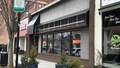
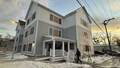
Allegrone's $17.8 million project will combine the two buildings into one development, retaining the commercial storefronts on North Street and providing 35 new rental units, 28 of which will be market-rate units and seven of which will be affordable. It will retain the historic facade of the Wright Building and the commercial store frontage on North Street.
Initial market-rate rent proposals range from $1,500 to $1,800 for a one-bedroom and $2,000 to $2,200 for a two-bedroom, based on unit size. Affordable units are proposed at $950 for a studio, $1,100 for a one-bedroom, and $1,402 for a two-bedroom.
The Healey-Driscoll administration says HDIP is a tool for the state's Gateway Cities to create more market-rate housing to support economic development, expand the diversity of housing stock, and create more vibrant neighborhoods.
Last fall, as part of a $1 billion tax cuts package, the annual HDIP program cap was raised from $10 million to $57 million in 2023 and will be $30 million annually going forward. That increase allowed the Executive Office of Housing and Livable Communities to fund all 13 project applications this round.
The city approved a 10-year tax increment financing agreement with the developer with a savings of over $400,000 through that period. It is a requirement to receive state tax credits through the HDIP.
The TIE freezes the current property values and base value, and phases in the increased property taxes that result from the upgrades, beginning at 100 percent forgiveness in the first year and decreasing by 10 percent each subsequent year over the term.
The current assessed value of the properties is $497,900 for the Wright Building and $229,900 for the former Jim's House of Shoes property. The redevelopment of these buildings is projected to increase the assessed value of each property to more than $2.5 million and more than $1.9 million, respectively.
The city approved a Housing Development Zone in 2012 to take advantage of the state Housing Development Incentive Program that supports market-rate housing development in gateway cities. The city can provide a TIE for newly created market-rate housing in the zone to private developers and for the projects to be eligible for up to $1 million in tax credits from the state through the Executive Office of Housing and Livable Communities and the Department of Revenue.
Dodds has previously explained that incentives are needed to expand the diversity of available housing, balance market-rate and affordable units, increase residential growth, and supplement existing affordable housing projects. It was also emphasized that this project will create needed workforce housing and preserve a historic building.
Allegrone has said the sources of funding are required to make this happen.
The project is also supported by $175,000 in the city's Community Preservation Act funds.
Tags: housing, state grant,