Sagas of the Shire: A Visit From The Divine Healer
 |
PITTSFIELD, Mass. — From the moment he arrived in town, everything about the mysterious traveler attracted attention and provoked comment.
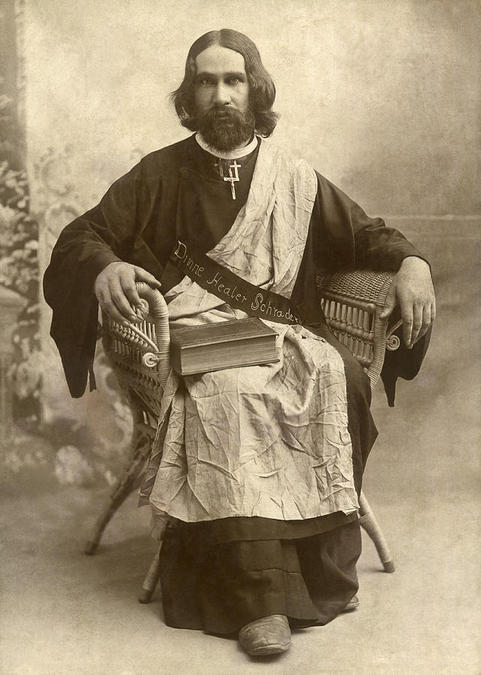
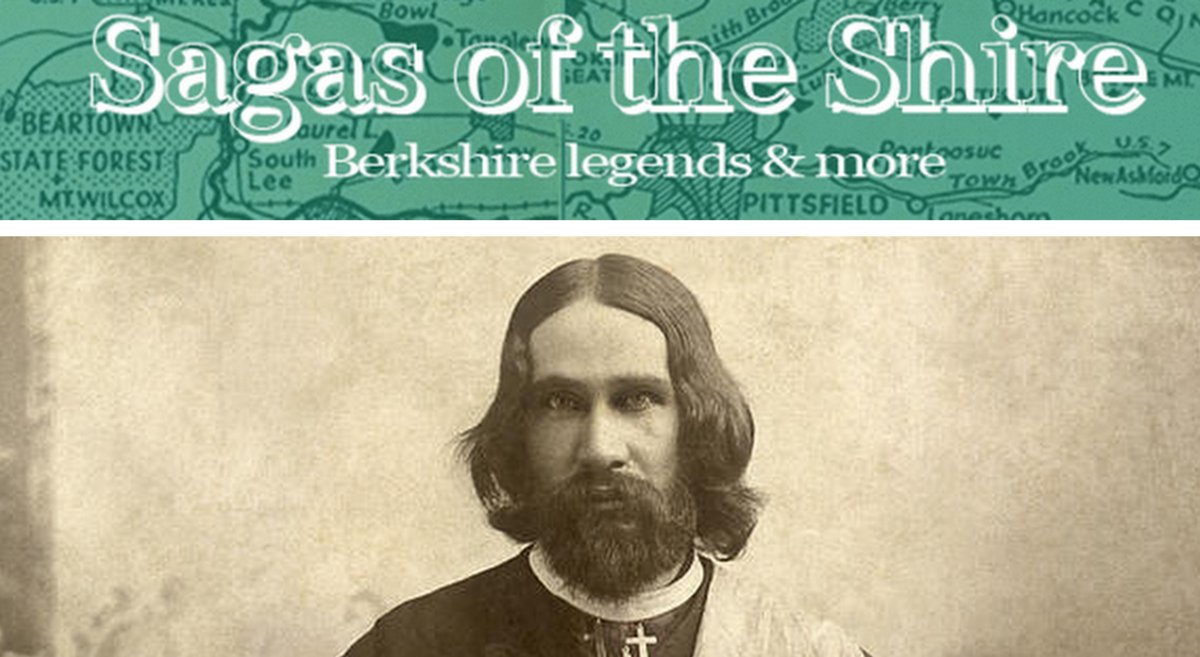
Garbed all in black, vaguely oriental robes and sashes, with grayish eyes and long flowing brown hair, he was an unusual sight for Pittsfield, glimpsed speeding about on his bicycle or holding court in space rented just off North Street.
This was the "Divine Healer," the "Western Wonder," Augustus Schrader.
He arrived in the city in mid-May, 1897, having traveled to Massachusetts after what he said were thousands of requests he'd received.
"LOOKS LIKE CHRIST," read the header of his ad space in the Pittsfield Sun, and below it: "Known as the 'New Messiah' in the West."
In person, Schrader was more bashful about the supposed resemblance between his appearance and that of popular depictions of Jesus in art. He declared himself an "instrument of God" only, through which worked the divine healing power.
"There is no disease known to man, he says, which does not disappear or go away after he treats it," according to the Sunday Morning Call. Of the three local newspapers that mention Schrader's appearance in Pittsfield, only the Call seems to have managed an interview in the rented Eagle Street room where he attended to his visitors.
The treatment itself was simple enough, with Schrader laying hands on the head and neck of the afflicted person for a moment, then clasping them together as he said a blessing over them. Alternately or in addition to this, he did a high turnover in blessing handkerchiefs.
"I bless handkerchiefs brought to me from the sick who cannot come, and the blessed handkerchief cures those who send it if it is placed on the afflicted part," Schrader told the Call.
Schrader charged nothing, but accepted donations from those he blessed. Generally he worked with a manager who collected these, and also sold photographs of him.
In this manner the "Western Wonder" traveled the country for over 20 years, marketing his alleged healing powers with minor variations to one city after another.
As such, he was the most successful imitator of the original, more well known "Divine Healer," of the time period, Francis Schlatter.
Schlatter was a mystical faith healer who attracted some level of national fame two years earlier when he emerged in Denver, attracting crowds of thousands during the summer of 1895. Schrader's wardrobe and elements of "Christ-like" styling were drawn from Schlatter, as was the technique of blessing handkerchiefs.
An Alsatian immigrant, Schlatter worked as a cobbler until the age of 38, until a vision in 1894 prompted him to depart on a 3,000 mile pilgrimage on foot around the western United States. Trekking across the Mojave Desert, he fasted on only flour and water for months before beginning his work as a healer of illness.
Accounts of his success rate in Denver and elsewhere through the Southwest vary, but word of him spread across the country rapidly and it is clear that he did receive several thousand visitors during his short tenure as a healer, a duration of only a few months. Leaving a note behind announcing that his mission was over, Schlatter disappeared into Mexico, where he died in 1896.
For decades after, his legacy and his name lived on, at times quite literally as a series of several imposters worked towns across the country proclaiming themselves to be the Francis Schlatter of Denver fame.
As early as the spring of 1896, Schrader began appearing around Illinois as Schlatter, dismissing reports of his death as inaccurate. Later he alternated between Schlatter and Schrader or went by both, professing them to be one and the same.
Augustus Schrader, who at other times also went by Dr. A.J. Schrader, Rev. D.H. Schrader, or John Schrader, was born August Schroeder in 1866, to German immigrants Carl Schroeder and Wilhemine Karoline Hagar. Neighbors from his hometown in Dodge Center, Minn., recalled him as a con artist and fraud whose adventures as a healer had begun 10 years earlier, when he came into a possession of a stone said to be magical.
Also unbeknownst to most of the cities he visited, before taking up the mantle left by Schlatter, Schroeder had spent a couple of years going about from town to town impersonating a Baptist minister collecting donations for a church that had burned down, though the location of this burned church varied depending on the city where he was fundraising.
Reception to Schrader's "Divine Healer" act varied from place to place. Shortly before arriving in Massachusetts, he was signed on for a several week engagement at a Pittsburgh resort. A couple of months later he was driven out of St. Louis by a mob hurling stones. His average stay anywhere was about a week, and his departure often coincided with skeptical or even scathing coverage in one or more local newspapers.
This continued for years, sometimes in competition with others working the circuit who also claimed to be Schlatter — most notably an immigrant Scotsman named Charles MacLean, who traveled as Schlatter with great success for over a decade.
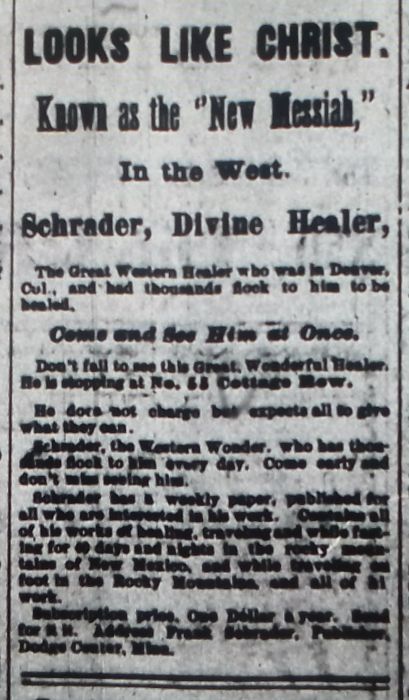 Advertisement from the Pittsfield Sun, May 16, 1897. Advertisement from the Pittsfield Sun, May 16, 1897. |
After the much-publicized (again) "death of Schlatter" (MacLean) in 1909, the Francis Schlatter identity was assumed by another traveling showman, one who had begun working as a partner with Schrader a few years earlier. The man had previously been going by the name James Alexander Dowie, supposed brother of John Alexander Dowie, founder of the Chistian Apostolic Church and Zion City, Ill.
Schrader and the new Schlatter worked their way across the West Coast, finally settling down in Oakland in 1912, where they set about finding a place to establish a formal church.
Legally incorporating first as the Divine Congregational Church, Schrader and Dowie/Schlatter ratcheted up their self-promotion. The stories of their powers grew in scale as they regaled the press with tales of miraculous healings and boasted a nationwide membership of 300,000 people in their new sect.
Schrader served as archbishop, and later as pope, of the new sect, which eventually became known as the Baptist Church of California. Schlatter (Dowie) the elder of the two, declared himself a bishop as well, as well as frequently claiming to be the reincarnation of Moses.
By 1916, the market for itinerant healers of the "Schlatter" variety had waned, as had the patience of California authorities with Schrader and Dowie, whose ministry by then had developed a lengthy and thorough reputation for swindles and scandal. In April, they were brought up on charges for soliciting funds through the mail in exchange for their blessing of handkerchiefs.
A colorful and controversial court case followed, during which Schrader provoked further wrath by publicly issuing a curse on the police officer who had arrested them.
Schrader's health was failing by that summer, though, and after several postponements of his trial, he died of pneumonia in February 1917. A month later, a jury convicted his partner after a four-minute deliberation, and "Schlatter," then 80, was imprisoned on March 18, 1917.
Tags: historical figure, history,