Pittsfield City Council Approves Puppy Mill Ban
PITTSFIELD, Mass. — The City Council unanimously approved on Tuesday an ordinance that would eliminate sales in the city of puppies, kittens, and rabbits from animal breeding mills.
"I think this is going to pass unanimously," local attorney Rinaldo Del Gallo said during public comment Tuesday. "I want to thank the city attorney and everybody here for their support."
Although there are no pet stores that sell these animals in Pittsfield, Del Gallo brought a petition forward last year to pre-emptively stop potential stores from opening in the city limits.
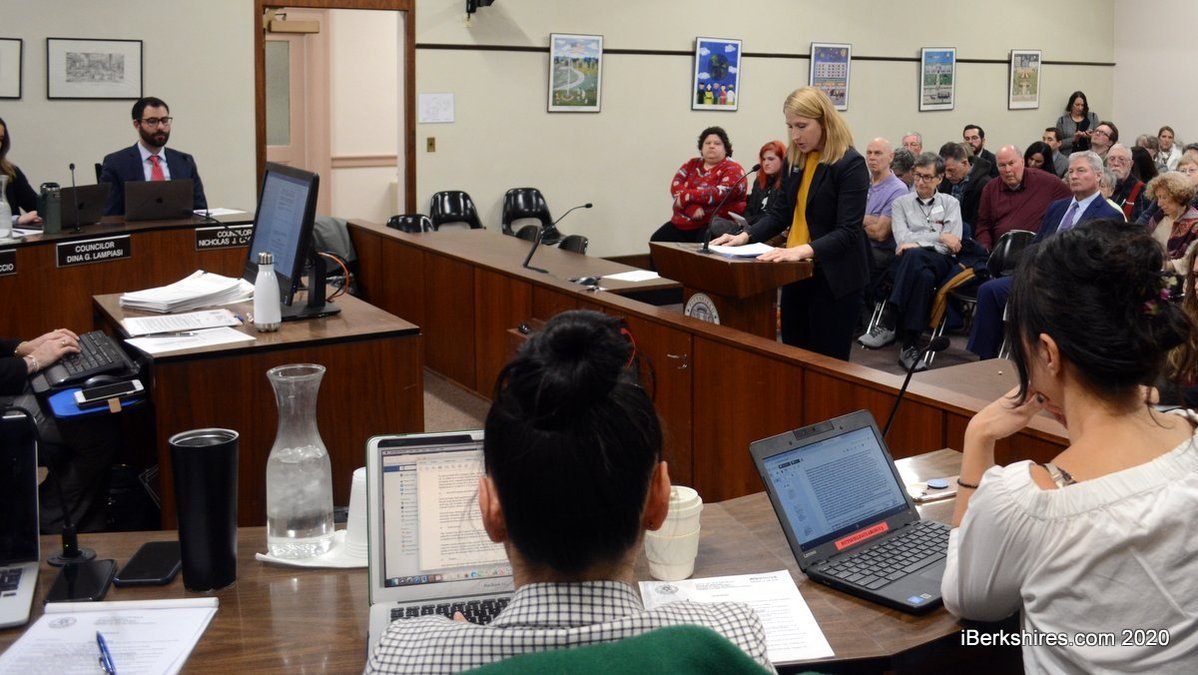
The ordinance was largely hashed out in the Ordinance and Rules Subcommittee earlier this month, however proponents still filled the City Council Chambers to continue their support.
Stephanie Harris, senior legislative affairs manager for the Animal Legal Defense Fund, spoke about the evils of puppy mills and the "puppy mill to pet store pipeline."
"Pet stores that adhere to a business model that rely on the sale of animals from inhumane sources threaten animal welfare, consumer protection, as well as public health," she said. "Despite heightened public awareness, puppy mills and their preferred retail sales outlets still plague the nation."
She said pet stores can still exist with this ban and that successful stores focus on selling pet products and services or they partner with shelters and rescues.
The council heard from members of the Berkshire Voters for Animals and other animal lovers who told testimonials about the horrors of inhumane breeding operations and the often unwell animals they produce.
There were even a few dogs in attendance.
Laura Hagan, the Massachusetts state director for the Humane Society of the United States, said communities are stepping up to cover where state and federal laws have failed. She said the USDA has even failed to enforce the minimal regulations in the Animal Welfare Act.
"Dogs were so badly starved at one facility that they resorted to cannibalism yet the USDA allowed the facility to continue to operate and sell puppies to pet stores," she said. "Another facility, dogs were seen with untreated deep wounds and fleas and tick infestations so severe you could barely see the dog’s faces."
The council heard from members of the Berkshire Humane Society and Communications and Marketing Manager Catherine Hibbard said when animals leave their facility, they make sure they are going to safe homes with an owner who will care for their new pet.
She said pet stores often rely on impulse buying.
Kara Holmquist, of the Massachusetts Society of the Prevention of Cruelty to Animals, said they often hear from pet store shoppers who purchased sick animals with expensive vet bills.
"This is really a consumer protection measure as it is an animal one," she said.
Ward 4 Councilor Christopher Connell said he was happy as a longtime dog owner to support the ordinance. Although he did not want to see a future amendment that could harm reputable small animal breeders.
"I know there are both good and bad breeders," he said. "There was just a concern from some of the small breeders who do a good job and care about their animals."
In other business, the City Council approved the Tyler Street zoning amendment, concluding months of hearings and meetings.
"We saw the need for flexibility and we saw the need for modernization to allow for uses that no one imagined 10 years ago let alone 1973," City Planner CJ Hoss said Tuesday night at City Council.
The Community Development Board acted as petitioner last year and sent the overlay to City Council, which bounced it back to Community Development with a recommendation. From there it went back to City Council, then then relayed the amendment to Ordinance & Rules in January.
The amendment would accommodate modern uses such as shared work spaces, live/work spaces, and other mixed uses. Also the southeast area would be rezoned from Commercial, Warehouse and Storage to General Business aligning with the current use that is mostly residential at the moment.
The amendment also sets up the framework for the development of more diverse three dwelling housing and aligns parking standards with the rest of the downtown, making it easier for businesses to move in.
The overlay sets the stage for the Tyler Street streetscape and future development in the area that stretches from First Street to Woodlawn Avenue.
• The City Council sent two communications from the mayor requesting some amendments to the city code to Ordinance and Rules.
The mayor asked for a list of changes in "Chapter 16 Personnel" to correct gender specific language, modernize the chapter to reflect current employment practices, reference any relevant federal and state laws, account for the department name change from Personnel to Human Resources, and add a new section regarding employee transfers from the school department.
Connell had some concerns over the changes and asked the subcommittee to note that the proposed amendments would limit the council's power. He said some decisions that had to be made jointly by the mayor, the council, and sometimes an administrator would be changed to just the mayor’s discretion.
"I just have a slight problem with that because of the fact we are a legislative body and we are supposed to be the check and balance," he said. "That is the reason why we are here and I would hate to lose some of that oversight for any mayor in office."
Tags: commercial zoning, dogs, puppies,