Williamstown Won't Attempt Street Closure Saturday
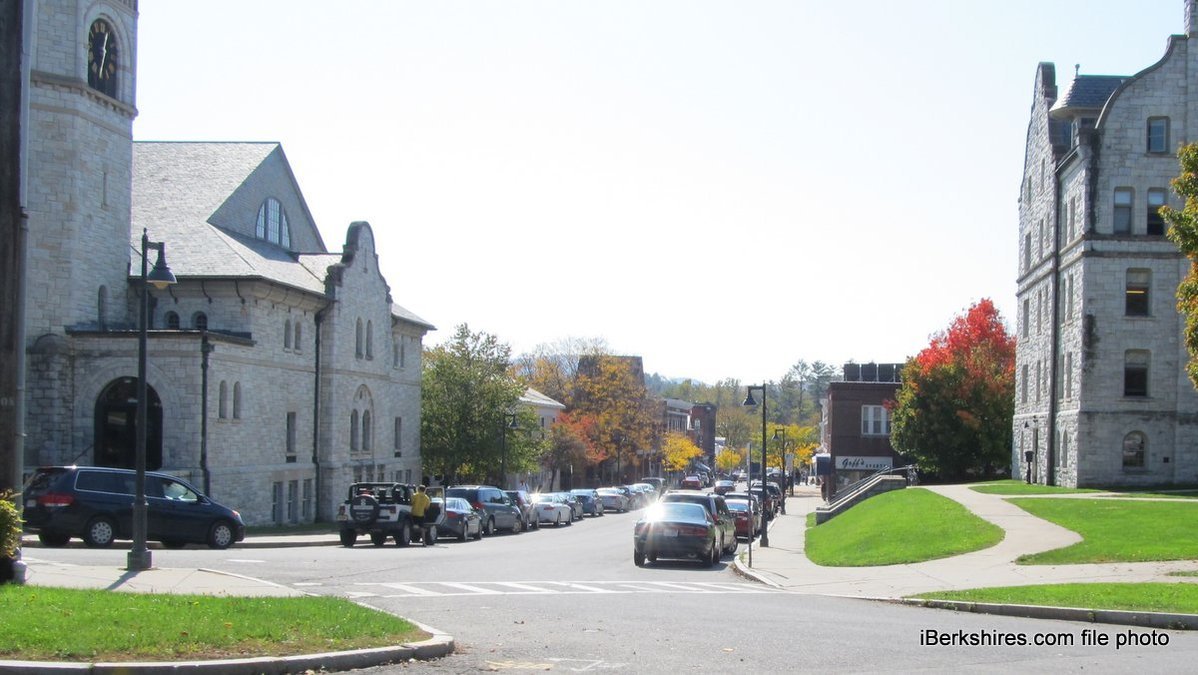
WILLIAMSTOWN, Mass. — The town will not be closing off Spring Street to vehicular traffic on Saturday evening as previously planned.
After hearing more testimony from a local business owner at Monday's meeting, the members of the Select Board showed no interest in going through with the plan to allow outdoor dining and shopping in downtown between 4 and 10 p.m.
Though the Select Board made no decision on the topic — none of the attempts to close the road this summer have been a board decision — the Chamber of Commerce in its Thursday email blast announced that the street closure would not happen, listing the information under the heading "Selectboard update."
Earlier this month, the town and the Chamber announced plans to try closures on July 11 and 18 as a way to help Spring Street businesses attract customers. Restaurants, in particular, were seen as potential beneficiaries because of state guidelines about social distancing that limit the number of tables they can set up inside their establishments.
The "outdoor dining" enabled by street closures in other parts of the country during the COVID-19 pandemic frequently was cited by advocates for giving the idea a try in Williamstown.
An attempt was made in June, but late afternoon rain was a hindrance. On July 11, a decision was made to pull the plug on the event when the noon forecast showed better than a 50 percent chance of rain during the hours of the planned closure.
The early forecast for Saturday — clear skies and temperatures in the 70s — is more favorable. But the feedback from the owner of the Williams Shop was decidedly unfavorable.
Bruce Goff told the Select Board on Monday that he appreciated efforts to help businesses on Spring Street but "a lot of businesses on the street are not on board with the closures."
Goff forwarded to the board the responses he received to an email he sent to his counterparts on Spring Street. He received 21 responses, of which four were in favor of the closure and 14 were against.
He talked Monday about a conversation he had with a restaurateur that surprised Goff.
"I was kind of surprised they were not supportive of that idea," Goff said. "They said a lot of their business has to do with customers placing orders to go.It's problematic when their customers are not able to do that easily."
Goff suggested there could be a compromise approach.
"A lot of the businesses are amenable to a modified approach where perhaps we close some of the parking lanes down for diners to use the sidewalks — close the sidewalks to pedestrians and pedestrians could use the parking lanes," Goff said. "Traffic would still be able to flow. That was the common theme from the businesses I talked to. They wanted to keep traffic flowing down Spring Street."
Select Board Chair Jane Patton, who also serves as president of the Williamstown Chamber of Commerce, thanked Goff for his remarks.
"I will say we spent some time last week discussing the idea of modified traffic lanes," Patton said. "We were just very concerned somebody would somehow be distracted or not pay attention and think the road is closed to vehicles and something tragic could happen. We were not accepting of that level of risk.
"We're certainly open to doing whatever the folks on the street want. It's a different time now than when we first started talking about this."
When Town Manager Jason Hoch first suggested the notion in a Select Board meeting in May, members of the panel were enthusiastic. But reaction on social media was mixed.
On Monday, Select Board member Jeffrey Thomas was among those saying that the time has come to give up on the idea.
"I agree with Hugh [Daley], it was a great experiment," Thomas said. "But I think what we've learned is that maybe takeout is more important to these restaurants. Maybe takeout is the new normal, and maybe that's how we ought to be thinking about it: The more important way to support these restaurants is to facilitate their takeout business rather than their sit-down business."
Tags: outdoor seating, restaurants, spring street,