Adams' St. Stan's Facing Short-Term Closure, Long-Term Uncertainty
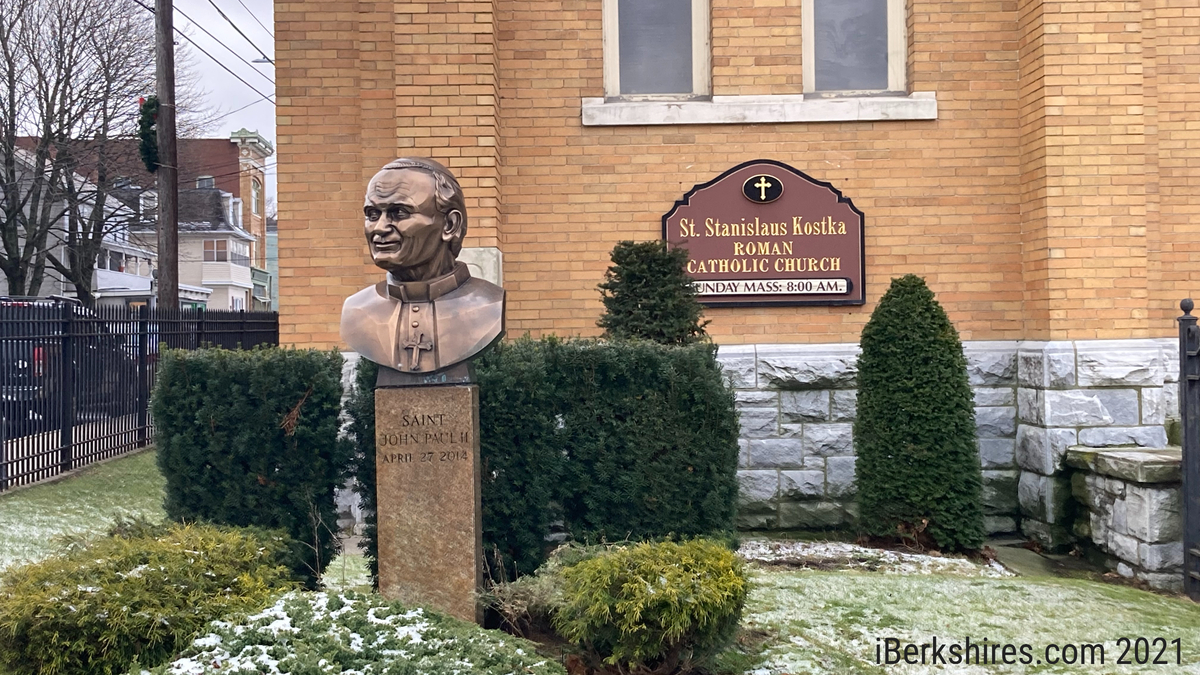
Parishioners mounted a three-year vigil in a successful attempt to keep the church open but black mold in the structure makes its future uncertain.
The 116-year-old church is facing a short-term closure and its long-term viability is very much in doubt.
The immediate problem, Pease reported, is that black mold has been confirmed in the historic Hoosac Street structure.
Down the road, the parish is facing repair bills well beyond its means.
In fact, Pease expressed doubt that Adams' Roman Catholic community can foot the bill for an estimated $100,000 worth of work needed to address the mold issue, which presents an immediate threat to the health of parishioners.
Pease advised that congregants who have respiratory issues immediately should plan to attend Mass in another of the area's churches, and he told attendees at Sunday's 8 a.m. Mass to throw away the face coverings they were wearing after the service because mold spores could become trapped in the masks.
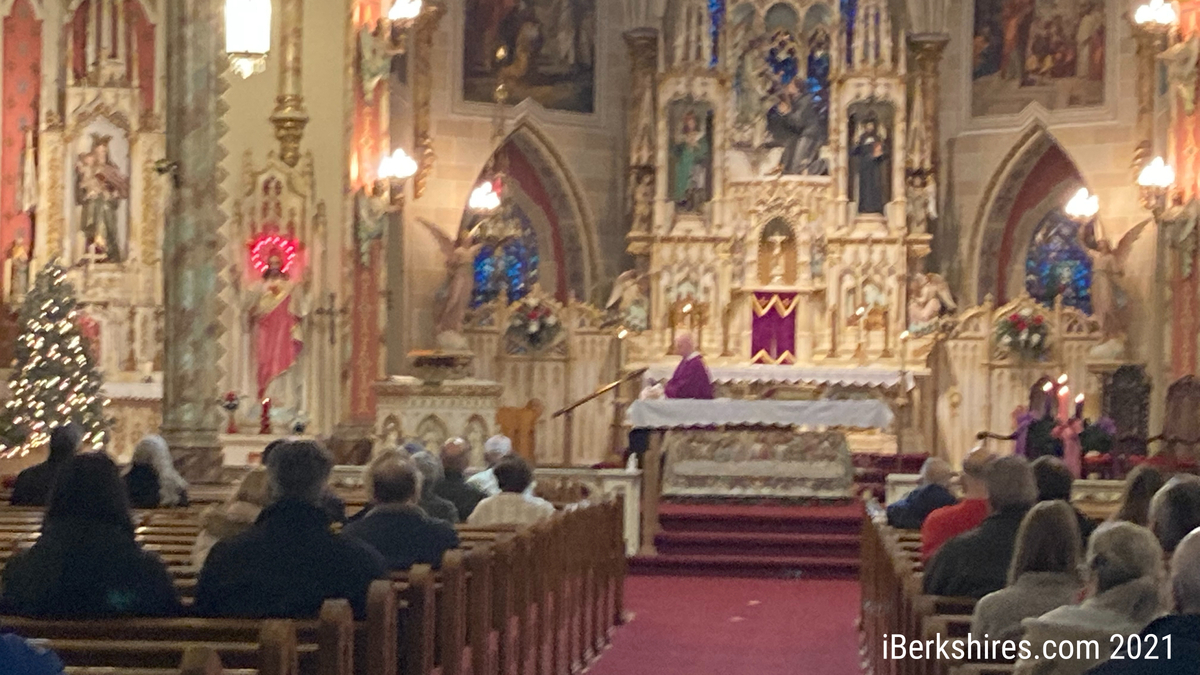
The parish is waiting on orders from the town of Adams to temporarily lock the doors to St. Stan's, Pease said in a 15-minute homily given over entirely to issues with the building.
In addition to cleaning the black mold already inside the church, the parish would be looking at exterior repairs that include installing a French drain around the perimeter and repairing or even replacing the church roof to prevent moisture from continuing to enter the space, he said.
"I don't know how much it's going to cost, but it's going to be expensive," Pease said. "I was told, the best-case scenario, for a project of this size, is going to cost a minimum of $50,000 to $100,000 with removal and remediation.
"In addition to that, we have the architectural problems to resolve."
Those issues are likely to cost in the neighborhood of $4 million to address, Pease told the congregation.
The priest said parish officials have consulted with professional fundraisers who said the faith community likely could raise, at best, $500,000 in a capital campaign, well short of what it would need.
The bottom line is that St. Stanislaus Kostka, whose closure parishioners staved off in 2012, likely will not survive indefinitely, Pease said.
"Sooner or later, this bad news was going to happen," he said from the pulpit. "It's unfortunate that the mold makes it more immediate."
According to a 100-page report from EnviroBiomics Inc., posted on the parish's website, "Potential health effects and symptoms associated with mold exposures include but are not limited to allergic reactions, asthma and other respiratory complaints."
A separate report from December 2020 from Amherst architect Kuhn-Riddle details structural work needed at St. Stan's with an estimated price tag of $2.8 million, though, as Pease noted in Sunday's homily, construction costs have risen during the COVID-19 pandemic.
Pease called upon parishioners at St. Stan's to join their fellow Catholics at its sister church at the other end of Hoosac Street, Notre Dame. The move would unite Adams' historically Polish-American and French-American communities under one roof; in 2009, Notre Dame and St. Stan's consolidated, along with St. Thomas Aquinas, to form St. John Paul II Parish.
"We can't save the building, but we can save the contents — the altar, the statues, the artwork," Pease said. "We can bring those things, once they've been inspected and cleaned to make sure we're not bringing any mold over, to 21 Maple St. ... and combine the legacies of the Polish and French communities so that both legacies survive.
"Looking at the future of the church in Adams, the people of St. Stan's are the key to that future. We can choose, and I said this at the 4 o'clock Mass last night [at Notre Dame], we can choose to come together now and survive, or we can choose to remain separate and both communities ... won't make it the next 20 years."
Tags: church, closure, st stans,