MCLA Green Living Seminar Series Begins Jan. 26

Print Story | Email Story
NORTH ADAMS, Mass. — MCLA's annual Green Living Seminar Series begins on Wednesday, Jan. 26 and continues through April, presenting a series of lectures on the theme of "Greening the City." 
 
Every semester, the Green Living Seminar Series centers around a different topic, timely and relevant in current sustainability issues. The series is free and open to the public, with seminars taking place on Wednesdays at 5:30 p.m. from Jan. 26 to April 20. Community members can find up-to-date information about the schedule at mcla.edu/greenliving. 
 
Presentations will also be broadcast on Northern Berkshire Community Television Channel (NBCTC) 1302 at the following times: 
 
Wednesdays at 7:30 p.m. 
Fridays at 4 p.m. 
Saturdays at 3:30 p.m. 
Sundays at 11:30 a.m. 
Mondays at 5:30 p.m. 
 
Mark Rabinsky, Green Communities Western Regional Coordinator for the Massachusetts Department of Energy Resources, will kick off the series on Jan. 26 with a talk titled "Clean Energy Solutions For Cities And Towns: Massachusetts Green Communities Program.  
 
Future Green Living presentations include: 
 
February 2: "Sustainable Zoning and Municipal Building Decarbonization Strategies" with Kai Palmer-Dunning, Northeast Energy Efficiency Partnerships, Buildings and Communities Associate 
 
February 9: "Pittsfield Grey to Green: Inclusive Planning for Environmental and Climate Justice" with Allison Egan, Berkshire Regional Planning Commission, Senior Planner 
                                                                                                         
February 16: "Reducing GHGs from Transportation in Massachusetts," with Katherine S. Fichter, Massachusetts Department of Transportation, Assistant Secretary and Chief of Climate And Decarbonization 
 
February 23: "How and Why to Increase Plant-Based Lunch Options in Schools" with Amie Hamlin, The Coalition for Healthy School Food, Executive Director 
                      
March 2: "Community Strategies for Addressing the Plastic Pollution Crisis," with David Sayer, Beyond Plastics and Sustainable Saratoga                                                                                        
 
March 9: "Residential Landscaping to Support Pollinators" with Dr. Susannah Lerman, U.S. Forest Service Research Ecologist 
 
March 23: "Public Health and Community Based Participatory Research in Urban Environmental Justice Communities" with Dr. Madeleine L. Scammell, Boston University School of Public Health, Associate Professor of Environmental Health 
 
March 30: "Mohawk Trail Woodlands Partnership: Sustainable Forest Management and Natural Resource-Based Economic Development in Northwestern Massachusetts" with Dr. Hank Art, Williams College Rosenburg Professor of Environmental Studies and Biology, Emeritus, Mohawk Trail Woodlands Partnership, board chair  
 
April 6: "Carbon Farming in Urban and Suburban Areas" with Dr. Nathan Phillips, Boston University Department of Earth and Environment, Professor 
                                                                                                                          
April 13: "Williamstown Composts!: Lessons from a Community Composting Pilot Program" with Nancy Nylen and Ann McCallum of Williamstown, Mass. 
 
April 20: "Bicycling in Berkshire County: History and Future" with Nicholas Russo, Berkshire Regional Planning Commission, Senior Transportation Planner 
 
The 2022 Green Living Seminar Series is a presentation of the MCLA Environmental Studies Department and MCLA's Berkshire Environmental Resource Center. 
 
For more information, go to www.mcla.edu/greenliving or contact Professor of Environmental Studies Elena Traister at (413) 662-5303.

Tags: MCLA,   
If you would like to contribute information on this article, contact us at info@iberkshires.com.

McCann Making Progress Toward MCAS Targets

By Jack GuerinoiBerkshires Staff

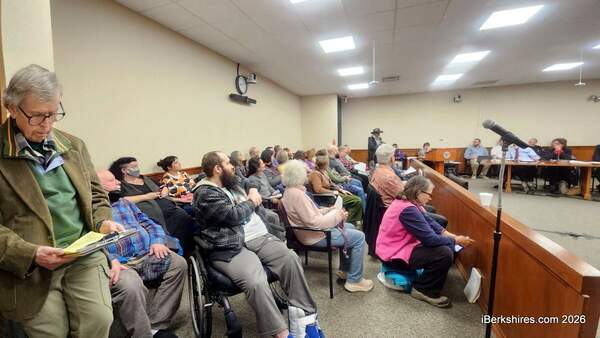
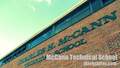
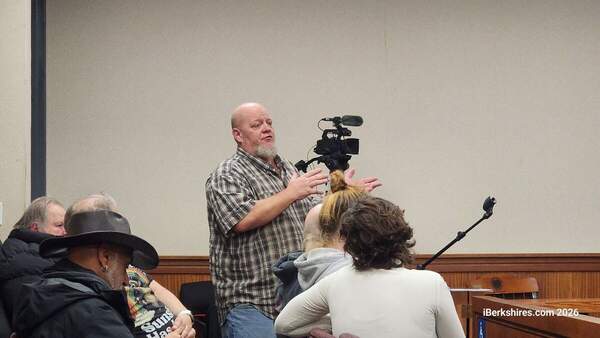
NORTH ADAMS, Mass. — McCann Tech Principal Justin Kratz told the Northern Berkshire Vocational Regional School District School Committee last week that because the school is making substantial progress toward its 2026 MCAS targets, there will be no Massachusetts Department of Elementary and Secondary Education (DESE) intervention.

"So long story short, we are not on DESE's radar for MCAS performance," he said. "At the end of the day, that is what is what we are after."

Kratz said McCann scored "a ton" of points, showing growth in most categories. He said they earned 75 percent of total possible points for all students and 83 percent of all possible points for lowest-performing students.

Kratz noted that DESE tends to change targets and formulas every year. But he drew attention to the year 2025, when a passing MCAS score was no longer a graduation requirement. In 2025, McCann received 33 percent of the possible points and 7 percent for the lowest-performing students. This equaled a score of 20 percent.

"That was the year where everything went off the cliff," he said. "We didn't do very well. This year was 79 percent, and that is knocking it out of the park. ... If we followed up with another 20, we would have been in rough water."

Kratz added this drop was typical across the state, saying he assumed students just took the test less seriously. He wanted to demonstrate how the scores and targets are "reshuffled" and gave a closer look at English scores over the years.

In 2024, the school had a target of 499.3 (average scaled score). The school scored 500.4. In 2025, McCann's new target was 502.5, but McCann scored 485.6. McCann's 2026 target was 487.7, and they scored 486.8.

Kratz said McCann is not scoring as high as they were in 2024, but they are getting more points. He said sometimes the scores needed to be taken with a "grain of salt."

He underlined that although MCAS is important in a vocational education, it only represents half of what a student does in a given school year. 

"There is no MCAS for 50 percent of their time here, which is their trade area," Kratz said. "They [DESE] don't assess that ... so this one little pocket is important, but it doesn't show the entire picture of a student."

Kratz moved from what he called the "good" section of his presentation to the "awesome." He said McCann was recognized as one of 55 schools that drastically improved chronic absenteeism by at least 5 percentage points. He said the school received a letter from DESE congratulating them that included a survey that asked how the school did it.

"It was a nice letter, but we kind of laughed and asked, 'What did we do?' " he said. "I say that sort of tongue-in-cheek because we didn't do any sort of targeted attendance improvement initiative."

He said the more he thought about it, the more he attributed the change to standardized grading and improving the school environment physically and culturally.  

"We didn't do all that wanting to improve attendance. We did it because we wanted to create more equity, and ... I think that is a byproduct of that," Kratz said. "Kids are more likely to want to go to school if that 62 they got on a test does not bury them for the rest of the year. They know they can dig their way out of it. And they are more likely to go to school if the building is a little brighter when they walk in in the morning."

Also, the importance of attendance is baked into the vocational school experience.

View Full Story

More North Adams Stories